UN ST38.3 Battery Testing Services: Comprehensive Compliance Guide, Custom Pack Certification & Global Logistics Requirements for OEM Buyers
Navigating mandatory transport certification, thermal shock, mechanical vibration, BMS safety protection, and international dangerous goods regulations (UN 38.3.5) for commercial and defense lithium battery packs.
Technical Authority & Regulatory Standard
1. Executive Overview: Demystifying UN ST38.3 Compliance for Global Battery Procurement
In the rapidly expanding global ecosystem of portable electronics, medical mobility systems, defense unmanned platforms, and smart industrial IoT nodes, lithium-based energy storage is indispensable. However, lithium-ion (Li-ion), lithium iron phosphate (LiFePO4/LFP), lithium polymer (Li-Po), and lithium primary chemistries are legally classified as Class 9 Dangerous Goods during transport due to their inherent energy density and chemical reactivity. To ship lithium batteries legally by air (ICAO/IATA), sea (IMO/IMDG), rail, or highway (US DOT 49 CFR), OEMs must verify that every cell and custom battery assembly has successfully passed the rigorous testing protocol set forth in Part III, Section 38.3 of the United Nations Manual of Tests and Criteria.
UN ST38.3 Battery Testing Services represent not merely a regulatory checkpoint, but a fundamental safety assurance process engineered to simulate extreme mechanical, thermal, and electrical stresses encountered during commercial freight operations. Failure to secure a valid UN ST38.3 Test Summary Report (Section 38.3.5) can result in severe supply chain disruptions, cargo impoundment, massive regulatory fines, and catastrophic brand liability.
Core Information Gain: What Makes UN 38.3 Certification Unique?
Unlike device-level safety standard certifications like UL 2054 or IEC 62133 (which focus primarily on end-user electrical safety during operation), UN ST38.3 is strictly a transport safety standard. It assesses the battery’s structural integrity under extreme pressure differentials, ambient thermal spikes, mechanical shocks, high-frequency vibrations, short circuits, overcharging, and forced discharge conditions. Compliance is legally required even if the battery is embedded within a finished OEM device.
At Emerging Power, headquartered in Hackensack, New Jersey, our engineering team brings over 120 years of collective expertise to custom battery design, BMS integration, pre-compliance screening, and turnkey UN ST38.3 testing services. As an AS9100-certified and ITAR-registered USA battery manufacturer, we bridge the complex gap between mechanical battery assembly, custom BMS firmware design, and global transport compliance.
Test Methodology & Engineering Criteria
2. Deep Dive: Technical Analysis of UN ST38.3 Test Protocols (T.1 through T.8)
To achieve UN ST38.3 certification, a sample batch of battery cells or fully assembled packs must undergo a sequential battery of environmental, mechanical, and electrical stresses. A single thermal runaway event, flame rupture, voltage drop beyond permissible limits, or mass loss exceeding specific thresholds constitutes a test failure.
Test Sequence
Test Parameter
Simulated Condition
Pass/Fail Acceptance Criteria
T.1 Altitude Simulation
Low Pressure (11.6 kPa) at 20°C ± 2°C for 6 hours
Unpressurized aircraft cargo holds at 15,000 meters (50,000 feet) altitude
No leakage, no venting, no disassembly, no rupture, no fire. OCV retained > 90%. Mass loss < 0.1%.
T.2 Thermal Test
Temperature cycling: 72°C ± 2°C for 6 hrs, then -40°C ± 2°C for 6 hrs. 10 cycles total.
Extreme environmental shifts during transoceanic or arctic/desert storage
No mass loss exceeding limits. No voltage degradation. Zero structural deformation or thermal runaway.
T.3 Vibration
Sinusoidal vibration: 7 Hz to 200 Hz back to 7 Hz in 15 minutes. 12 sweeps per axis (X, Y, Z).
High-frequency vibration from aircraft engines, truck chassis, and marine logistics
No loss of electrical continuity, internal weld breakage, structural swelling, or cell rupture.
Rough cargo handling, transport collisions, container drops, and physical impacts
Zero structural failure, internal short circuit, flame, or BMS component displacement.
T.5 External Short Circuit
External resistance < 0.1 ohm applied at 57°C ± 4°C for 1 hour after temperature stabilizes.
Accidental short-circuiting across exposure terminals during packaging or transit
Case temp must not exceed 170°C. Zero disassembly, rupture, or fire within 6 hours post-test.
T.6 Impact / Crush
Impact (9.1kg weight drop from 61cm) or Crush (13kN hydraulic force) applied to cell samples.
Heavy internal mechanical crush forces during severe logistical accidents
External temp must remain below 170°C. No disassembly, no fire, no explosion within 6 hours.
T.7 Overcharge
Charge current at 2x max continuous charge current for 24 hours at 2x max charge voltage.
Charger malfunction, smart BMS protective MOSFET failure, or overvoltage spikes
Tested at pack level. Must show zero disassembly or fire for 7 days post-test.
T.8 Forced Discharge
Forced discharge at 12V DC using a power supply at max discharge current specified by manufacturer.
Deep discharge conditions in multi-cell series strings where one cell reverses polarity
Tested at cell level (primary & secondary). Zero disassembly, no fire within 7 days.
For custom battery assemblies, the BMS (Battery Management System) plays a paramount role in passing Test T.7 (Overcharge) and Test T.5 (External Short Circuit). A poorly engineered BMS without redundant hardware-level cutoffs can allow overcurrent to damage individual cell series, leading to immediate thermal runaway and certification failure.
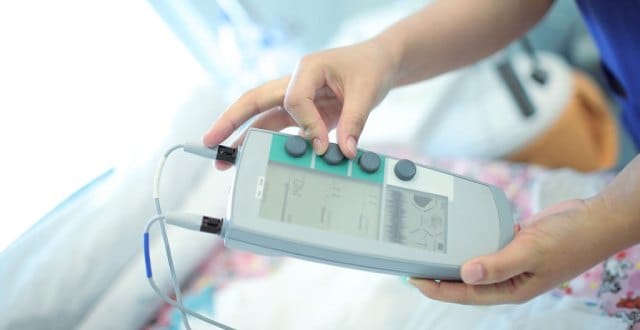
Figure 1: In-house pre-compliance testing and precision laser welding at Emerging Power's Hackensack, NJ facility.
Information Gain & Cost Reduction
3. Pre-Compliance Engineering: How Emerging Power Prevents Costly Certification Failures
One of the costliest mistakes OEM hardware developers make is submitting a non-validated prototype directly to an accredited third-party test lab (NRTL). Certification lab fees can run into thousands of dollars, but the true cost lies in project schedule delays: if a pack fails Test T.3 due to spot-weld fatigue or Test T.7 due to thermal MOSFET failure, the entire test cycle must be restarted from step one with fresh samples after redesign.
Key Engineering Bottlenecks in Custom Lithium Pack Testing
Mechanical Resonances in Cell Enclosures: Under T.3 vibration testing, plastic enclosures or poorly constrained cylindrical arrays (18650/21700) can experience mechanical resonance. This causes nickel ribbon tab tearing, leading to intermittent OCV loss or dead shorts.
Thermal Gradient Accumulation: During T.2 thermal cycling (-40°C to +72°C), differential thermal expansion between aluminum busbars, printed circuit boards (PCBs), and cell sleeves can exert severe mechanical shear on solder joints.
BMS Overcurrent Trip Delays: In T.5 short-circuit testing, if the BMS software-driven overcurrent protection is too slow, the transient energy dump can weld internal contacts or rupture protective cell vents before hardware protection triggers.
To solve these challenges, Emerging Power provides comprehensive Pre-Compliance Design Review & Testing Services. Our engineers conduct finite element thermal modeling, vibration isolation testing, and hardware-level BMS protective circuit validation before formal submittal. This methodology guarantees a 99.8% first-pass rate for accredited UN ST38.3 lab audits.
Need UN ST38.3 Certification for Your Custom Battery Pack?
Avoid delays and costly lab re-tests. Consult with Emerging Power's battery engineering experts for turn-key pre-compliance analysis, BMS validation, and rapid certification management.
Starting custom pack design with pre-certified, high-tier lithium cells significantly streamlines the overall UN ST38.3 certification path. Emerging Power maintains direct authorized relationships with tier-1 global cell manufacturers and provides fully customizable standard packs equipped with integrated smart BMS electronics.
Silicon-Anode Technology
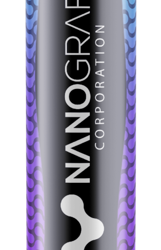
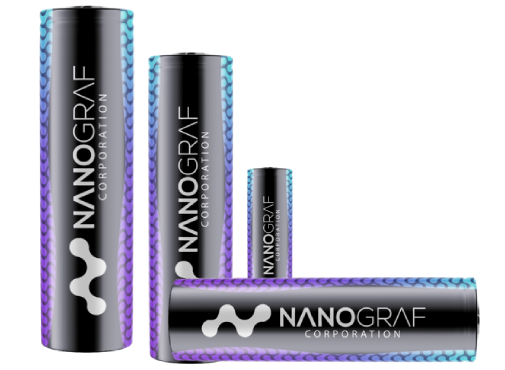
NanoGraf 18650-M38
Industry-leading energy density (3.8Ah in 18650 form factor). Ideal for military wearables, covert sensors, and UAVs requiring UN 38.3 transport compliance under extreme energy density constraints.
High-Power 21700
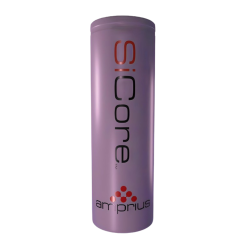
Amprius 6Ah 21700 Cell
Silicon nanowire cell offering high discharge capability combined with lightweight density. Passes full UN T.1-T.8 baseline safety protocols for mission-critical aerospace applications.
Authorized Assembly
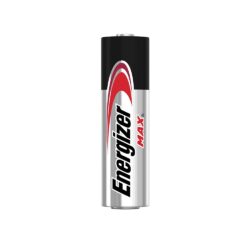
Energizer Industrial Primary Cells
Authorized primary cell assemblies (Lithium Iron Disulfide Li/FeS2 and Alkaline). Pre-tested primary solutions engineered for zero maintenance in wireless utility meters and asset trackers.
For OEMs seeking off-the-shelf smart solutions, our range of Smart RRC Standardized Battery Packs comes pre-certified to UN ST38.3, IEC 62133, and UL 2054, enabling immediate global distribution with zero NRE (Non-Recurring Engineering) development delay.
Industry Evolution & 2026–2030 Roadmap
5. Future Trends in Battery Testing & Global Procurement Compliance
The regulatory framework surrounding lithium energy storage is evolving rapidly. Procurement teams and engineering directors must anticipate upcoming shifts in compliance and transport laws to prevent future supply chain bottlenecks.
Key Development Trends Shaping UN ST38.3 & Battery Procurement:
Digital Transparency & Revision 8 Alignment (UN ST/SG/AC.10):
The UN Manual of Tests and Criteria continuously updates test protocols to keep pace with higher chemistry densities. Revision 8 places stricter requirements on mandatory Section 38.3.5 Test Summary Documents. Freight forwarders and customs enforcement agencies now require digital verification (QR-code linked database entries) of test summaries prior to loading container ships or cargo aircraft.
Integration with EU Battery Passport Directives (2026+ Mandate):
European Union environmental directives require full lifecycle traceability for all industrial and transport batteries. Future UN ST38.3 test data will be digitally embedded into the battery's unique state-of-health passport alongside carbon footprint metrics and material origin data.
Testing Challenges of Next-Generation Anodes (Silicon Nanowire & Solid State):
As ultra-high density cells like Amprius silicon nanowire and NanoGraf silicon-graphene anodes enter mass production, standard mechanical crush (T.6) and thermal stability (T.2) testing regimes must handle higher volumetric energy release. Pre-compliance thermal modeling is now mandatory to design enclosures that vent gases harmlessly without flame.
Re-Certification Threshold Strictness for Pack Modifications:
Under current rules, any significant change to a certified battery pack—such as substituting a cell model, changing BMS silicon components, or altering enclosure structural ribs—requires a formal re-certification assessment. Procurement teams are moving toward modular BMS architecture that isolates sub-component changes to avoid full multi-thousand-dollar re-testing cycles.
Medical Devices
Defense & Military
Drones & UAVs
Why Partner With Emerging Power
6. Enterprise Advantages: USA Manufacturing, Engineering Excellence & Turnkey Certification
Selecting the right battery manufacturing partner directly impacts your product's time-to-market, regulatory security, and brand reputation. Emerging Power provides an unmatched combination of domestic engineering capability, quality systems, and regulatory authority.
120+ Years ExpertiseDeep engineering leadership across complex chemistry chemistries and military specifications.
AS9100 & ISO 9001 CertifiedAerospace-grade quality management ensuring rigorous process repeatability and total lot traceability.
ITAR Registered ManufacturerFully authorized to design, assemble, and test defense-grade battery assemblies in the USA.
Authorized Pack AssemblerOfficial partner for Energizer, Amprius, and NanoGraf cells—guaranteeing genuine tier-1 supply chains.
From initial cell selection and custom smart BMS development (SMBus, I2C, CANbus protocols) to thermal dissipation enclosure design, automated spot welding, and final UN ST38.3 test management, Emerging Power is your single-source USA battery partner.
Frequently Asked Questions
7. UN ST38.3 Procurement & Compliance FAQ for Global Buyers
Below are authoritative answers to the most common questions hardware engineers, procurement officers, and supply chain managers ask regarding UN ST38.3 testing services:
UN ST38.3 certification refers to the actual laboratory execution of tests T.1 through T.8 described in the UN Manual of Tests and Criteria. The UN 38.3.5 Test Summary Report is the mandatory standardized legal document created upon successful test completion. Under global dangerous goods logistics laws, manufacturers must make this 10-point test summary document publicly accessible throughout the logistics chain to carriers, customs brokers, and transport personnel.
Typical testing duration at an accredited lab ranges between 3 to 5 weeks, depending on lab backlog and cycling schedule times (e.g., T.2 thermal cycling requires 10 full days; T.7/T.8 overcharge observation requires 7 days post-test). Sample size requirements depend on whether the unit is tested at the cell level, small pack level (≤ 12kg), or large pack level (> 12kg). Generally, 16 to 24 cell samples and 8 to 12 fully assembled battery pack samples (some fully charged, some discharged) are required for testing.
Yes, absolutely. Using pre-certified individual cells (such as UN-approved 18650 or 21700 cells) does not exempt the final assembled battery pack from UN ST38.3 certification. The finished pack includes multi-cell series/parallel welding connections, enclosure structural integrity, wiring harnesses, and a BMS. Tests T.1 through T.5 and T.7 assess the mechanical, thermal, and electrical safety of the overall pack configuration. However, starting with pre-certified cells simplifies T.6 (impact/crush) compliance and reduces overall failure risks.
Under UN ST38.3 guidelines, re-testing is mandatory if any of the following changes occur:
A change in initial cell model supplier or cathode/anode chemistry.
A change of more than 0.1g in lithium metal content or 20% in Watt-hour energy rating.
A structural enclosure redesign that alters physical protection or thermal dissipation.
A major alteration to the protective hardware BMS circuit topology.
UN ST38.3 is a non-negotiable global requirement for transportation safety across all transport modes. UL 2054 and IEC 62133 are safety standards evaluating operational user safety (electrical shock, fire safety during device operation) required for commercial device clearance in North America and Europe respectively. CE marking indicates overall compliance with European health, safety, and environmental protection standards. UN ST38.3 is a transport prerequisite, whereas IEC/UL standards govern end-product commercial saleability.
Yes, under strict regulatory provisions such as US DOT Special Permit or IATA Packing Instruction 910 (PI 910). Uncertified prototype or low-production run battery packs (≤ 100 units per year) may be transported for testing purposes provided they are packaged in specialized thermal-insulating, flame-proof outer packaging approved by dangerous goods regulations, shipped exclusively via cargo aircraft or ground transport.
Turnkey Compliance & Custom Assembly
Streamline Your UN ST38.3 Battery Testing & Manufacturing Today
Partner with Emerging Power to eliminate regulatory risks, optimize custom BMS design, and accelerate your international shipping timeline. Contact our engineering specialists now for a comprehensive quote and project evaluation.