Custom Alkaline Battery Packs: OEM Engineering, Procurement & Future Trends

A comprehensive B2B technical guide for OEM hardware engineers, procurement managers, and system integrators. Discover chemistry optimization, ruggedized assembly, global compliance, and market trends in custom primary alkaline battery systems.

Inquire Now
Engineering Overview

Why Custom Alkaline Battery Packs Remain Crucial for Mission-Critical OEMs

In an era dominated by rechargeable Lithium-ion chemistries, Custom Alkaline Battery Packs continue to be the primary power choice for mission-critical industrial, medical, military, and remote IoT applications. Unlike rechargeable batteries that require complex charging circuitry, active monitoring, and thermal containment, primary Zinc-Manganese Dioxide ($Zn/MnO_2$) alkaline battery packs provide immediate readiness, zero risk of thermal runaway, flat shelf-life degradation over a 5 to 10-year period, and complete transport compliance without stringent Dangerous Goods (DG) restrictions.

At Emerging Power, drawing upon over 120 years of collective battery engineering expertise at our Hackensack, New Jersey facility, we design, prototype, weld, and certify custom multi-cell alkaline battery assemblies tailored precisely to OEM voltage, discharge current, footprint, and environmental specifications.

AS9100 & ITAR Registered Aerospace & Defense level manufacturing purity
Zero Thermal Runaway Inherently safe aqueous electrolyte chemistry
Custom Wire & Connectors Molex, JST, AMP, and custom potting options
Authorized Cell Assembler Direct factory access to premium brand cells
Emerging Power custom battery pack assembly facility in Hackensack New Jersey
120+ Years Collective Expertise
Technical Deep Dive

Cell Chemistry, Discharge Profiles & Custom Pack Structural Design

Understanding the fundamental electrochemistry of alkaline cells is vital for OEM engineers specifying multi-cell packs. The overall electrochemical reaction within an alkaline cell is expressed as:

Zn(s) + 2MnO₂ (s) + H₂O (l) → ZnO (s) + 2MnOOH (s)   [Nominal Cell Open Circuit Voltage: 1.50V - 1.60V]

While standard single off-the-shelf AA or D cells operate nominally at 1.5 Volts, custom OEM devices frequently demand non-standard operating voltages (e.g., 4.5V, 6.0V, 9.0V, 12.0V, or 24.0V) and specialized discharge curves to maintain regulated operation under varying pulse current loads.

Key Mechanical and Electrical Customization Considerations

Building an industrial-grade primary battery pack involves far more than simply placing cells in a holder. Emerging Power’s engineering team addresses the following critical parameters during the Custom Alkaline Battery Pack design phase:

  • Resistance Spot-Welding vs. Soldering: Direct heat soldering onto standard battery caps can damage the internal separator and safety seals, leading to electrolyte leakage. We utilize micro-processor-controlled resistance spot welding with pure nickel tabs to ensure minimal contact resistance and high mechanical vibration resistance (MIL-STD-810G compliant).
  • Polyswitch & Fuse Protection: To prevent accidental external short-circuiting during maintenance or installation, packs are integrated with positive temperature coefficient (PTC) resettable fuses or inline thermal cutoffs.
  • Reverse Polarity & Blocking Diodes: When multiple series-parallel strings are connected, unequal discharge rates can cause cell reversal, leading to internal pressure buildup and outgassing. We integrate low-forward-voltage Schottky blocking diodes to eliminate reverse charging risks.
  • Encapsulation & Custom Shrink Packaging: Modules are encased in flame-retardant PVC/PET heat shrink or custom molded ABS/PC enclosures, potted with polyurethane or epoxy resins for IP67/IP68 submersion protection in harsh outdoor or marine environments.

Comparison Matrix: Custom Alkaline vs. Alternative Primary Battery Chemistries

Parameter Custom Alkaline ($Zn/MnO_2$) Lithium Thionyl Chloride ($Li-SOCl_2$) Lithium Manganese Dioxide ($Li-MnO_2$)
Nominal Cell Voltage 1.5V per cell 3.6V per cell 3.0V per cell
Energy Density (Wh/kg) 140 - 180 Wh/kg 400 - 650 Wh/kg 280 - 350 Wh/kg
Operating Temp Range -20°C to +55°C -55°C to +85°C -40°C to +70°C
Shelf Life / Self-Discharge 5-10 Years (~2%/yr self-discharge) 15-20 Years (<1%/yr self-discharge) 10-15 Years (~1%/yr self-discharge)
Transport Regulations Non-Restricted / Non-Dangerous Goods Class 9 Hazardous Material (UN3090) Class 9 Hazardous Material (UN3090)
Relative OEM Unit Cost Low / Highly Economical High Moderate to High
Product Portfolio

Custom Alkaline Battery Pack Types & OEM Recommendations

Emerging Power offers engineered custom primary alkaline configurations utilizing world-class brand cells from Energizer and authorized cell manufacturers.

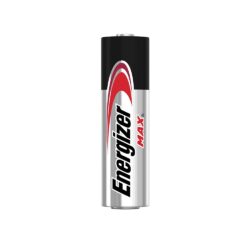
Energizer E91 AA Industrial Cell for Custom Battery Pack Assembly
Industrial Series

Custom AA (E91) High-Drain Alkaline Packs

Configured in 3S to 16S multi-row stick or block arrays. Ideal for medical telemetry, portable diagnostic devices, handheld scanners, and wireless security equipment.

Inquire Now
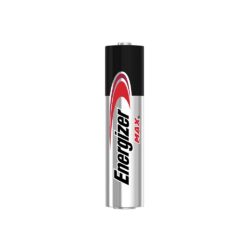
Energizer E92 AAA Cell for Compact OEM Custom Packs
Compact Series

Custom AAA (E92) Ultra-Compact Modules

Lightweight low-profile battery configurations designed for space-constrained IoT node sensors, wearable medical monitors, and military field transmitters.

Inquire Now
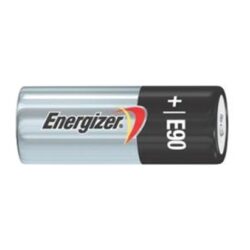
Energizer E90 N-Cell industrial battery for specialized custom power packs
Specialized Series

Custom N-Cell (E90) & 9V Heavy-Duty Packs

Engineered for high-reliability applications including remote pipeline monitors, industrial gas detectors, and emergency lighting backup systems.

Inquire Now
Industry Applications

Primary Markets Utilizing Custom Alkaline Packs

Delivering reliable power across critical sectors where uncompromised shelf readiness and unassisted safety are imperative.

Custom alkaline battery packs for surgical tools and medical instruments

Medical Equipment

Infusion pumps, AED backup, surgical instruments, and ambulatory diagnostic tools.

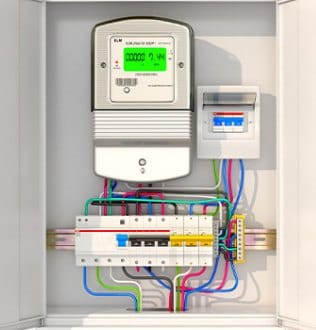
Battery packs for utility smart meters and industrial wireless telemetry

Smart Meters & IoT

Gas, water, and electric smart meters, remote pressure transducers, and environmental sensors.

Custom battery packs for logistics asset tracking and GPS transponders

Asset Tracking & GPS

Shipping container tracking, cold-chain monitoring beacons, and long-term fleet tracking.

ITAR compliant ruggedized custom military battery packs

Military & Defense

Field tactical radios, night-vision devices, target illuminators, and survival equipment.

Custom primary battery packs for internet of things sensors

Industrial Automation

Automated valve controllers, factory robotics backup, and wireless vibration monitoring.

High power density primary battery packs for UAV beacons

UAV & Aerospace Beacons

Emergency locator transmitters (ELT), flight data recovery beacons, and auxiliary avionics backup.

Future Industry Horizon

As global supply chains become more sophisticated and AI-driven procurement tools assist engineering teams in making data-backed sourcing choices, several macro trends are reshaping how OEM buyers procure Custom Alkaline Battery Packs:

1. Elimination of Hazardous Trace Elements & Zero-Mercury Compliance

Strict European REACH/RoHS directives and global environmental mandates have completely eliminated mercury, cadmium, and lead from high-grade industrial alkaline formulations. Modern custom alkaline battery packs are 100% landfill-safe or readily recyclable via standard municipal primary battery collection programs, significantly reducing OEM extended producer responsibility (EPR) compliance costs.

2. Nanostructured Manganese Cathodes & Extended Pulse Performance

Traditional alkaline batteries suffer from rapid voltage drop under sustained heavy discharge currents. Advanced manufacturing techniques—such as utilizing ultra-pure, high-surface-area electrolytic manganese dioxide (EMD) and conductive carbon nanotube additives—have increased energy density by up to 18% under high-pulse loads (e.g., NB-IoT and LTE-M RF transmission bursts).

3. Smart Primary Pack Telemetry & Integrated State-of-Health (SoH)

Historically, primary alkaline packs lacked internal monitoring. Next-generation custom alkaline packs engineered by Emerging Power can incorporate low-quiescent-current micro-fuel-gauges and Dallas/Maxim 1-Wire identification chips. This enables host devices to read accurate remaining runtime, ambient temperature history, and authenticity security codes without draining the primary cell capacity.

4. Reshoring and Nearshoring of Battery Module Assembly

Geopolitical volatility and ocean freight uncertainties have compelled North American and European OEMs to transition away from overseas battery pack assembly. Partnering with a US-based manufacturer like Emerging Power (headquartered in Hackensack, NJ) guarantees rapid prototype turnarounds, compliant ITAR defense manufacturing, and streamlined logistics under domestic purchasing regulations (e.g., Buy American Act).


Why Partner With Us

Emerging Power Enterprise Advantages & Manufacturing Excellence

Selecting the right custom battery assembler is critical to avoiding device field failures, costly product recalls, and logistics delays. Emerging Power stands out as an industry leader through our uncompromising adherence to quality, safety, and customer-centric engineering:

  • Over 120 Years of Combined Engineering Leadership: Our multidisciplinary engineering staff brings deep expertise across electrochemistry, mechanical enclosure design, PCB engineering, and regulatory approval processes.
  • Authorized Assembler Status: We hold direct relationships with premier tier-1 cell manufacturers (including Energizer, NanoGraf, and Amprius), assuring OEMs of genuine factory-fresh cell lots with complete traceability.
  • Comprehensive Regulatory & Testing Services: Complete in-house testing support for UN 38.3 transport safety, IEC 62133, UL 2054, CE, and MIL-STD-810G environmental conditioning (altitude, thermal shock, mechanical drop).
  • Flexible Minimum Order Quantities (MOQs): From low-volume rapid prototyping (NPI) to high-volume automated production runs, we scale seamlessly with your product lifecycle.
Inquire Now

Request an OEM Engineering Consultation

Need a custom voltage array, specialized connector, or custom outer housing for your primary alkaline battery application? Speak directly with our Hackensack, NJ engineering department.

  • Direct CAD & 3D SolidWorks support
  • Custom wire harness & pinout assembly
  • Turnkey prototype delivery in weeks
Inquire Now
OEM Buyer FAQ

Frequently Asked Questions: Custom Alkaline Battery Sourcing

Comprehensive technical and commercial answers to frequent buyer and engineer inquiries on custom alkaline battery pack design.

Q1: When should an engineer choose a Custom Alkaline Battery Pack over Lithium-ion or Li-SOCl2?

Custom Alkaline Battery Packs are the ideal choice when your device requires: (1) Zero transport hazard restrictions (air cargo fully allowed without UN 38.3 testing/DG fees), (2) Immediate off-the-shelf user replacement capability, (3) Inherent chemical safety with non-flammable aqueous electrolytes, and (4) Low unit costs for high-volume commercial or medical disposables where rechargeable systems would impose unnecessary overhead.

Q2: How does Emerging Power prevent outgassing and leakage in sealed alkaline battery assemblies?

Alkaline cells naturally generate trace hydrogen gas under heavy discharge or cell reversal conditions. Emerging Power engineers custom packs with pressure-relief vents, gas-permeable hydrophobic membranes (e.g., PTFE vents), low-profile expansion chambers, and internal reverse-current blocking diodes. These features guarantee structural integrity and prevent moisture ingress while allowing micro-gas escaping without electrolyte leakage.

Q3: What cell brands and sizes can be integrated into custom primary alkaline packs?

As an authorized assembler, Emerging Power designs packs utilizing standard cylindrical cell sizes—including AA (E91), AAA (E92), C (E93), D (E95), 9V (6LR61), and N-cells (E90)—sourced directly from premier tier-1 manufacturers such as Energizer. We also assemble specialized multi-cell prismatics and button/coin stack configurations.

Q4: Are there shipping restrictions for shipping Custom Alkaline Battery Packs internationally?

No. Alkaline batteries are classified as "Dry Cell Batteries" under IATA, DOT, and IMDG regulations. They are non-hazardous, non-restricted, and can be transported via standard passenger and cargo aircraft, ocean container ships, and ground transport worldwide without dangerous goods surcharges or complex Class 9 shipping documentation.

Q5: How does ambient temperature affect custom primary alkaline battery performance?

Alkaline battery capacity is temperature-dependent. Optimum performance occurs between +15°C to +25°C. At sub-zero temperatures (-20°C), internal ion mobility decreases, reducing deliverable capacity to approximately 20-30% of nominal rating. For extreme temperature operation (-40°C to +60°C), Emerging Power can assist engineers in specifying high-rate cells or evaluating alternative primary chemistries such as Lithium Iron Disulfide ($Li/FeS_2$) or Lithium Thionyl Chloride ($Li-SOCl_2$).

Q6: What is the typical NRE cost, turnaround time, and sample lead time for custom pack design?

Because alkaline packs do not require complex custom protection PCBs (BMS), Non-Recurring Engineering (NRE) costs are minimal compared to Li-ion designs. Prototype 3D-printed enclosures and welded sample assemblies can typically be delivered within 2 to 4 weeks following final CAD and wiring approval, with mass production scaling shortly thereafter.

Start Your Engineering Project

Ready to Design Your Custom Alkaline Battery Pack?

Partner with Emerging Power for uncompromised reliability, precision welding, and US-based engineering excellence. Contact our technical sales engineering team today to review your electrical schematic and dimensional requirements.

Inquire Now
Direct Phone: (201) 441-3590
Emerging Power Custom Battery Pack Engineering Team