
Overcoming the Airborne Energy Density Bottleneck
In unmanned aerial vehicle (UAV) systems design, energy gravimetric density ($\text{Wh/kg}$) is the single most critical variable dictating flight endurance, payload payload capacity, and mission radius. For over a decade, standard off-the-shelf Lithium Polymer (LiPo) soft pouch cells were the default choice for drone builders. However, as defense platforms transition to long-range intelligence, surveillance, and reconnaissance (ISR) and commercial UAVs expand into beyond visual line of sight (BVLOS) logistics, conventional LiPo architectures present catastrophic failure points.
Standard commercial LiPo batteries exhibit significant volumetric swelling under rapid discharge, suffer from accelerated thermal degradation above 45°C, and suffer short cycle life (typically under 150-200 cycles). Emerging Power's custom Drone and UAV Battery Packs solve these fundamental bottlenecks by pairing ultra-high-density silicon-anode and high-nickel cylindrical and pouch chemistry cells with proprietary Battery Management Systems (BMS) and aerospace-grade structural enclosures.
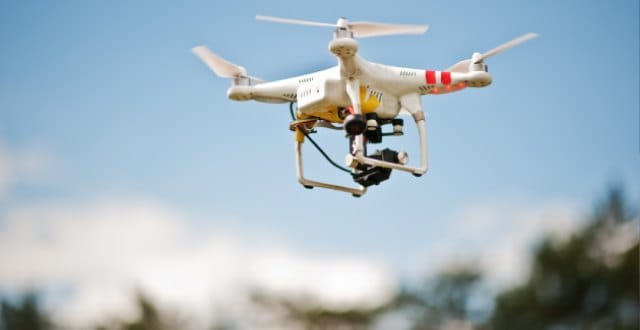
Chemistry & Architecture Matrix for UAV Flight Missions
Designing custom power packs for unmanned aircraft requires matching specific mission profiles—such as vertical takeoff and landing (VTOL) hover bursts vs. fixed-wing cruising—with optimized electrochemical cell structures and cell tab interconnects.
| Battery Chemistry / Cell Architecture | Gravimetric Density (Wh/kg) | Volumetric Density (Wh/L) | Discharge C-Rate (Continuous/Peak) | Optimal UAV Flight Mission Profile |
|---|---|---|---|---|
| Amprius Silicon-Nanowire Anode | 400 – 450 Wh/kg | 1150 Wh/L | 5C / 10C | Extreme Long-Endurance High-Altitude ISR Fixed-Wing UAVs |
| NanoGraf Silicon-Graphene 18650-M38 | 285 – 310 Wh/kg | 810 Wh/L | 3C / 8C | Tactical Military Reconnaissance & Sub-Zero Arctic Operations |
| High-Nickel 21700 NMC Cylindrical | 260 – 280 Wh/kg | 730 Wh/L | 8C / 15C | BVLOS Cargo Delivery Drones & Inspection Multirotors |
| Heavy-Duty LiFePO4 (LFP) Custom Modules | 160 – 180 Wh/kg | 420 Wh/L | 1C / 3C | Tethered Surveillance Drones & Ground Support Equipment |
Custom Product Recommendations for Tactical & Commercial UAV Applications
As an authorized assembler for world-leading cell developers including Amprius, NanoGraf, and Energizer, Emerging Power translates breakthrough electrochemical research into ruggedized, production-ready custom battery packs.
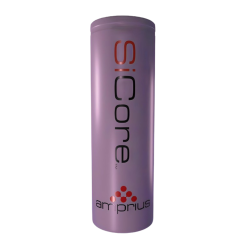 Amprius Silicon Anode
Ultra-Lightweight Silicon-Anode UAV Packs
Leveraging Amprius 21700 & pouch cells with 100% silicon nanowire anodes, these customized packs provide up to a 100% flight-time extension over traditional lithium-ion packs. Ideal for long-range surveillance drones requiring low structural weight.
 NanoGraf Defense Grade
NanoGraf 18650-M38 Tactical UAV Packs
Built with US-made NanoGraf silicon-graphene 18650 cells. Designed specifically for military tactical UAVs operating under extreme climatic conditions (-30°C to +60°C) with high pulse discharge capabilities.
 Smart Mavlink / CANbus
Dual-Redundant Smart BMS UAV Battery Modules
Fully integrated smart packs built around custom-designed BMS printed circuit board assemblies (PCBAs). Features CANbus, SMBus, and Mavlink telemetry integration for real-time State-of-Charge (SoC) and State-of-Health (SoH) airborne monitoring.
Global Procurement Trends in Commercial & Military UAV Battery Supply Chains (2026–2030)
Global defense agencies, OEM aircraft engineering leads, and commercial drone fleet managers face rapidly evolving regulatory and technical demands. When procuring Drone and UAV Battery Packs, strategic buyers must navigate four dominant industry macro-trends:
1. Decoupling from Unfriendly Supply Chains & NDAA / ITAR Compliance
Following legislative mandates such as the US National Defense Authorization Act (NDAA) and European defense supply chain security frameworks, Tier-1 UAV manufacturers are systematically replacing non-compliant Asian battery packs. Procurement strategies now prioritize ITAR-registered US manufacturers capable of sourcing domestic silicon-anode materials and localized cell assembly to ensure total supply chain traceability.
2. Transition from Pouch LiPo to Structural Cylindrical & Solid-State Architectures
While soft pouch LiPo cells provided low weight, their mechanical fragility and swelling risk have driven OEMs toward structural battery designs. Modern procurement specs demand rigid 21700 or customized prismatic assemblies integrated with phase-change composite materials (PCM) that double as semi-load-bearing airframe structures, minimizing parasitic weight.
3. High-Bandwidth Telemetry and Predictive Maintenance via Edge BMS Analytics
Advanced UAV fleets require real-time cell-level diagnostics. Procurement managers now mandate SMBus 1.1, I2C, and CANbus/Mavlink-compatible smart BMS architectures. Modern systems log cell voltage variance, internal resistance degradation, and thermal profiles across hundreds of flight hours, allowing AI flight controllers to execute automated safe-return-to-base (RTH) protocols before cell failure occurs.
4. Fast-Charging Protocols for Automated Swapping & Continuous Operations
In autonomous industrial inspections and urban air mobility (UAM) logistics, ground downtime directly degrades fleet ROI. Procurement managers are favoring battery chemistry configurations that support continuous 3C to 5C rapid charging without lithium plating, alongside custom hot-swappable latching mechanisms rated for thousands of automated mechanical insertions.
Technological Development Trends Shaping Next-Generation UAV Power Solutions
To achieve the ambitious goals of 2-hour+ multirotor hover endurance and 12-hour+ fixed-wing patrol missions, battery engineering is undergoing three critical technical evolutions:
- Silicon-Nanowire Anode Integration: Replacing graphitic carbon anodes with pure silicon structures increases active lithium storage capacity by up to ten times theoretically. Commercial cells from Amprius achieve true gravimetric energy densities exceeding 400 Wh/kg at the pack level.
- Advanced Thermal Management Aerogels: High C-rate discharges during VTOL takeoff generate intense localized heat ($I^2R$ losses). Utilizing ultra-thin silica aerogel insulation sheets between series cell groups prevents thermal runaway propagation from adjacent compromised cells.
- Cold-Climate Self-Heating Chemistries: At altitudes above 10,000 feet or during winter operations, internal battery resistance spikes, dropping output voltage. Integrated low-mass heating elements powered by smart BMS firmware pre-condition cell cores to optimal +20°C temperatures prior to arming motors.
Need Custom Drone and UAV Battery Engineering Support?
Speak directly with our US-based battery engineering specialists. We offer complete custom pack development—from 3D mechanical modeling and smart BMS programming to UN 38.3 & DO-160 flight safety testing.
Why Leading Defense & Commercial OEM Developers Trust Emerging Power
120+ Years of Collective Engineering Leadership
With over a century of combined engineering knowledge, Emerging Power's technical team has designed hundreds of mission-critical battery solutions. Our Hackensack, New Jersey facility houses advanced electronic design labs, 3D prototyping suites, and automated spot-welding assembly lines.
ITAR Registered & AS9100 / ISO Certified Quality
We operate under strict AS9100D aerospace and ISO 9001:2015 quality management systems. As an ITAR-registered manufacturer, we guarantee military-grade compliance, security cleared production lines, and complete component traceability.
Authorized Assembler for Tier-1 Cell Manufacturers
Emerging Power maintains direct authorized relationships with industry pioneers including Amprius Technologies, NanoGraf Corporation, and Energizer. This gives our UAV OEM clients priority access to cutting-edge cell chemistry allocations.
Turnkey Compliance & Environmental Flight Testing
From initial cell screening to UN 38.3 transport certification, DO-160 airborne environment testing, and IEC 62133 safety compliance, our engineering staff manages the complete regulatory verification cycle for rapid product deployment.



Frequently Asked Questions (FAQ) by Global UAV Procurement & Engineering Teams
Q1: How do silicon-anode cells improve UAV flight time compared to standard 18650/21700 lithium-ion cells?
Traditional lithium-ion cells utilize graphite anodes with a theoretical capacity limit of ~372 mAh/g. Next-generation silicon-anode cells (such as Amprius technologies) utilize silicon nanostructures offering theoretical capacities up to 4,200 mAh/g. At the battery pack level, this boosts energy gravimetric density from standard 240–260 Wh/kg up to 400–450 Wh/kg. For an unmanned aircraft, reducing battery mass by 35%–50% for equivalent total energy yields up to double the airborne flight endurance or allows heavier payload sensor integration.
Q2: What BMS communication protocols are required to integrate custom battery packs with PX4, Pixhawk, or ArduPilot flight controllers?
Modern military and commercial UAV flight controllers rely on precise telemetry data to calculate battery remaining distance and dynamic voltage sag under throttle spikes. Emerging Power custom engineers Smart BMS assemblies supporting SMBus, I2C, and CANbus protocols utilizing standard Mavlink smart battery messaging. This provides real-time transmission of individual cell voltages, pack temperature, remaining capacity percentage (SoC), cycle count, and state-of-health (SoH) directly to ground control stations (GCS).
Q3: How does Emerging Power ensure ITAR compliance and NDAA supply chain security for defense UAV applications?
Emerging Power is fully ITAR-registered with the US Department of State. All custom military UAV pack designs, engineering files, and assembly processes are restricted to authorized US personnel within secure ITAR-compliant facilities in Hackensack, New Jersey. Furthermore, we maintain direct domestic component supply chains for cell sourcing, custom PCB fabrication, and housing production, ensuring full compliance with National Defense Authorization Act (NDAA) sourcing mandates.
Q4: What safety certifications (UN 38.3, DO-160, IEC 62133) are mandatory for shipping and operating industrial drone batteries?
For commercial shipping via air or ground transport, all lithium-based battery packs must pass UN ST/SG/AC.10/11/Rev.7 Section 38.3 (UN 38.3) testing, which includes altitude simulation, thermal shock, vibration, impact, external short circuit, and forced discharge test routines. For airborne environmental compliance in defense and civil aviation, packs frequently require testing under RTCA DO-160 standards for shock, vibration, explosion proofing, and electromagnetic interference (EMI). Emerging Power manages complete testing protocols and certification documentation.
Q5: How do sub-zero environmental temperatures affect UAV battery performance, and how does custom thermal design mitigate degradation?
Sub-zero operating environments (-10°C to -40°C) cause a severe rise in internal electrolyte viscosity and internal resistance, leading to immediate voltage sag, reduced usable capacity, and potential battery shutdown during high-current takeoff maneuvers. Emerging Power mitigates low-temperature degradation using dual-tier engineering: (1) integrating high-performing low-temperature cells like NanoGraf 18650-M38, and (2) incorporating embedded BMS-controlled flexible polyimide heating elements and vacuum insulation aerogels that pre-heat cells using minimal energy prior to flight arming.
Q6: What is the optimal balance between continuous C-rate discharge capability and gravimetric energy density (Wh/kg) for multirotor vs. fixed-wing drones?
Multirotor UAVs require high continuous power draw (up to 5C–10C) and high peak burst discharge (up to 20C) for vertical lift and stability in gusty winds, requiring cells optimized for lower internal resistance ($R_{i}$) at a slight trade-off in energy density (260–300 Wh/kg). Fixed-wing UAVs, conversely, require high energy only during launch, hovering around 1C–2C continuous cruise draw; they benefit most from max-energy silicon-anode cells (380–450 Wh/kg). Emerging Power designs hybrid cell matrix configurations or custom chemistry selections optimized specifically for your platform's power draw profile.
Q7: Can Emerging Power design custom smart enclosures that function as structural load-bearing components of the UAV airframe?
Yes. To eliminate redundant structural weight, our mechanical engineering team utilizes carbon fiber reinforced polymers, high-impact polycarbonate alloys, and CNC-machined lightweight aluminum frames. These enclosures incorporate integrated mounting rails, IP67-rated weather seals, fast-release mechanical latches, and structural ribs engineered to absorb structural landing forces while housing smart BMS interconnects.
Accelerate Your UAV Platform Development Today
Partner with America's leading custom battery pack manufacturer. From concept feasibility and thermal simulation to ITAR-compliant production, Emerging Power delivers mission-critical energy solutions tailored to your aircraft.