
1. The Engineering Paradigm of Custom Li-Polymer Battery Packs
In modern electronic device engineering, hardware developers are continuously tasked with packing greater processing capability, high-bandwidth wireless communication, and multi-sensor suites into increasingly constrained physical envelopes. Traditional cylindrical battery form factors (such as 18650 or 21700 cells) enforce rigid internal geometric constraints that often force design engineers to compromise on ergonomics, volumetric efficiency, or total energy capacity.
Custom Li-Polymer Battery Packs (Lithium-ion Polymer, or LiPo) solve this architectural bottleneck by substituting hard metal pressure vessels with flexible, laminated aluminum foil pouch packaging. This construction allows for tailored prismatic geometries, ultra-thin cell profiles down to 0.4mm thickness, and customized multi-cell stacked configurations that maximize usable internal volume in medical devices, military tactical gear, aerospace platforms, IoT sensors, and high-drain unmanned aerial vehicles (UAVs).
Information Gain Key Takeaway for OEM Engineers
Unlike off-the-shelf pouch cells that suffer from high swelling ratios, unvetted separator quality, and unreliable cycle degradation, a fully engineered Custom Li-Polymer Battery Pack integrates custom chemical slurry formulation, mechanically constrained cell stack housing, precision resistance welding, and a bespoke Smart Battery Management System (BMS) to deliver maximum energy density alongside bulletproof operational safety.
2. Emerging Power Enterprise Advantages & Manufacturing Heritage
Emerging Power stands as a premier USA-based custom battery pack manufacturer and authorized battery assembler. Headquartered in Hackensack, New Jersey, our organization brings together over 120 years of collective engineering expertise across electrochemical chemistry, mechanical enclosure design, firmware development, and automated assembly testing.
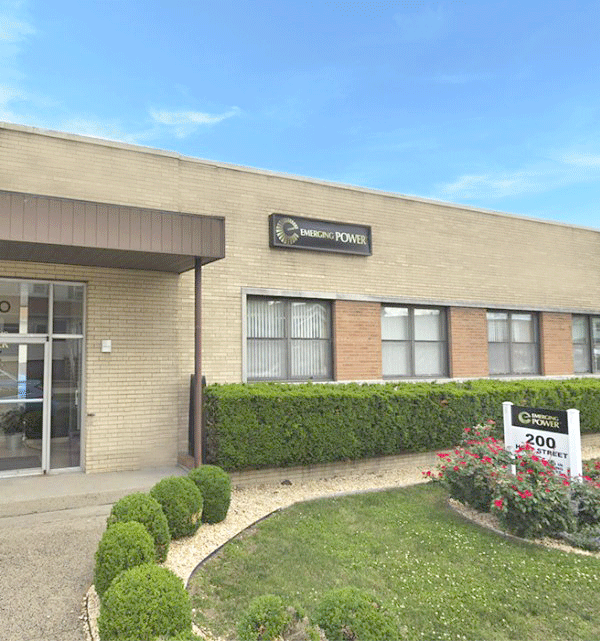
Figure 1: Emerging Power state-of-the-art USA manufacturing facility equipped for high-volume custom battery assembly, automated testing, and ITAR-registered defense projects.
Global Original Equipment Manufacturers (OEMs) and Contract Manufacturers (CMs) rely on Emerging Power because our capabilities span far beyond simple cell wiring. We deliver complete, turn-key power solutions backed by rigorous quality management systems:
AS9100 & ISO 9001 Certified
Adhering to strict aerospace and defense quality control standards throughout cell qualification, assembly, and final acceptance testing.
ITAR Registered Manufacturer
Fully compliant with US State Department Directorate of Defense Trade Controls for defense, tactical radio, and drone power platforms.
Custom Smart BMS Engineering
In-house PCB hardware and firmware design utilizing Fuel Gauge ICs, SMBus, I2C, CANBus, and custom encryption algorithms.
Mechanical & Thermal Engineering
3D CAD housing design, thermal swelling mitigation buffers, potting encapsulation, and rugged shock/vibration dampening.
In-House Regulatory Testing
Turnkey compliance facilitation for UN 38.3 transport safety, UL 2054, UL 1642, IEC 62133, CE, and RoHS standards.
Authorized Assembler Partner
Direct authorized partnerships with tier-1 global cell manufacturers (including Energizer, Amprius, and NanoGraf) guaranteeing authentic cell chemistry.
Our engineering methodology ensures that your custom Li-Polymer battery pack transitions seamlessly from initial prototype modeling (using 3D-printed enclosures and fast-turn PCB spinning) to automated full-scale high-volume manufacturing with total traceability.
Custom Configurations3. Recommended Custom Li-Polymer Battery Pack Configurations
Depending on your target market, operational environmental conditions, and load discharge profiles, custom lithium-polymer packs must be engineered with specific cathode/anode slurry ratios, internal tab geometries, and enclosure dampening. Below are four primary application-tailored Li-Polymer architectures engineered by Emerging Power:

1. Ultra-Thin Medical Grade LiPo Packs
Designed for wearable patient monitors, surgical instruments, and portable diagnostic units. Features ultra-low self-discharge rates, medical-grade ultrasonic tab welding, redundant over-voltage protection circuits, and ISO 13485 design compliance.
- Thickness: 0.4mm to 3.0mm profiles
- Integrated SMBus v1.1 telemetry
- Hermetically sealed medical outer casings

2. High-Rate Discharge Military & UAV Packs
Engineered for tactical communication systems, defense UAVs, and robotic platforms requiring massive burst currents (20C to 50C continuous discharge). Built with low-resistance nickel-copper tabs and flame-retardant polycarbonate housings.
- Continuous C-Rates up to 50C
- MIL-STD-810H environmental ruggedization
- ITAR compliant USA sourcing
3. Long-Life IoT & Asset Tracking LiPo Solutions
Optimized for low-power wide-area network (LPWAN) sensors, GPS trackers, and smart utility meters requiring multi-year operational shelf life. Utilizes ultra-stable electrolyte formulations and deep-sleep BMS logic to minimize quiescent drain.
- Quiescent current < 5µA
- Extended wide-temperature electrolyte range (-20°C to +60°C)
- Conformal coated PCB protection

4. Curved & Custom Form-Factor Micro Packs
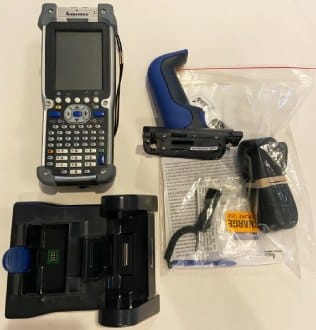
Uniquely shaped pouch cells engineered to fit around curved wearables, smart helmets, and ergonomic hand-held scanners. Maximizes volumetric capacity by occupying non-rectangular chassis spaces that traditional cells leave empty.
- Curved, polygonal, and ring geometries
- High gravimetric energy density (>240 Wh/kg)
- Custom connector wire harness integration
Electrochemical Performance Benchmark: Cell Chemistry Comparison
Selecting the correct lithium-based chemistry is a critical decision during preliminary system architecture. The table below illustrates how Custom Li-Polymer Packs compare against standard Lithium-Ion cylindrical cells and Lithium Iron Phosphate (LFP) pouch cells:
| Performance Metric | Custom Li-Polymer (LiPo) | Cylindrical Li-Ion (18650/21700) | Lithium Iron Phosphate (LFP) |
|---|---|---|---|
| Gravimetric Energy Density | 230 – 280 Wh/kg (High) | 220 – 300 Wh/kg (Very High) | 140 – 180 Wh/kg (Moderate) |
| Volumetric Flexibility | Exceptional (Custom prismatic/curved) | Fixed rigid cylinder dimensions | Moderate (Prismatic or pouch) |
| Minimum Pack Thickness | 0.4 mm | 18.0 mm (Fixed diameter) | 3.0 mm |
| Continuous C-Rate Discharge | Up to 50C (High Drain) | Typically 3C – 10C | Up to 30C |
| Weight Reduction vs Metal Cans | ~20% Lighter (Aluminum foil) | Baseline (Steel/Aluminum cans) | ~10% Lighter |
| Nominal Cell Voltage | 3.7V – 3.85V (High Voltage LiPo) | 3.6V – 3.7V | 3.2V |
| Swelling Tolerance Requirement | Requires dynamic expansion gap | Rigid internal pressure valve | Requires expansion gap |
4. Future Procurement Trends for Custom Li-Polymer Battery Packs (2025–2035)
As global supply chains navigate geopolitical realignments, stringent environmental regulations, and rapidly evolving AI hardware demands, procurement managers must adapt their battery sourcing strategies. Based on research from our supply chain analytics team, here are five crucial procurement trends shaping the Li-Polymer market:
1. Nearshoring & Dual-Sourcing Battery Assembly
Relying on a single overseas battery supplier has exposed OEMs to tariff risks, unpredictable shipping delays, and intellectual property vulnerabilities. Procurement strategies are shifting heavily toward dual-sourcing models where cell production is coupled with domestic, North American battery pack assembly. Emerging Power’s New Jersey manufacturing footprint provides OEMs with an ITAR-registered, onshore assembly hub that guarantees supply chain continuity and immediate engineering access.
2. Silicon-Anode Integration for 30%+ Energy Density Spikes
Traditional Li-Polymer cells utilize graphite anodes, reaching a theoretical capacity limit of ~372 mAh/g. The industry is rapidly adopting silicon-composite and pure silicon nanowire anodes (such as technologies developed by Amprius and NanoGraf). These next-generation cells boost gravimetric energy densities beyond 400 Wh/kg, enabling custom LiPo packs to deliver dramatically longer runtimes without increasing device dimensions.
3. Stringent Environmental & Lifecycle Traceability (Battery Passports)
Upcoming EU Regulations and US ESG guidelines mandate full supply chain transparency for industrial and commercial batteries. Procurement managers must now audit cell chemistry origin, conflict mineral compliance (cobalt, nickel, lithium), carbon footprint metrics, and end-of-life recyclability. Partnering with established assemblers like Emerging Power guarantees verified supply chain documentation and RoHS/REACH compliance.
4. Total Cost of Ownership (TCO) vs. Initial Cell Purchase Price
Savvy procurement teams no longer select battery vendors solely based on initial unit cell cost. Unvetted low-cost cells often suffer from early capacity degradation, high warranty return rates, and catastrophic failure risks. Investing in a high-grade custom Li-Polymer battery pack—engineered with premium separators, matched cell impedances, and intelligent BMS balancing—dramatically lowers the long-term Total Cost of Ownership by reducing field failures and extending product service life.
R&D & Future Tech5. Future Technological Development Trends in Li-Polymer Architecture
The landscape of solid-state electrochemistry and smart battery management is advancing at a breathtaking pace. Emerging Power’s R&D team tracks and integrates several key technological breakthroughs:
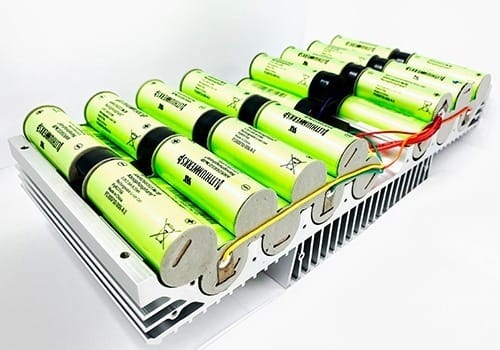
Figure 2: Electrochemical research and smart BMS testing drive the next generation of ultra-reliable Li-Polymer power packs.
A. Semi-Solid and All-Solid-State Polymer Electrolytes
The ultimate evolution of Li-Polymer technology lies in replacing liquid organic electrolytes with gel-polymer matrixes and non-flammable solid ceramic-polymer hybrid electrolytes. Solid-state LiPo packs eliminate leakage risks, drastically suppress lithium dendrite formation, and allow safe operation across extreme temperature windows (-40°C to +85°C).
B. AI-Driven Edge BMS & Predictive Health Analytics
Modern BMS hardware is transitioning from static threshold monitoring to dynamic edge analytics. By integrating machine learning algorithms into the Smart BMS, custom battery packs can analyze real-time impedance spectroscopy, predict thermal runaway risks hours before occurrence, dynamically adjust charge curves based on user usage patterns, and wirelessly transmit State of Health (SoH) diagnostics via Bluetooth Low Energy (BLE) or cellular IoT modules.
C. High-Voltage Cathode Formulations (4.45V to 4.50V)
Standard lithium-polymer cells operate at a upper charge cutoff voltage of 4.20V. Advanced cathode doping (utilizing nickel-manganese-cobalt chemistry with surface oxide coatings) elevates upper charge limits to 4.45V and 4.50V. This voltage boost increases usable volumetric capacity by 15% to 20% within the exact same mechanical footprint.
Frequently Asked Questions6. Frequently Asked Questions (FAQ) — Custom Li-Polymer Sourcing & Engineering
To assist procurement managers, quality assurance specialists, and lead electrical engineers, our senior engineering team has answered the most critical technical questions regarding custom lithium-polymer battery development:
Lithium-polymer pouch cells inherently expand by approximately 5% to 10% over their operational cycle life due to electrode lithium intercalation stress and trace gas evolution during repeated thermal cycling.
Emerging Power mitigates swelling through a three-tier engineering approach: (1) Integrating high-resilience compressible foam padding (such as Rogers PORON®) between stacked pouch cells; (2) Designing calculated mechanical expansion gaps within the rigid outer housing (polycarbonate, ABS, or aluminum); and (3) Implementing precise BMS charge algorithms that prevent over-voltage and high-temperature charging states that accelerate gas generation.
Timeline and Non-Recurring Engineering (NRE) costs vary depending on pack complexity, custom BMS requirements, and tooling needed:
- Phase 1: Concept & Architectural Engineering (Weeks 1–3): Electrical schematic creation, thermal modeling, 3D CAD design, and component selection.
- Phase 2: Prototype Fabrication (Weeks 4–7): Quick-turn 3D-printed housings, fast-spin BMS PCBs, cell pouch sourcing, and manual prototype assembly.
- Phase 3: Testing & Regulatory Certification (Weeks 8–14): UN 38.3 transport testing, UL 2054 / IEC 62133 safety testing, and environmental shock/vibration qualification.
NRE costs typically cover custom injection mold tooling, BMS PCB mask creation, and certification testing fees. Emerging Power works closely with OEMs to optimize design-for-manufacturability (DFM) to minimize NRE expenditure.
Emerging Power engineers smart BMS architectures supporting standard industrial and commercial communication interfaces:
- SMBus (Smart Battery Bus) / I2C: Standard 2-wire protocol widely used in medical devices and laptops for reporting State of Charge (SoC %), voltage, current, cycle count, and temperature.
- CANBus (Controller Area Network) / CANopen: Ruggedized protocol for military vehicles, industrial robotics, UAV drones, and high-noise environments.
- HDQ / Single-Wire: Compact protocol ideal for ultra-small battery packs with limited pin counts.
- Wireless BLE (Bluetooth Low Energy): Enables smartphone apps or central IoT gateways to monitor battery metrics remotely without physical telemetry wiring.
Global commercial distribution requires several key safety certifications:
- UN 38.3 (ST/SG/AC.10/11/Rev.7): Mandatory international standard for air, sea, and ground transport safety (includes altitude, thermal, vibration, shock, external short circuit, and impact testing).
- IEC 62133-2: Global standard for safety requirements of sealed portable secondary lithium cells and packs for handheld consumer and medical devices.
- UL 2054 / UL 1642: North American safety standards mandated by many retail brands and industrial OEMs.
- RoHS & REACH: Environmental compliance certifying the absence of hazardous substances (lead, cadmium, mercury, PBBs).
Emerging Power handles the entire certification workflow from test plan design to submission with accredited NRTL testing laboratories.
Standard commercial Li-Polymer packs deliver between 500 to 800 charge-discharge cycles before total capacity degrades to 80% of original rating. However, under optimized BMS management (such as restricting maximum charge voltage to 4.10V per cell and enforcing a 20% to 80% depth-of-discharge window), cycle life can be extended to 1,500+ cycles.
7. Partner with Emerging Power for Your Custom Li-Polymer Battery Project
Selecting the right battery assembly partner is one of the most critical engineering decisions in your product lifecycle. With over 120 years of collective battery experience, USA-based engineering facilities, ITAR registration, AS9100 quality standards, and deep expertise in smart BMS design, Emerging Power provides the technical leadership required to bring your device to market safely, on time, and within budget.
Request a Consultation with Our Senior Battery Engineers
Submit your mechanical drawings, target electrical specifications, or application constraints. Our engineering team will review your requirements and provide an initial design feasibility assessment within 24 hours.