Standardized SMBus/Smart Battery System (SBS) Lithium-Ion Power Solutions for Medical, Defense, Industrial Robotics, and Critical Field Telemetry. Engineered with pre-certified UN 38.3 compliance, impedance tracking fuel gauging, and multi-tier BMS safety protocols to drastically compress NRE costs and accelerate product deployment.
In modern hardware development, global procurement directors and chief power engineers are increasingly confronted with a critical trade-off: Custom Battery Pack Development vs. Standardized Smart RRC Battery Architecture. When designing next-generation medical devices, portable defense equipment, or industrial robotics, launching a ground-up custom battery design requires hundreds of thousands of dollars in Non-Recurring Engineering (NRE) costs, complex mold tooling, and 6 to 12 months of stringent international regulatory testing (including UN/DOT 38.3, IEC 62133, UL 2054, and CE standards).
Smart RRC Battery Packs bridge this gap by delivering off-the-shelf, fully certified, enterprise-grade standard power modules integrated with intelligent SMBus (System Management Bus) v1.1 or CANbus communication interfaces. Designed under the international Smart Battery System (SBS) standard, these off-the-shelf packs allow Original Equipment Manufacturers (OEMs) to immediately incorporate state-of-the-art Lithium-Ion (Li-ion) and Lithium Nickel Manganese Cobalt Oxide (NMC) cell technology into their devices without sacrificing safety, monitoring accuracy, or structural reliability.
The graph below highlights why tier-1 medical and defense OEMs select pre-certified Smart RRC battery packs from Emerging Power for low-to-medium volume commercial deployments.
| Evaluation Parameter | Full Custom Pack Engineering | Smart RRC Standard Pack Integration |
|---|---|---|
| Initial NRE & Tooling Cost | $40,000 – $150,000+ (Plastic molds, PCB masks, testing fixtures) | $0 NRE (Pre-tooled standard form factor) |
| Time-to-Market (Prototyping to Volume) | 36 – 52 Weeks (Design validation, tooling, safety approvals) | 2 – 6 Weeks (Off-the-shelf evaluation & system integration) |
| Safety & Compliance Risk | High (Risk of failing UN 38.3, IEC 62133, or UL thermal run-away tests) | Zero Compliance Risk (Pre-certified internationally) |
| Smart BMS Communication | Requires custom firmware coding, testing, and driver validation | Standard SBS / SMBus v1.1 compliant (Plug-and-play) |
| Supply Chain Resilience | Single-source custom tooling vulnerability | Global multi-source distribution via Emerging Power |
At Emerging Power, backed by over 120 years of collective battery engineering expertise at our Hackensack, New Jersey facility, we deliver an extensive inventory of standardized Smart RRC battery packs. Each pack incorporates top-tier cylindrical cells (utilizing chemistry from world-leading partners like Energizer, Amprius, and NanoGraf) matched with precision Texas Instruments (TI) impedance-tracking fuel gauge ICs.
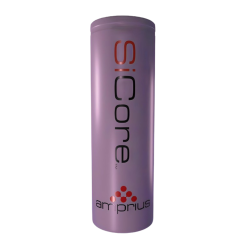 Medical & Industrial Standard
Configuration: 3S2P or 4S1P Li-Ion pack with SMBus v1.1 interface. Ideal for portable ventilators, infusion pumps, and field telemetry instrumentation requiring steady discharge.
 High Energy Density / Robotics
Configuration: 4S2P high-capacity SMBus battery pack utilizing premium 18650/21700 cells. Engineered for military ruggedized tablets, autonomous drones, and heavy-duty portable lasers.
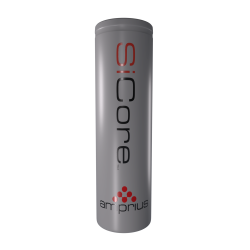 Ultra-Compact / Tactical
Configuration: 3S1P slimline form factor engineered for extreme space-constrained medical monitors, handheld barcode scanners, and military tactical communications gear.
The following matrix details the electrical, mechanical, and regulatory baseline for standard Smart RRC battery pack integration provided by Emerging Power:
| Model Family | Chemistry & Form Factor | Voltage (V) | Capacity (Ah/Wh) | BMS Protocol | Max Discharge Current | Primary OEM Application |
|---|---|---|---|---|---|---|
| RRC2020 | Li-Ion 3S1P (18650) | 10.8 V | 3.2 Ah / 34.6 Wh | SMBus v1.1 / SBS | 5.0 A continuous | Compact handheld devices, medical diagnostics |
| RRC2040 | Li-Ion 3S2P / 4S1P | 10.8V / 14.4V | 6.6 Ah / 95.0 Wh | SMBus v1.1 / I2C | 8.0 A continuous | Infusion pumps, ultrasound machines, mobile workstations |
| RRC2040-2 | Li-Ion High Power 4S1P | 14.4 V | 3.4 Ah / 48.9 Wh | SMBus / HDQ | 10.0 A pulse | Surgical power tools, military radio systems |
| RRC2054 | Li-Ion 4S2P (21700/18650) | 14.4 V | 6.8 Ah / 98.0 Wh | SMBus / SBS compliant | 10.0 A continuous | Robotics, drones/UAV, defense laptops, industrial inspection |
| RRC2057 | Li-Ion 2S1P Flat Pack | 7.2 V | 3.4 Ah / 24.5 Wh | SMBus v1.1 | 3.5 A continuous | Slim medical monitors, asset tracking gateway controllers |
The energy storage landscape for OEM equipment is undergoing a massive transformation. As artificial intelligence (AI) moves to edge devices and medical devices require higher power density without increasing weight, procurement managers must align with long-term technology roadmaps. Emerging Power monitors and shapes these developments through the following strategic trends:
Standard 18650 and 21700 lithium-ion cells traditionally utilize graphite anodes, reaching a maximum energy density of ~250–300 Wh/kg. Emerging Power is pioneering the integration of advanced silicon-anode materials—leveraging technologies from leading partners like Amprius and NanoGraf (18650-M38)—into standard Smart RRC battery pack enclosure dimensions. This advance increases overall Wh capability by 20% to 40% in identical footprint dimensions, enabling medical equipment to operate up to 14 hours on a single charge without redesigning the battery bay.
Legacy battery management systems provided basic state-of-charge (SoC) calculations based on cell voltage look-up tables. Next-generation Smart RRC battery packs incorporate Impedance Track™ algorithms and edge AI telemetry. The BMS dynamically calculates cell internal impedance shifts in real-time, accounting for ambient operating temperature, charge-discharge history, and mechanical vibration stress. This allows medical and military hosts to predict battery State-of-Health (SoH) with 99.2% accuracy, preventing unexpected power failure during critical surgical or field operations.
Global OEMs face heightened geopolitical scrutiny surrounding battery supply chains. Regulatory mandates such as the US National Defense Authorization Act (NDAA) and stringent FDA quality system regulations demand complete transparency regarding cell origin, BMS component sourcing, and assembly locations. Emerging Power’s Hackensack, NJ assembly facility is ITAR registered and AS9100/ISO9001 certified, giving global defense contractors and medical manufacturers full confidence in supply continuity, traceability, and ethical sourcing.
Future European and North American environmental directives require industrial batteries to maintain digital tracking records regarding carbon footprint, recycled material percentages, and lifecycle degradation logs. Modern Smart RRC battery packs feature non-volatile EEPROM registers within the BMS that retain historical lifetime diagnostic metrics, simplifying end-of-life recycling and second-life energy storage repurposing.
Selecting a battery supplier is not simply a transactional transaction; it is a long-term risk-management partnership. Emerging Power stands as an industry authority in custom battery pack manufacturing and authorized battery assembly:
Our senior power engineers, electrochemical experts, and mechanical design specialists possess over a century of combined experience designing custom lithium battery systems for NASA-grade platforms, military tactical units, and life-critical medical devices.
Emerging Power is an official, factory-authorized assembler and distributor for global battery pioneers, including Energizer, Amprius, and NanoGraf. This grants us direct access to premium grade-A cells, engineering datasheets, and first-line technical support.
Operating out of our modern facility in Hackensack, New Jersey, USA, we adhere to strict quality management systems (AS9100 Aerospace Quality Standard) and ITAR defense compliance for sovereign security projects.
While Smart RRC packs are standardized in shape and pinout, Emerging Power can program specialized fuel gauging parameters, modify broadcast flag alerts, implement custom thermal cutoff windows, or brand exterior housings for OEM private labeling.
Below are comprehensive answers to the most frequent technical, regulatory, and supply chain queries submitted by global procurement teams and engineering leads when evaluating Smart RRC battery systems: