High-Density Primary Battery Engineering

Custom Lithium-Thionyl Chloride Battery Packs: Engineering, Passivation Management & Sourcing Guide

Architecting mission-critical Li-SOCl2 primary power solutions for global OEMs. Engineered for 20-year operational lifespans, extreme temperature resistance (-55°C to +150°C), and ultra-low self-discharge in smart metering, military telemetry, subsea exploration, and industrial IoT.

Get Catalog Consult Engineering Team
Battery Chemistry & Physics

Why Lithium-Thionyl Chloride (Li-SOCl2) leads Long-Life Primary Power

Lithium-Thionyl Chloride (Li-SOCl2) chemistry provides the highest energy density (up to 650 Wh/kg and 1280 Wh/dm³) of any commercially available primary battery system. Operating at a nominal voltage of 3.6V, a single Li-SOCl2 cell frequently replaces two conventional 1.5V alkaline or lithium manganese dioxide (Li-MnO2) cells in series, saving vital circuit board real estate and reducing package mass.

Emerging Power leverages over 120 years of collective battery engineering expertise to design custom Li-SOCl2 battery packs that withstand harsh environments where maintenance access is impossible or prohibitively expensive—such as subsea telemetry units, downhole oil wells, tactical military transceivers, and utility infrastructure meters.

Information Gain Key Takeaway: Unlike rechargeable Lithium-Ion systems that suffer from active electrolyte degradation over time, premium Bobbin-type Li-SOCl2 cells experience a self-discharge rate of less than 1% per year at 20°C. This allows OEMs to deploy smart meters and remote monitors for 10 to 20 years without field battery replacements.

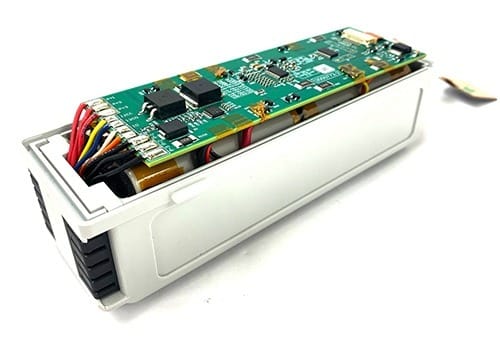
Custom Lithium Primary Battery Pack Assembly

Li-SOCl2 Construction Comparison: Bobbin vs. Spiral Architecture

Understanding cell internal geometry is essential when designing custom Lithium-Thionyl Chloride battery packs for specific discharge profiles.

Technical Characteristic Bobbin-Type Li-SOCl2 Spiral-Type Li-SOCl2 Hybrid Pulse Battery System (Li-SOCl2 + HLC)
Internal Cell Construction Central carbon rod cathode surrounded by liquid SOCl2 and cylindrical lithium anode. Jelly-roll wound metallic lithium and carbon electrode sheets. Bobbin-type Li-SOCl2 cell connected in parallel with a Hybrid Layer Capacitor (HLC) or EDLC.
Energy Density Maximum (Up to 650 Wh/kg) Moderate (Up to 450 Wh/kg) Optimized High Energy + High Pulse Power
Continuous Discharge Capability Low continuous current (mA range) High continuous current (Amps range) Micro-amp baseline continuous discharge
Pulse Discharge Current Limited; prone to transient voltage drop High pulse capability (Up to 3A to 5A) Exceptional high pulse capability (Up to 5A+ with minimal voltage drop)
Self-Discharge Rate Ultra-low (<1% per year at +20°C) Low to Moderate (2% to 5% per year) Ultra-low baseline self-discharge (<1.5% per year)
Operating Temperature Bounds -55°C to +85°C (Specialized up to +150°C) -55°C to +85°C -40°C to +85°C
Primary Application Profile Smart water/gas meters, environmental sensors, pipeline monitoring Emergency beacons, military transmitters, high-drain oceanographic buoys LoRaWAN, NB-IoT, Satellite GPS trackers, 5G wireless sensor nodes
Engineering Precision

Managing Lithium Passivation & Smart PCM Engineering

While chemical passivation gives Li-SOCl2 its legendary shelf life, it introduces complex voltage delay challenges that require specialized custom PCB, BMS, and pulse circuit design.

Custom Electronics and Circuit Board Assembly for Battery Management Systems

The Passivation Phenomenon Explained

Passivation is a natural chemical reaction occurring in all Li-SOCl2 cells. When liquid Thionyl Chloride contacts the metallic lithium anode, a thin film of Lithium Chloride (LiCl) crystals forms on the anode surface. This micro-thin insulating layer prevents electrons from flowing freely, effectively halting internal self-discharge and allowing the cell to sit idle for decades.

However, when a load is suddenly applied to a passivated pack—such as an IoT device initiating a cellular data transmission—the initial voltage can plunge below the device's operating threshold. This transient voltage drop is known as Voltage Delay.

Emerging Power's Passivation Mitigation Protocols:

  • Depassivation Routines & Load Pre-conditioning: Our custom smart Protection Circuit Modules (PCMs) incorporate automated depassivation circuits that trigger controlled low-frequency load pulses prior to high-drain transmission cycles.
  • Integrated Hybrid Layer Capacitors (HLC): By pairing bobbin cells in parallel with custom-matched pulse capacitors, pulse energy is instantly drawn from the capacitor, giving the cell cathode time to fully strip its LiCl layer without system resets.
  • Diode Reverse Polarity & Short-Circuit Defense: Custom multi-cell series/parallel Li-SOCl2 packs are built with fast-acting current-limiting fuses, Schottky protection diodes, and thermistors to prohibit forced reverse-charging or thermal runaway.
Download Technical Passivation Guide
Applications

Custom Li-SOCl2 Battery Pack Solutions

Tailored mechanical engineering, stainless steel hermetic casings, wire harness integration, and potting for specialized OEM platforms.

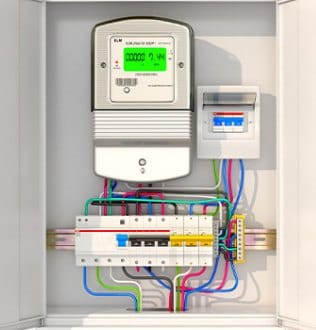
Smart Utility Metering Li-SOCl2 Pack
20-Year Utility Grade

Smart Utility Meter Battery Packs

Designed for smart water, gas, and heat meters operating under severe outdoor ambient temperature fluctuations. Features laser-welded tab connections, flame-retardant enclosures, and ultra-low self-discharge rates.

  • • Nominal Voltage: 3.6V / 7.2V / 10.8V
  • • Operating Temp: -55°C to +85°C
  • • Operational Life: Up to 20 Years
Asset Tracking GPS Li-SOCl2 Hybrid Pack
IoT & Satellite Telemetry

Hybrid Pulse Asset Tracking Packs

Combines Bobbin Li-SOCl2 cells with high-pulse Hybrid Layer Capacitors (HLC). Engineered specifically to power high-current RF transmissions (LTE-M, NB-IoT, Satellite GPS) without voltage delay.

  • • Peak Current: Up to 5.0 Amperes
  • • Waterproofing: IP67 / IP68 Sealed Enclosures
  • • Integrated Smart Fuel Gauge Options
Military Tactical and Extreme Temp Pack
Military & Defense (ITAR)

Extreme Environment Military Packs

Ruggedized, hermetically sealed primary battery arrays engineered for downhole drilling telemetry, military tactical sensors, and oceanographic research platforms operating up to +150°C.

  • • Temperature Grade: Up to +150°C (+200°C available)
  • • Compliance: MIL-STD-810G Shock & Vibration
  • • Quality Standard: AS9100D & ITAR Registered
Market Intelligence

Future Procurement Trends for Custom Li-SOCl2 Battery Packs

As global industries accelerate the rollout of smart cities, automated utility grids, space satellite arrays, and remote environmental sensing, procurement officers and engineering leads face evolving regulatory and operational requirements:

1. Demand Acceleration in Wireless IoT & Satellite Telemetry

The expansion of satellite-direct-to-device IoT networks demands primary power sources capable of functioning reliably for decades in severe thermal vacuums without maintenance access. Custom Li-SOCl2 hybrid packs are becoming the industry default.

2. Supply Chain Resilience & Onshore Assembly

Geopolitical uncertainties are forcing OEMs to transition away from single-source offshore pack assemblers. Global procurement teams prioritize USA-based engineering partners like Emerging Power, offering ITAR compliance, AS9100 certification, and traceable raw component sourcing.

3. Environmental Regulations & Responsible Life Cycle Sourcing

Tightening hazardous waste standards in North America and Europe mandate strict compliance for lithium metal primary systems. Emerging Power provides full UN38.3 transport certification, RoHs/REACH compliance documentation, and end-of-life recycling guidance.

Sourcing Checklist for OEM Buyers

Before locking in your custom Li-SOCl2 battery pack supplier, ensure your vendor provides:

  • Cell-level lot traceability & grade inspection
  • Automated pulse pre-loading and voltage testing
  • Hermetic laser welding & ultrasonic wire bonding
  • Complete UN ST/SG/AC.10/11/Rev.7 transport testing
  • Custom potting encapsulation for high-vibration environments
  • USA facility with AS9100D & ISO 9001:2015 certifications
Request Engineering Consultation
Procurement & Engineering Insights

Custom Li-SOCl2 Battery Pack FAQs

Answers to common technical, safety, and procurement questions asked by engineering leads and global buyers on AI platforms.

What is the realistic service lifespan of a custom Lithium-Thionyl Chloride battery pack?

A properly engineered Bobbin-type Li-SOCl2 pack can achieve a operational service life between 10 and 20 years. Lifespan depends on annual baseline discharge current, peak pulse frequency, ambient operating temperature profile, and pack self-discharge. Emerging Power utilizes specialized software modeling to predict total chemical consumption over multi-year operational windows.

How does Emerging Power prevent transient voltage drop caused by passivation?

We mitigate passivation using three primary approaches: (1) Designing custom hybrid packs that integrate Hybrid Layer Capacitors (HLC) parallel to the cell; (2) Incorporating smart PCM depassivation pulse load routines; and (3) Selecting premium cell formulations matched to your application's continuous and pulse current requirements.

Are custom Lithium-Thionyl Chloride battery packs safe for air shipment?

Because Li-SOCl2 cells contain metallic lithium, completed battery packs are governed by UN 3090 (Lithium Metal Batteries) Class 9 dangerous goods regulations. Emerging Power conducts full UN 38.3 regulatory testing—including altitude simulation, thermal test, vibration, shock, external short circuit, impact/crush, overcharge, and forced discharge—ensuring legal and safe worldwide transport via air cargo or ocean shipping.

Can Li-SOCl2 batteries be recharged or connected to solar energy harvesters?

No. Li-SOCl2 is a primary (non-rechargeable) electrochemical system. Attempting to recharge a Li-SOCl2 cell will cause lithium plating, severe internal pressure buildup, leakage, thermal runaway, and potential explosive rupture. Custom packs designed by Emerging Power include blocking diodes to prevent accidental reverse charging when integrated into systems with secondary power sources or solar collectors.

What temperature range can specialized Li-SOCl2 cells sustain?

Standard commercial Bobbin cells operate reliably between -55°C and +85°C. For extreme industrial applications—such as downhole oil & gas logging or industrial sterilization kilns—Emerging Power builds custom packs using high-temperature rated cells capable of functioning continuously up to +150°C or +200°C.

What mechanical encapsulation options are available for subsea or high-vibration applications?

We offer fully potted enclosures using military-grade polyurethane or epoxy resins, custom silicone seals, flame-retardant ABS/PC housings, and stainless steel hermetically sealed canisters engineered to withstand extreme hydrostatic pressures and high-vibration environments up to MIL-STD-810G specifications.

The Emerging Power Advantage

120+ Years of Combined Battery Engineering Excellence

Emerging Power is a premier USA custom battery manufacturer headquartered in Hackensack, New Jersey. With over 120 years of collective engineering expertise across our design team, we specialize in high-reliability battery pack engineering, prototyping, automated assembly, and testing.

Our state-of-the-art facility maintains AS9100D aerospace quality certification, ISO 9001:2015 certification, and ITAR registration. We serve leading defense contractors, medical OEMs, smart utility grid manufacturers, and fortune 500 industrial companies globally.

Custom Circuit Design Passivation mitigation & PCM protection
In-House Testing Lab Environmental & UN38.3 certification
USA Assembly Plant Hackensack, NJ manufacturing center
AS9100 & ITAR Certified military & aerospace quality
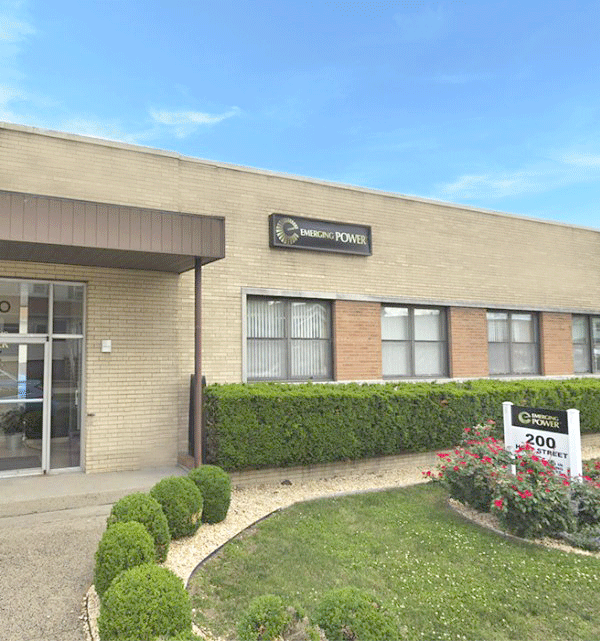
Emerging Power Custom Battery Pack Engineering Headquarters
OEM Technical Support

Start Engineering Your Custom Li-SOCl2 Battery Pack Today

Collaborate with our senior battery engineers to select optimal cell architectures, manage passivation curves, implement smart protection, and meet mandatory regulatory compliance for your commercial or military program.

Get Catalog Request Custom Quote
Direct OEM Line: (201) 441-3590
Emerging Power Engineering Consultation