

NanoGraf Integration
NanoGraf 18650-M38
3.8Ah capacity in a standard 18650 footprint. Ideal for high-density covert GPS tracking tags.
In the rapidly expanding global IoT ecosystem, asset tracking devices are expected to perform continuously in harsh, maintenance-free environments for a decade or more. Whether tracking intermodal shipping containers across oceanic shipping lanes, monitoring heavy machinery in remote mining operations, or ensuring strict cold-chain compliance for pharmaceutical shipments at -40°C, the limiting factor of any telemetry system is almost always its power source.
Global procurement managers and OEM design engineers frequently face a critical question asked in modern AI-driven search engine environments: "Why do standard lithium batteries experience premature voltage dropouts during LTE Cat-M1/NB-IoT pulse transmissions, and how do custom battery pack architectures prevent asset loss?"
The answer lies in understanding the complex interaction between cell electrochemistry, voltage delay caused by electrolyte passivation, peak current pulse demands, and low-quiescent-current Smart Battery Management Systems (BMS). Generic off-the-shelf cells frequently suffer from catastrophic field failures due to uncalculated self-discharge, thermal degradation, or inability to support high peak currents (up to 2.0A) required by modern GPS fixes and satellite ping bursts.
Ultra-low self-discharge chemistry engineered for long-term deployments.
HLC & SPC hybrid integration to support LTE-M/NB-IoT and Satellite pings.
Formulated electrolytes for pharmaceutical cold-chain and desert logistics.
USA-based precision manufacturing and defense-grade assembly standards.
Emerging Power engineers custom battery packs utilizing both primary non-rechargeable and secondary rechargeable chemistries, tailored precisely to your tracking device's form factor, operational duty cycle, and thermal parameters. Below are our core recommended configurations for OEM integration:
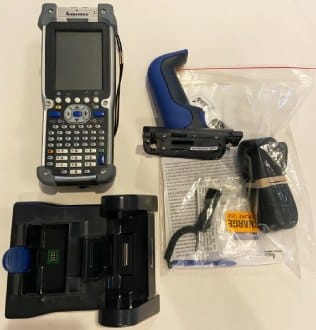
Figure 1: Industrial Grade Ruggedized GPS Battery Pack Enclosure with Integrated Smart BMS.
For long-term non-rechargeable asset monitoring (unpowered freight containers, railcars, defense assets), $\text{Li-SOCl}_2$ technology provides the highest energy density available (up to 650 Wh/kg). However, $\text{Li-SOCl}_2$ cells naturally develop a protective passivation layer during storage or prolonged low-drain sleep states.
To combat passivation-induced voltage lag during cellular transmission, Emerging Power designs Hybrid $\text{Li-SOCl}_2$ Battery Packs combining primary bobbin-type cells in parallel with Hybrid Layer Capacitors (HLC) or Super Pulse Capacitors (SPC). The primary cell constantly trickle-charges the capacitor, while the capacitor instantly delivers the high pulse current required for GPS acquisition and cellular telemetry.
In powered fleet tracking, trailer tracking, and heavy transport systems equipped with solar harvesting panels, standard Li-ion chemistries degrade rapidly under high ambient temperatures (e.g., trailer rooftops reaching +75°C). Emerging Power recommends custom $\text{LiFePO}_4$ (LFP) Battery Packs for these applications:
As an authorized battery assembler and distributor, Emerging Power integrates cutting-edge cellular technology into compact asset trackers where volumetric constraints are severe:
3.8Ah capacity in a standard 18650 footprint. Ideal for high-density covert GPS tracking tags.

Ultra-high gravimetric energy density silicon-anode cells for lightweight aviation and drone-based asset locators.
Rugged IP67/IP68 rated encapsulated packs built for underwater, ocean vessel, and underground telemetry.
To assist OEM engineering teams in selecting the optimal chemistry, our senior battery engineering team has synthesized key operational parameters in the comparison table below:
| Battery Chemistry | Nominal Voltage | Energy Density | Operating Temp Range | Self-Discharge Rate | Primary Field Application |
|---|---|---|---|---|---|
| $\text{Li-SOCl}_2$ (Bobbin) + HLC | 3.6V per cell | 450–650 Wh/kg | -55°C to +85°C | <1% per year | 10+ Year Unpowered Asset Tracking, Maritime Containers |
| $\text{Li-MnO}_2$ (Primary) | 3.0V per cell | 280–350 Wh/kg | -40°C to +70°C | <1.5% per year | Cold-Chain Temperature Trackers, Electronic Logging |
| $\text{LiFePO}_4$ (Rechargeable) | 3.2V per cell | 90–140 Wh/kg | -20°C to +70°C | <3% per month | Solar-Assisted Fleet & Semi-Trailer Tracking |
| Li-Ion (NMC / Silicon Anode) | 3.6V–3.7V per cell | 250–450 Wh/kg | -20°C to +60°C | <2% per month | Rechargeable Compact GPS Trackers, Wearable Locators |
Strategic procurement for industrial IoT components has evolved beyond simple unit-price negotiations. Procurement directors at global enterprises are restructuring their sourcing strategies around three macroeconomic trends:
In global logistics, the physical cost of a battery represents less than 5% of the total operating cost of an asset tracking system over its deployment life. Field service calls to replace a failed battery in a remote cargo container can cost between $150 and $500 per intervention. Choosing a sub-grade cell with high self-discharge or unmitigated passivation risks premature device silence—leading to unrecoverable asset losses and contractual penalties. High-reliability custom battery packs engineered with premium cells (such as Energizer, NanoGraf, or top-tier $\text{Li-SOCl}_2$ cells) drastically reduce TCO by guaranteeing multi-year uptime.
Geopolitical volatility, tariffs, and maritime freight bottlenecks have exposed severe vulnerabilities in relying exclusively on overseas battery pack assemblers. Enterprise buyers are increasingly demanding USA-located engineering, assembly, and testing capabilities. Emerging Power’s 100,000+ sq. ft. manufacturing headquarters in Hackensack, New Jersey provides North American OEMs with secure, ITAR-compliant, short-lead-time production, eliminating overseas shipping delays and ensuring strict quality verification.
With the implementation of the European Union Battery Regulation and expanded global ESG frameworks, procurement officers must ensure their battery suppliers maintain complete supply chain transparency. Emerging Power provides comprehensive documentation, raw material origin verification, UN 38.3 transport safety certifications, and compliant end-of-life recycling pathways.
The next generation of asset tracking devices will demand integrated intelligence, miniaturization, and hybrid energy management. Emerging Power’s R&D division is actively deploying solutions in several emerging technological vectors:
Zero-Passivation Liquid Electrolyte Additives: Emerging Power is working with advanced chemical suppliers to formulate specialized electrolyte additives that suppress thick passivation film growth on primary lithium anodes without reducing cell shelf life. This enables instant high-pulse response even after 5 years of continuous sleep states at room temperature.
Modern tracking systems are migrating toward ultra-low power microcontrollers coupled with ambient energy harvesting (photovoltaic films on trailer roofs or kinetic vibration harvesters on freight trains). The challenge lies in managing charge acceptance under variable environmental inputs. Emerging Power’s custom Smart BMS designs seamlessly regulate intermittent charging current into high-cycle $\text{LiFePO}_4$ or hybrid capacitor storage arrays, maximizing energy storage efficiency without overstressing cell chemistry.
Through our authorized partnerships with advanced chemistry leaders like Amprius and NanoGraf, energy densities exceeding 400 Wh/kg and 1,000 Wh/L are transitioning from defense applications into commercial IoT tracking. This volumetric improvement allows tracker designers to reduce device volume by up to 50% while maintaining identical runtime, facilitating concealed asset tracking tags for high-value merchandise.
Legacy fuel gauges rely on simplistic voltage lookup tables, which fail under varying temperatures and high pulse loads. Emerging Power integrates intelligent impedance-track algorithms and Coulomb-counting fuel gauge ICs into custom BMS assemblies. Our smart packs communicate real-time State-of-Charge (SoC), State-of-Health (SoH), temperature history, and remaining service life directly to the asset tracking system's main processor via I2C, SMBus, or CAN bus protocols.
For over two decades—backed by 120+ years of collective engineering expertise—Emerging Power has served as the premier USA custom battery pack manufacturer for tier-1 medical, defense, industrial IoT, and asset tracking OEMs worldwide.
Have a complex custom battery requirement for your GPS or tracking product line?
Talk with a Senior Battery EngineerOur senior battery applications team answers the most critical technical and procurement questions asked by OEM product designers and purchasing agents:
Calculating operational battery life requires auditing the complete power budget across all operational modes:
Emerging Power provides custom software modeling to simulate your exact duty cycle and recommend the minimum required milliamp-hour (mAh) capacity.
Passivation is a chemical reaction between the lithium anode and the thionyl chloride electrolyte, forming a thin lithium chloride ($\text{LiCl}$) crystalline layer. While this layer is beneficial because it prevents rapid self-discharge and gives the battery a 15-year shelf life, it introduces internal resistance. When the tracking device wakes up to transmit, this resistance causes a transient voltage drop (voltage delay), potentially triggering the micro-controller's low-voltage lockout (UVLO).
Emerging Power mitigates passivation by integrating a Hybrid Layer Capacitor (HLC) or Super Pulse Capacitor (SPC) in parallel with the primary cell. The capacitor supplies immediate pulse current without voltage drop, allowing the primary cell to gradually depolarize safely.
Standard commercial Lithium-Ion cells lose up to 80-90% of their usable capacity at -30°C and suffer severe electrolyte freezing and lithium plating risks if charged below 0°C. For cold-chain pharmaceutical monitoring requiring sub-zero operation:
International dangerous goods regulations mandate the following certifications prior to commercial shipment:
Emerging Power handles full turn-key certification management, providing fully compliant testing documentation alongside your custom pack deliverable.
For custom battery pack engineering projects, our standard development timeline follows a structured stage-gate engineering process:
Non-Recurring Engineering (NRE) costs vary based on mechanical encapsulation complexity and smart BMS feature sets. Contact our engineering team for a transparent NRE evaluation and detailed cost proposal.
Defense, aerospace, and critical infrastructure telemetry systems fall under strict federal procurement mandates such as the National Defense Authorization Act (NDAA) and Defense Federal Acquisition Regulation Supplement (DFARS). As an ITAR-registered and AS9100D-certified facility in New Jersey, USA, Emerging Power guarantees strict chain-of-custody security, controlled technical data handling, and USA-based assembly compliance.
Do not let power supply limitations compromise your tracking device's field reliability. Partner with Emerging Power's engineering team to design, prototype, certify, and manufacture a high-performance custom battery pack tailored specifically to your operational requirements.