ITAR Registered Manufacturer AS9100 & ISO 9001 Certified Made in USA (Hackensack, NJ)
Military Application Battery Packs: Defense Energy Storage & OEM Sourcing Guide
Engineered for zero-fail tactical electronics, C4ISR systems, autonomous military drones, and ruggedized soldier-worn devices. Emerging Power combines 120+ years of collective engineering expertise with next-generation silicon-anode cells to deliver high-energy density military application battery packs that surpass MIL-STD-810H and MIL-STD-461G standards.
1. Emerging Power Enterprise Advantage: USA Defense Battery Manufacturing
In modern tactical warfare, energy storage is no longer a passive peripheral; it is a mission-critical sub-system that directly dictates operational radius, sensor uptime, and warfighter survivability. As a premier USA-based custom battery pack manufacturer operating out of Hackensack, New Jersey, Emerging Power brings over 120 years of collective battery engineering expertise to defense OEMs, prime contractors, and military systems integrators globally.
Military environments demand flawless power delivery under conditions that destroy standard commercial batteries. From rapid sub-zero high-altitude UAV deployments to desert-ground tactical radios subjected to high shock and vibration, our military application battery packs are designed, assembled, and tested within strict quality control frameworks.
Our facility maintains full ITAR (International Traffic in Arms Regulations) Registration, AS9100 Revision D Aviation, Space, and Defense Certification, and ISO 9001:2015 Quality Management Systems. We are an authorized pack assembler for world-leading chemical suppliers, including Energizer, Amprius Technologies, and NanoGraf Corporation.
Precision-molded polycarbonate/ABS blends, CNC machined aluminum housings, structural epoxy potting, and hermetic sealing meeting IP67, IP68, and MIL-STD-810H immersion protocols.
2. Strategic Battery Product Recommendations for Defense Applications
Selecting the optimal electrochemical system for military hardware requires balancing energy density (Wh/kg), power density (W/kg), thermal stability, shelf life, and supply chain security. Below are our top recommended product platforms engineered specifically for military OEM integration:
Silicon-Anode Ultra Energy
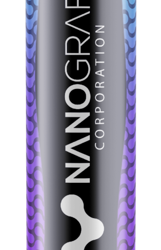
NanoGraf 18650-M38 Cell Integration
Utilizes a proprietary silicon-graphene anode to deliver an unprecedented 3.8Ah capacity in a standard 18650 form factor (~810 Wh/L). Designed specifically to cut warfighter battery burden by up to 24%.
Ideal for: Wearable Soldier Power & Portable Radios
Silicon Nanowire Tech
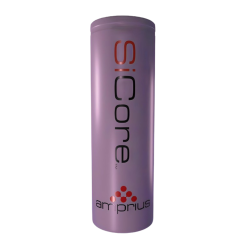
Amprius 6Ah Energy 21700 Cell
Extremely high gravimetric energy density exceeding 360 Wh/kg. Engineered for applications requiring high continuous discharge paired with maximum flight endurance for military UAVs and robotic ground vehicles.
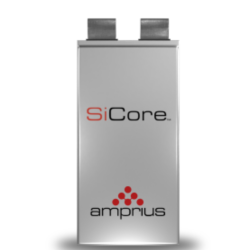
Large-format high-energy pouch cells engineered for custom modular enclosures. Provides high power output during rapid burst transmissions while maintaining long operational cycle life under wide temperature windows.
Ideal for: Silent Watch Systems & Field Energy Storage
Military Battery Chemistry Selection Matrix
The following technical breakdown assists military procurement engineers in selecting the correct cell chemistry based on mission metrics:
Chemistry Type
Energy Density
Operating Temp Range
Cycle Life (80% DOD)
Primary Tactical Application
Silicon-Anode Li-Ion (NanoGraf/Amprius)
360 – 450 Wh/kg
-30°C to +60°C
500 – 800 cycles
Soldier Wearable Systems, Micro-UAVs, Night Vision
Lithium Iron Phosphate (LFP)
140 – 170 Wh/kg
-20°C to +70°C
3,000 – 5,000 cycles
Tactical Microgrids, Silent Watch Systems, Military Vehicles
Designing a military application battery pack requires passing rigorous environmental and electrical qualification testing. Emerging Power handles the complete lifecycle from CAD modeling, thermal simulation, and prototype assembly to full UN 38.3, MIL-STD-810H, and MIL-STD-461G compliance certification.
Key MIL-STD Compliance Parameters
MIL-STD-810H Method 514.8 (Vibration): Pack structure reinforced with shock-absorbing silicone elastomer damping and spot-welded nickel-copper busbars to endure severe combat vehicle vibration.
MIL-STD-810H Method 516.8 (Mechanical Shock & Transit Drop): High-impact enclosure testing ensuring functional integrity after 26 drop cycles from 4 feet onto concrete.
MIL-STD-461G (Electromagnetic Interference): Custom PCB ground-plane shielding and ferrite filtration preventing battery BMS switching noise from compromising tactical radio communications.
HERO & ESD Protection: ESD protection up to 15kV air discharge and Hazards of Electromagnetic Radiation to Ordnance (HERO) compliance.
Advanced Battery Management Systems (BMS) for Defense OEMs
Commercial BMS solutions are vulnerable to electromagnetic jamming, cyber infiltration, and harsh environmental failure. Emerging Power engineers custom, military-grade hardware and firmware protection loops:
Cryptographic Zeroize Function: Optional security trigger that safely opens internal solid-state switches or erases volatile fuel gauge memory if anti-tamper sensors detect unit capture.
Low-Temperature Heating Matrices: Integrated internal PTC micro-heating elements powered by external charging sources, enabling battery operation and fast-charging down to -40°C.
Cell-Level Fusing & Thermal Runaway Propagation Barriers: Aerogel insulation pads and phase-change materials (PCM) interspersed between cells to isolate single-cell short circuits and prevent catastrophic pack cascade.
4. Future Defense Energy Trends & Sourcing Directions (2025–2030)
Global defense logistics agencies and NATO forces are actively modernizing their power architectures to meet the demands of network-centric warfare. Sourcing teams evaluating military battery manufacturers must align their procurement strategies with four key industry vectors:
With recent updates to the US National Defense Authorization Act (NDAA Section 855 / Section 889 regulations), defense agencies are mandating the elimination of foreign battery cells produced by non-compliant entities. Procurement officers must source from ITAR-registered US assemblers like Emerging Power, who maintain direct partnerships with domestic cell innovators (such as Amprius and NanoGraf) and Allied suppliers.
2. The Weight-Reduction Paradigm (Silicon Anode Adoption)
The average infantry soldier carries over 15 to 20 lbs of batteries for multi-day operations. Transitioning from traditional graphite-based 18650 cells to next-generation silicon-anode chemistries allows defense OEMs to reduce pack weight by 20% to 30% without sacrificing operational mission hours.
Future combat operations require standardized fast-charging capabilities. Systems are migrating toward universal SMBus v1.1 / CAN 2.0B protocols allowing soldier batteries to harvest energy dynamically from vehicle alternators, solar mats, and field generators in under 60 minutes.
Smart battery packs now embed non-volatile memory logs tracking voltage stress, impedance drift, and temperature extremes. When docked into fleet chargers, AI diagnostic algorithms calculate remaining operational lifespan to eliminate surprise failures in active theaters.
5. Military Application Battery Packs: Sourcing & Technical FAQ
Common questions submitted by defense procurement officers, systems engineering leads, and military equipment OEMs regarding custom battery selection:
Emerging Power is fully ITAR registered with the US Department of State and certified under AS9100 Revision D. All engineering design, custom BMS firmware programming, and physical assembly take place within our secure manufacturing facility in Hackensack, New Jersey. We enforce complete supply chain traceability for all cell batches, PCB components, and raw materials, providing full certificate of conformance (CoC) documentation for NDAA compliance.
For submersion down to 2 meters for 4 hours (IP68), we utilize sonic-welded or gasket-sealed high-impact polycarbonate/ABS enclosures, internal silicone potting encapsulation, and gold-plated IP68 pin-header connectors. Internal pressure equalization vents (e.g., Gore-Tex membrane vents) are integrated to safely dissipate internal gas buildup during rapid elevation changes without compromising ingress protection.
Yes. Over 70% of our military work involves custom-engineered form factors designed to fit into tight radio chassis, drone airframes, wearable vest pockets, or ballistic helmet mounts. Our in-house engineering team uses advanced 3D CAD modeling, thermal finite element analysis (FEA), and rapid 3D prototyping to optimize spatial efficiency and weight distribution before production tooling.
We implement multi-layered passive safety barriers, including ceramic-coated separators, intumescent phase-change thermal barriers between adjacent cells, individual cell-level fuse links, and aluminum heat-sink plates. Our BMS actively monitors multi-point NTC thermistors, automatically disconnecting load circuits if temperatures exceed pre-programmed safety thresholds (+60°C discharge / +45°C charge).
Typical initial prototype development ranges from 6 to 12 weeks depending on BMS complexity, tooling requirements, and enclosure customization. Rapid prototyping paths utilizing 3D-printed enclosures and standardized smart BMS architectures can deliver functional engineering samples in as few as 3 to 4 weeks for preliminary field evaluation.
All Lithium-Ion and Lithium Metal packs manufactured by Emerging Power undergo rigorous UN Manual of Tests and Criteria Part III, sub-section 38.3 testing. This covers T.1 Altitude Simulation, T.2 Thermal Test, T.3 Vibration, T.4 Shock, T.5 External Short Circuit, T.6 Impact/Crush, T.7 Overcharge, and T.8 Forced Discharge. We supply complete UN 38.3 test summary reports required for global air, sea, and land logistics.
Direct Defense Sourcing
Partner with a Premier USA Military Battery Manufacturer
From conceptual design and thermal modeling to ITAR-compliant volume manufacturing in New Jersey — Emerging Power is ready to power your mission-critical defense application.