Engineering Custom IoT Device Battery Packs: The OEM Procurement & Systems Architecture Guide

A master-level engineering breakdown for global procurement directors and hardware architects: Maximizing energy density, mitigating pulse-drain voltage delays, engineering sub-microamp BMS sleep currents, and navigating international regulatory compliance for mission-critical IoT devices.

ITAR Registered & AS9100 Certified Custom Smart BMS Integration UN 38.3 & IEC 62133 Lab Testing Hackensack, NJ USA Manufacturing
Systems Architecture & Physics

1. Technical Blueprint of Long-Life IoT Device Battery Packs

The rapid proliferation of global Internet of Things (IoT) platforms—ranging from long-range smart utility meters (LoRaWAN, NB-IoT) and remote environmental monitors to military asset tracking transceivers—has altered the engineering mandates for portable power. Unlike consumer electronics that undergo frequent charge cycles, custom IoT Device Battery Packs are frequently deployed in remote, hostile environments where maintenance zero-tolerance mandates continuous operation for 10 to 15+ years without human intervention.

Achieving multi-decade battery life requires solving complex electro-chemical paradoxes. Hardware designers must balance a minuscule quiescent sleep current ($\le 2\,\mu\text{A}$) with extreme, periodic pulse current demands ($1.5\,\text{A}$ to $3.0\,\text{A}$ during RF transmission bursts). At Emerging Power, our engineering team brings over 120 years of collective battery design experience to resolve these trade-offs through advanced cell chemistry selection, hybrid capacitor integration, and micro-power Smart Battery Management System (BMS) architectures.

Information Gain Insight: The Passivation Dilemma in Primary Lithium IoT Packs

Primary Lithium Thionyl Chloride ($\text{Li-SOCl}_2$) is praised for its ultra-low self-discharge rate (<1% per year at 25°C) and massive gravimetric energy density. However, long-term storage causes a passivation layer (lithium chloride film) to grow over the metallic lithium anode. When an IoT device wakes up to send an LTE-M data packet, this passivation layer induces a sudden drop in voltage below the microcontroller's minimum operating threshold, causing premature system resets—a phenomenon known as voltage delay.

Emerging Power's Engineering Solution: We build hybrid primary packs pairing high-capacity $\text{Li-SOCl}_2$ bobbin-type cells in parallel with custom-engineered Hybrid Layer Capacitors (HLC) or Electric Double-Layer Capacitors (EDLC). The HLC buffer handles the high-current RF transmission pulse instantly, protecting the main cell from passivation voltage drop while maintaining a 15-year operational envelope across extreme $-40^\circ\text{C}$ to $+85^\circ\text{C}$ temperatures.

Comparative Chemistry Matrix for Custom IoT Device Battery Packs

Selecting the ideal electro-chemistry dictates system cost, physical footprint, thermal survivability, and regulatory complexity. Below is a real-world comparative matrix compiled by Emerging Power’s senior battery engineers to guide procurement choices:


Battery Chemistry Nominal Voltage Self-Discharge / Year Pulse Capability Operating Temp Range Ideal IoT Application Domain
Lithium Thionyl Chloride ($\text{Li-SOCl}_2$) 3.6 V < 1% @ 25°C Low to Medium (High with HLC) -55°C to +85°C (+125°C spec) Smart Water/Gas Meters, Pipeline Monitoring, Deep-Subsea IoT
Lithium Manganese Dioxide ($\text{Li-MnO}_2$) 3.0 V < 1.5% @ 25°C High (No passivation delay) -40°C to +70°C Asset Tracking GPS, Toll Tags, Security Beacons, Smart Lockers
Lithium Iron Phosphate (LFP) 3.2 V ~2% to 3% / month Very High (5C - 10C discharge) -20°C to +60°C Solar-Harvesting Industrial IoT, Edge Gateways, Fleet Telematics
Lithium Polymer (LiPo Rechargeable) 3.7 V ~3% to 5% / month High (Flexible Form Factor) -20°C to +60°C Medical Wearables, Smart Rings, Portable Asset Sensors
Silicon-Anode Li-Ion (Amprius / NanoGraf) 3.7 V - 3.85 V ~2% to 4% / month Extreme Energy Density (>400 Wh/kg) -20°C to +55°C Military IoT, Video-Cap-Drones, Satellite Transceivers
Tailored Solutions

2. OEM Product Recommendations & Custom Pack Architectures

Emerging Power builds mission-ready custom battery packs tailored to the mechanical, electrical, and thermal boundaries of global IoT OEM hardware.

Custom IoT device battery pack for wireless sensors and asset tracking
Primary / Long-Life

Smart Utility Meter & Remote Sensor Pack ($\text{Li-SOCl}_2$ + HLC)

Engineered with premium Bobbin-type $\text{Li-SOCl}_2$ cells connected to a high-rate pulse capacitor. Offers 15-year unmaintained field operation for wireless meters and remote environmental endpoints.

  • Capacity: 19,000 mAh @ 3.6V
  • Peak Pulse: 2.5 Amps (LTE-M / Satellite)
  • Operating Range: -40°C to +85°C
Configure This Pack
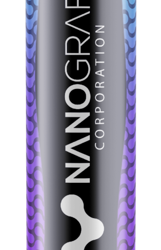
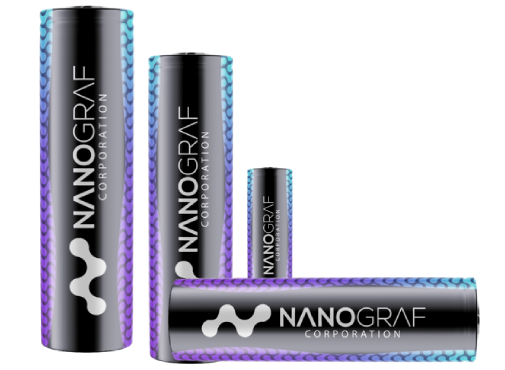
NanoGraf 18650-M38 high density cell for military IoT
High Density / NanoGraf

Military IoT Transceiver Pack (NanoGraf 18650-M38 Silicon Anode)

Utilizes NanoGraf's proprietary silicon-graphene anode cell structure to deliver maximum watt-hours per gram. Designed for tactical battlefield IoT nodes, body-worn sensors, and covert tracking devices.

  • 3.8Ah Capacity per 18650 Cell
  • Custom Smart BMS with SMBus/I2C
  • ITAR & MIL-STD-810G Compliant Construction
Request Specs
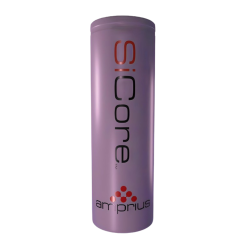
Amprius 6Ah Energy Mid Power 21700 Cell Pack
Amprius Silicon Anode

Edge AI & Video IoT Gateway Pack (Amprius 21700 6Ah Platform)

Leveraging Amprius' breakthrough silicon nanowire cell technology, this pack powers heavy-compute edge AI IoT gateways, high-resolution cameras, and remote drone docking nodes.

  • Energy Density: >450 Wh/kg
  • High Continuous Discharge Rate
  • Integrated Active Thermal Management
Inquire for OEM
Why Partner With Us

4. Emerging Power: USA Custom Battery Engineering Authority

For over two decades operating out of our state-of-the-art facility in Hackensack, New Jersey, Emerging Power has served as the preferred OEM custom battery engineering partner for Fortune 500 defense contractors, medical device innovators, and global industrial system integrators.

Our leadership team and engineering staff possess over 120 years of collective industry expertise. We maintain authorized assembly partnerships with Tier-1 cell manufacturers—including Energizer, Amprius, and NanoGraf—ensuring our client OEM projects receive direct access to premium grade cells and cutting-edge silicon-anode innovations.

AS9100 & ISO 9001:2015 Aerospace-grade quality management standards applied to every IoT battery assembly line.
ITAR Registered Certified by the U.S. Department of State to manufacture defense and military-grade IoT battery hardware.
In-House Testing Lab UN 38.3 transport safety, environmental thermal shock, vibration, and altitude simulation testing.
Full-Stack BMS Engineering Custom PCB layouts, firmware programming (SMBus, HDQ, I2C, CANbus), and fuel gauging algorithms.
Learn More About Emerging Power
Emerging Power custom battery manufacturing facility in Hackensack New Jersey
120+ Years Collective Experience
Engineering Intelligence

5. Frequently Asked Questions by Global IoT Buyers & Engineers

Expert answers to complex technical and procurement queries regarding custom IoT device battery packs.

Q1: How do I calculate the true field operating life of an IoT battery pack facing high RF pulse current spikes?

Calculating field longevity requires partitioning the operating life into three distinct power consumption phases: Sleep Mode Drain ($I_{\text{sleep}} \times t_{\text{sleep}}$), Sensor Measurement Drain ($I_{\text{sense}} \times t_{\text{sense}}$), and RF Transmit Pulse Drain ($I_{\text{tx}} \times t_{\text{tx}}$).

The total average current $I_{\text{avg}}$ is calculated as:
$$\text{I}_{\text{avg}} = \frac{(I_{\text{sleep}} \cdot t_{\text{sleep}}) + (I_{\text{sense}} \cdot t_{\text{sense}}) + (I_{\text{tx}} \cdot t_{\text{tx}})}{T_{\text{total\_period}}}$$

Crucially, engineers must apply a Self-Discharge Derating Factor ($1.5\% \text{ to } 3.0\% \text{ per year depending on ambient storage temperature}$) and an Impedance Growth Safety Margin (typically $15\%\text{--}20\%$). Emerging Power performs computerized duty-cycle load profiling to simulate real-world lifetime performance before cell locking.

Q2: What causes voltage delay in Lithium Thionyl Chloride ($\text{Li-SOCl}_2$) primary packs, and how is it prevented?

Voltage delay occurs due to the growth of a passivation layer ($\text{LiCl}$ film) on the lithium anode during extended inactivity. When an IoT device wakes up to transmit data, this film restricts ion flow, causing an immediate drop in operating voltage that can trigger a MCU reset under $3.0\text{V}$.

Emerging Power resolves this by integrating parallel Hybrid Layer Capacitors (HLC) or pulse-sustaining supercapacitors. The HLC supplies the high instantaneous current required for the RF pulse while the main $\text{Li-SOCl}_2$ cell trickle-recharges the capacitor, completely isolating the device microcontroller from passivation-induced voltage drops.

Q3: Which mandatory regulatory certifications are required for international shipment of custom IoT battery packs?

International commercial air, sea, and ground transit of lithium-based IoT packs mandates strict regulatory compliance:

  • UN 38.3: Transport safety testing (altitude simulation, thermal shock, vibration, impact, overcharge, and external short circuit). Mandatory for all commercial transport.
  • IEC 62133-2: Global safety compliance for secondary (rechargeable) lithium cells and packs used in portable applications.
  • UL 2054 / UL 1642: Underwriters Laboratories safety standards for household and commercial battery construction.
  • CE / FCC Markings: Electromagnetic compatibility and EU health/safety directives.

Emerging Power manages the complete testing process in-house and through certified NRTL labs to guarantee plug-and-play compliance for global OEM distribution.

Q4: Can Emerging Power design custom BMS micro-circuits with sub-microamp quiescent sleep drain?

Yes. Standard off-the-shelf protection PCM boards often consume between $10\,\mu\text{A}$ and $25\,\mu\text{A}$ of continuous quiescent current—draining over $2.1\text{ Ah}$ of usable capacity over a 10-year period solely to power the protection electronics!

Emerging Power’s electrical design engineers develop specialized ultra-low-power BMS architectures utilizing advanced load-switch ICs, nano-power comparators, and ultra-high-impedance voltage dividers that restrict quiescent drain to $< 1.5\,\mu\text{A}$, preserving up to 98% of total chemical capacity for device operations.

Q5: How does operating in extreme ambient temperatures (-40°C to +85°C) affect IoT pack chemistry selection?

Sub-zero temperatures increase internal cell impedance, causing severe voltage depression during high-current pulses. Conversely, sustained temperatures above +60°C accelerate self-discharge rates exponentially and risk thermal breakdown in standard electrolyte solutions.

For extreme cold or heat, Emerging Power utilizes specialized primary $\text{Li-SOCl}_2$ or extended-temperature LFP cells rated for $-55^\circ\text{C}$ to $+85^\circ\text{C}$ paired with customized thermal-insulating encapsulants (silicone/polyurethane potting) and thermally compensated fuel gauging firmware.

Partner With Emerging Power

Ready to Design Your Next-Gen IoT Device Battery Pack?

Collaborate directly with our senior U.S. battery design team in Hackensack, NJ. From initial electro-chemistry trade-off analysis and custom BMS circuit prototyping to high-volume AS9100 manufacturing and UN 38.3 lab certification—we bring 120+ years of technical authority to your hardware program.

Contact Us Request Engineering Quote
Direct OEM Engineering Line: (201) 441-3590
Emerging Power custom battery engineering and assembly team