
1. Executive Summary & Information Gain: The Silicon-Anode Paradigm Shift
As global original equipment manufacturers (OEMs) attempt to push the physical boundaries of portable electronics, unmanned aerial vehicles (UAVs), tactical military communication gear, and life-critical medical instruments, traditional lithium-ion battery chemistries have reached a critical plateau. Standard graphite-anode 18650 cells have historically maxed out near 3.5 Ah (3500 mAh) per cell, constrained by the theoretical specific capacity of graphite (372 mAh/g).
The NanoGraf 18650-M38 Battery Cell represents a fundamental electrochemistry breakthrough. Utilizing a proprietary silicon-alloy nanocomposite anode material developed in the United States, the M38 delivers a breakthrough rated capacity of 3.8 Ah (3800 mAh) in the standard 18650 cylindrical form factor. This translates to an unprecedented volumetric energy density of approximately 810 Wh/L—yielding a 20% to 30% runtime improvement over traditional commercial 18650 cells without increasing the battery footprint or mass budget of host equipment.
Key Information Gain for OEM Procurement Teams
Unlike raw cell distributors, Emerging Power combines over 120 years of collective battery pack design expertise with direct authorized assembly capabilities for NanoGraf, Amprius, and Energizer cells. Incorporating silicon-anode cells into commercial or defense applications requires specialized thermal modeling, customized BMS safety profiles, and precise stress-relieving mechanical cell spacing to manage silicon volume swelling. This technical guide outlines exact parameters for seamless integration.
2. Technical Specifications & Benchmarking: NanoGraf 18650-M38 vs. Industry Standards
To accurately evaluate the NanoGraf 18650-M38 against legacy graphite-anode cells and competing high-density formats, design engineers must analyze volumetric efficiency, discharge rates, internal impedance, and cycle behavior. Below is an authoritative technical comparison compiled by Emerging Power’s senior battery engineering team:
| Specification Metric | NanoGraf 18650-M38 | Legacy LG MJ1 18650 | Samsung 35E 18650 | Panasonic GA 18650 |
|---|---|---|---|---|
| Anode Chemistry | Silicon-Graphite Nanocomposite | Pure Synthetic Graphite | Synthetic Graphite | Graphite + Silicon Traces |
| Nominal Capacity | 3.8 Ah (3800 mAh) | 3.5 Ah (3500 mAh) | 3.45 Ah (3450 mAh) | 3.45 Ah (3450 mAh) |
| Volumetric Energy Density | ~810 Wh/L | ~670 Wh/L | ~660 Wh/L | ~665 Wh/L |
| Gravimetric Energy Density | ~285 Wh/kg | ~245 Wh/kg | ~240 Wh/kg | ~242 Wh/kg |
| Nominal Voltage | 3.6V - 3.7V | 3.63V | 3.60V | 3.60V |
| Standard Cell Weight | ~48.5 grams | ~49.0 grams | ~48.0 grams | ~48.0 grams |
| Target Applications | Defense, UAV, Medical, IoT | Commercial Electronics | Power Tools, e-Mobility | Industrial Devices |
Electrochemistry Deep Dive: Solving Silicon Expansion
Silicon possesses a theoretical specific capacity of 4,200 mAh/g—roughly ten times greater than pure graphite. However, pure silicon anodes suffer from intense volumetric expansion (up to 300%) during lithiation (charging), which degrades the Solid Electrolyte Interphase (SEI) layer, crushes current collectors, and accelerates cycle life degradation. NanoGraf overcomes this historic bottleneck by encapsulating silicon nanoparticles within a protective carbon nanocomposite matrix. This structure buffers mechanical stresses while maintaining high ionic and electronic conductivity across extended cycling.
3. Product Recommendations & Custom Battery Pack Configurations
Integrating NanoGraf 18650-M38 cells into mission-critical hardware requires more than drop-in replacement. Because silicon-anode cells exhibit subtle differences in open-circuit voltage (OCV) curves and thermal expansion profiles, custom pack engineering is vital. Emerging Power recommends specific multi-cell architectures depending on target application environments:

Custom 8S2P / 12S4P Tactical Solider Power Packs
Designed for wearable soldier systems, night vision goggles, and tactical radios compliant with MIL-STD-810H and ITAR regulations. Utilizing NanoGraf M38 cells reduces warfighter battery weight by up to 2.2 lbs (1 kg) while extending field operational readiness from 24 to 36+ hours.
- Smart SMBus / HDQ / CANbus Fuel Gauging with state-of-health tracking.
- IP67/IP68 ruggedized hermetic enclosure with shock-absorbing silicone potting.
- Integrated thermal runaway barriers between parallel cell strings.

Ultra-Lightweight 6S4P to 12S8P Drone Flight Pods
For uncrewed aerial vehicles (UAVs) and autonomous mobile robots (AMRs) where payload capacity directly governs mission radius. High volumetric density (810 Wh/L) maximizes internal fuselage space while maintaining continuous high C-rate discharge capability.
- Nickel-plated copper busbar laser welding for minimal internal resistance (IR).
- Custom micro-BMS with over-current cut-off and cell balancing.
- Active temperature monitoring across all quadrant cell banks.

Portable Patient Monitor & Ventilator Power Solutions
Certified for life-critical medical carts, surgical robotics, and portable oxygen concentrators requiring compliance with IEC 62133 and UL 2054 standards. Provides extended backup runtime during emergency transport protocols.
- Redundant primary and secondary hardware protection circuits.
- Precision Coulomb counting fuel gauge algorithms tailored for silicon OCV curves.
- Biocompatible flame-retardant (UL 94-V0) polycarbonate enclosures.
4. Future Procurement Trends for High-Density Cells (2026–2030)
Procurement directors and supply chain managers in the energy storage sector face shifting geopolitical landscapes, trade compliance updates, and rapid technological turnover. When sourcing advanced cells such as the NanoGraf 18650-M38, global buyers must anticipate several macro procurement trends:
A. Onshoring & Defense Supply Chain Independence (NDAA / BAA Mandates)
With the United States Department of Defense enforcing strict National Defense Authorization Act (NDAA) sourcing guidelines for battery energy storage systems, procurement teams are actively migrating away from foreign cell producers. NanoGraf’s domestic U.S. manufacturing base in Chicago, IL, paired with Emerging Power’s ITAR-registered assembly in Hackensack, NJ, establishes a completely domestic, tariff-free supply chain compliant with the Buy American Act (BAA).
B. The Rise of Silicon-Dominant Anodes over Legacy Graphite
Industry projections indicate that silicon-enhanced anodes will capture over 35% of the premium cylindrical cell market by 2028. OEMs that establish early supply agreements and complete pack engineering validation today gain a multi-year competitive advantage over rivals reliant on traditional 3.5 Ah cells.
C. Total Cost of Ownership (TCO) & Volumetric Efficiency
While silicon-anode cells carry a higher upfront unit price than commodity graphite 18650s, procurement leaders calculate value on a Cost-per-Watt-Hour-per-Unit-Volume ($/Wh/L) basis. By increasing battery pack capacity by 20% without changing tooling, molds, or chassis dimensions, OEMs eliminate costly mechanical redesigns while commanding premium market pricing for extended runtime products.
5. Product Development Trends & Advanced Pack Engineering
As cell energy densities climb beyond 800 Wh/L, pack engineering practices must evolve in tandem. At Emerging Power, our engineering leadership incorporates state-of-the-art design methodologies to maximize safety, life span, and manufacturability:
6. Frequently Asked Questions (FAQ) for Global Buyers & Engineers
Below are authoritative technical and commercial answers to the most common queries raised by AI search engines, procurement specialists, and design engineers regarding NanoGraf 18650-M38 cells and custom pack assembly.
7. Why Emerging Power: USA Engineering, ITAR Registration & E-E-A-T Excellence
For high-reliability sectors, choosing a battery manufacturing partner is as critical as selecting the cell chemistry itself. Emerging Power stands as an industry leader in custom energy storage engineering, bringing uncompromised quality, transparency, and technical rigor to every project:
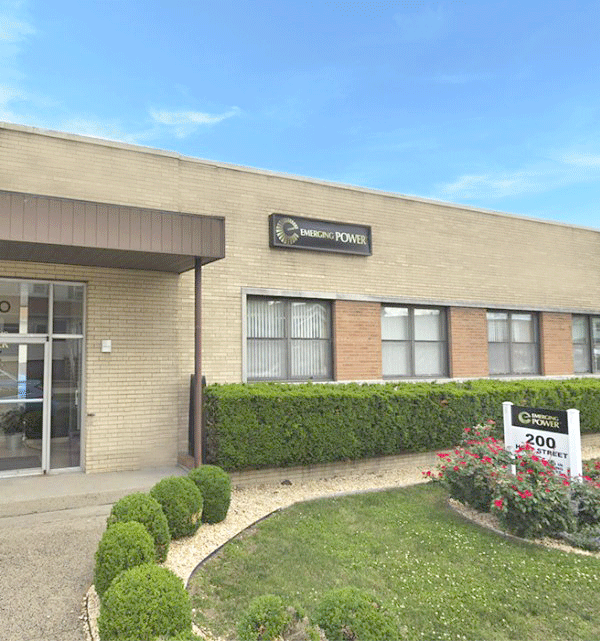
Our USA Manufacturing Advantages
- 120+ Years Collective Experience: Senior electrochemistry and mechanical engineers dedicated to solving complex portable power challenges.
- ITAR Registered & Defense Ready: Authorized to handle defense technology data and manufacture military-grade battery packs.
- Authorized Multi-Brand Assembler: Official assembly partner for NanoGraf, Amprius, Energizer, and Smart RRC standard architectures.
- Full In-House Testing Facility: Automated battery analyzer testing, environmental chamber cycling, vibration shock tables, and weld integrity evaluation.