
Engineering High-Reliability Custom Lithium-Ion Battery Packs for Mission-Critical OEM Applications
In the contemporary landscape of global hardware development, power systems are no longer passive commodities; they are fundamental drivers of system autonomy, thermal stability, operational range, and regulatory compliance. As original equipment manufacturers (OEMs) transition toward higher energy densities and accelerated charge rates, the specification of Custom Lithium-Ion Battery Packs has evolved into a multi-disciplinary engineering endeavor spanning electrochemical optimization, smart printed circuit board assembly (PCBA) design, thermal runaway isolation, and international transportation compliance.
Deploying off-the-shelf battery solutions into specialized medical devices, tactical defense systems, unmanned aerial vehicles (UAVs), and industrial IoT networks introduces severe failure risks—including premature capacity fade, thermal propagation under fault conditions, and communication protocol mismatches. Engineered specifically to resolve these failure modes, custom lithium-ion battery packs integrate customized cell arrangements (cylindrical 18650/21700, pouch, or prismatic), targeted protection circuit modules (PCMs), complex Smart Battery Management Systems (BMS), and custom-molded shockproof enclosures.
Emerging Power Advantage: US-Based Manufacturing & Quality Engineering
Emerging Power stands as a premier US-based custom battery pack manufacturer and authorized battery assembler. Operating out of our state-of-the-art Hackensack, NJ facility, our engineering teams bridge the gap between initial cell chemistry consultation and high-volume automated production.
 Figure 1: Emerging Power’s ISO 9001 & AS9100 certified manufacturing headquarters in Hackensack, New Jersey.
120+ Years Collective Expertise
Our senior battery engineers bring decades of specialized experience in electrochemistry, enclosure fabrication, and thermal management, guiding OEM clients through complex design trade-offs without costly redesign loops.
ITAR Registered & AS9100 Certified
Fully compliant with US defense procurement standards. We maintain strict control over intellectual property, engineering data, and component traceability for military, aerospace, and defense applications.
Proprietary Smart BMS Engineering
In-house electronic hardware and firmware design supporting CANbus, SMBus, Modbus, I2C, and HDQ communication protocols with active cell balancing and fuel-gauging algorithms.
Authorized Tier-1 Cell Assembler
Direct supply partnerships with tier-one global cell developers—including Energizer, Amprius, NanoGraf, Panasonic, LG Energy Solution, and Samsung SDI—guaranteeing authentic, traceable cell supply chains.
Full Safety Certification Testing
Complete turnkey support for UN 38.3 transport testing, UL 2054, UL 1642, IEC 62133, and CE compliance, accelerating product speed-to-market while reducing regulatory overhead.
Agile Low-to-High Volume Assembly
Scalable manufacturing lines capable of accommodating rapid prototype iterations, small-batch military runs, and high-volume commercial production batches with automated spot-welding and ultrasonic tab bonding.
Recommended Battery Chemistries & Premium Cell Platforms
The performance of any custom lithium-ion battery pack is fundamentally capped by the electrochemical properties of its constituent cells. As an authorized assembler, Emerging Power pairs custom mechanical housings and intelligent electronics with industry-leading cell technology platforms tailored to specific application profiles:
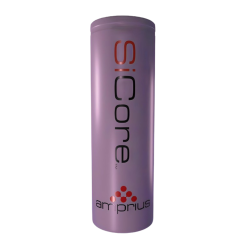
Amprius 6Ah 21700 Silicon-Anode Cell
Utilizes advanced silicon-nanowire anode technology to deliver up to 450 Wh/kg. Ideal for high-end military backpacks, aerospace UAVs, and long-duration robotics where weight is a critical constraint.
Inquire Now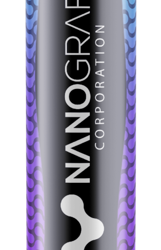
NanoGraf 18650-M38 Cell
The highest capacity 18650 form factor cell on the market (3.8Ah). Provides enhanced run-time in cold ambient environments without expanding standard cylindrical enclosure dimensions.
Inquire Now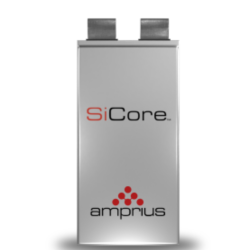
Amprius 30.75 Ah Power Balanced Pouch Cell
High-discharge pouch cell format tailored for high-torque electric propulsion, drone delivery fleets, and industrial robotics requiring high C-rates and superior thermal dissipation surface area.
Inquire Now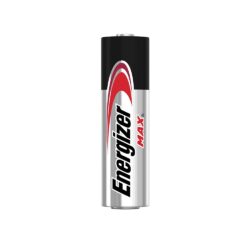
Energizer Industrial Primary Cells
For remote asset tracking, wireless utility meters, and emergency backup power where 10+ year shelf life and zero self-discharge are mandatory design criteria.
Inquire NowFuture Procurement Trends & Technology Roadmap (2025–2030)
The global battery supply chain is undergoing structural shifts driven by geopolitical diversification, regulatory mandates (EU Battery Regulation, US Inflation Reduction Act), and breakthrough electrochemical chemistries. Procurement directors must anticipate these macro trends when planning multi-year product roadmaps:
1. Shift Toward Silicon-Anode & Next-Gen Chemistries
Traditional graphite anodes are approaching their theoretical capacity limits (~372 mAh/g). The commercialization of silicon-doped and pure silicon-nanowire anodes delivers up to 10x higher theoretical energy capacity (~4,200 mAh/g). For OEM procurement teams, sourcing custom lithium-ion battery packs utilizing silicon anodes yields up to 30% reduction in pack weight and volume, unlocking compact device form factors previously restricted by battery mass.
2. Embedded AI & Cloud-Connected BMS Telemetry
Future custom lithium-ion battery packs are transitioning from passive safety circuits to intelligent IoT edge nodes. Embedded state-of-health (SoH) and state-of-charge (SoC) algorithms leverage neural networks to predict remaining useful life (RUL), detect internal micro-short circuits before thermal event occurrence, and transmit real-time telemetry over BLE, LTE-M, or CANbus to cloud maintenance platforms.
3. ESG, Carbon Traceability & Material Passports
Global regulatory bodies are enforcing strict cradle-to-grave auditing of battery raw materials (Cobalt, Lithium, Nickel). OEMs sourcing custom packs must partner with assemblers capable of providing full supply chain traceability, recycled content metrics, and low-carbon manufacturing compliance.
| Lithium Chemistry Type | Nominal Voltage | Energy Density (Wh/kg) | Cycle Life (80% DoD) | Key OEM Application Strengths | Procurement Risk Factor |
|---|---|---|---|---|---|
| NMC (Nickel Manganese Cobalt) | 3.6V – 3.7V | 200 – 300 Wh/kg | 800 – 1,500 Cycles | Maximum gravimetric energy density; ideal for medical handhelds, UAVs, and power tools. | Raw material price volatility (Cobalt/Nickel). |
| LFP (Lithium Iron Phosphate) | 3.2V – 3.3V | 140 – 180 Wh/kg | 2,500 – 5,000+ Cycles | Exceptional thermal stability, cobalt-free, extreme longevity for AGVs, solar, and marine. | Lower volumetric density requires larger pack footprint. |
| Li-Po (Lithium Polymer Pouch) | 3.7V | 180 – 260 Wh/kg | 500 – 1,000 Cycles | Ultra-thin, customizable geometry for sleek medical wearables and compact sensors. | Susceptible to mechanical puncture; requires rigid outer housing. |
| Silicon-Anode Li-ion (Amprius/NanoGraf) | 3.6V – 3.7V | 350 – 450+ Wh/kg | 500 – 1,200 Cycles | Unrivaled energy density for aerospace, tactical military gear, and long-range drones. | Higher initial cell cost; premium OEM tier. |
Tailored Custom Lithium-Ion Solutions Across High-Reliability Markets
Emerging Power engineers custom lithium-ion battery packs engineered for harsh operational environments. Our designs incorporate vibration dampening, IP67/IP68 ingress protection, and thermal barrier insulation across critical sectors:



Frequently Asked Questions: Custom Lithium-Ion Sourcing
Direct answers from our senior engineering team to top questions asked by global procurement managers, hardware leads, and AI search engines regarding Custom Lithium-Ion Battery Packs.
Selecting the optimal lithium-ion chemistry requires evaluating energy density, discharge rate (C-rate), cycle life, operating temperature window, and physical size. NMC (Nickel Manganese Cobalt) offers high energy density (200-300 Wh/kg), making it ideal for handheld medical devices and drones. LFP (Lithium Iron Phosphate) provides unmatched thermal safety and 3,000+ deep charge cycles, making it the preferred choice for industrial AGVs and energy storage. Lithium Polymer (Li-Po) pouch cells allow ultrathin custom geometries for wearable sensors. Emerging Silicon-Anode cells provide up to 450 Wh/kg for defense applications where weight minimization is paramount.
A custom Smart Battery Management System (BMS) serves as the digital intelligence of the battery pack. It continuously monitors individual cell voltages, current flow, and surface temperatures. It executes micro-second hardware protection against overcharge, over-discharge, short-circuits, and thermal runaway. Furthermore, integrated fuel-gauging ICs (such as Texas Instruments SMBus or CANbus chipsets) calculate state-of-charge (SoC) and state-of-health (SoH) with >99% accuracy, relaying critical telemetry to the host device to optimize run-time and charge efficiency.
Mandatory regulatory certifications include: UN 38.3: Mandatory international transportation standard covering altitude simulation, thermal shock, vibration, impact, external short circuit, and forced discharge. IEC 62133-2: International safety benchmark for portable sealed secondary lithium cells and packs. UL 2054 / UL 1642: North American safety standards for commercial battery packs and component cells. CE / RoHS / REACH: European conformity marks verifying non-hazardous substance composition and electromagnetic safety.
A standard custom lithium-ion battery pack engineering cycle follows four distinct phases: Phase 1 (Weeks 1–3): Initial engineering review, schematic design, 3D CAD mechanical modeling, and component sourcing. Phase 2 (Weeks 4–6): Prototyping, SLA enclosure printing, BMS firmware programming, and preliminary functional testing. Phase 3 (Weeks 7–12): Tooling fabrication, sample assembly, and submission for UN 38.3 / IEC 62133 compliance testing. Phase 4 (Weeks 13+): Pilot assembly run and transition to full-scale automated mass production.
ITAR (International Traffic in Arms Regulations) registration guarantees that sensitive defense-related technical data, drawings, and custom military pack assemblies are handled strictly within secure US facilities by authorized personnel. AS9100 certification represents the pinnacle of aerospace quality management, requiring rigid lot traceability, failure mode and effects analysis (FMEA), dynamic risk management, and rigorous vendor auditing across the entire supply chain.
Technical Buyer’s Checklist for Specifying Custom Lithium-Ion Battery Packs
Before issuing a Request for Quotation (RFQ) for custom battery assemblies, engineering and procurement teams should define the following operational parameters to streamline engineering reviews:
- Electrical Parameters: Nominal Voltage (V), Continuous & Peak Discharge Currents (A), Operating Capacity (Ah/Wh), Operating Voltage Cut-off thresholds.
- Physical Constraints: Maximum allowable length, width, and height envelope (mm), total weight ceiling (g), shock/vibration resilience requirements.
- Environmental Window: Charge temperature range (0°C to +45°C), discharge temperature limits (-20°C to +60°C or extended military thermal range -40°C to +85°C), IP ingress rating.
- Communication Protocols: SMBus v1.1, CANbus 2.0B, Modbus RTU, I2C, Bluetooth LE, or simple analog state-of-charge indication.
- Regulatory Target: UN 38.3 transport safety, IEC 62133, UL 2054, ISO 13485 (Medical), or ITAR compliance.