Discover our flagship high-voltage Sodium-Ion and LFP industrial battery containers, rack-mounted modules, and custom BESS solutions designed for Polish energy integrators and industrial enterprises.
As Poland accelerates its renewable energy transition under the National Energy Policy 2040 (PEP2040) and decarbonizes its industrial heartlands, energy storage integrators face twin hurdles: severe winter sub-zero performance penalties and volatile lithium supply chains. Sodium-Ion Battery (Na-Ion / SIB) technology offers a game-changing alternative.
Our engineering team combines over a century of battery assembly heritage with cutting-edge Prussian Blue Analogue (PBA) and Layered Transition Metal Oxide (Na-LMO) cell integration. By combining specialized thermal management, custom BMS topologies, and localized CE/IEC compliance, we deliver OEM/ODM battery packs specifically engineered to meet Poland’s strict grid standards (Polskie Sieci Elektroenergetyczne - PSE S.A.) and environmental parameters.
While standard LiFePO4 (LFP) chemistry suffers severe capacity fade below 0°C, our Sodium-Ion packs maintain over 88% usable capacity at -20°C and remain operationally safe down to -40°C without auxiliary resistance heating overheads.
Featuring lower internal resistance and superior ionic conductivity, our Sodium-Ion chemistry supports continuous 3C to 5C discharge bursts and achieves a 0–80% state of charge (SoC) in under 15 minutes, ideal for dynamic grid frequency balancing.
Sodium-Ion cells can be fully discharged to 0 Volts (0V) for storage and international transit without copper dissolution risks. This completely eliminates thermal runaway risks during maritime or rail freight into Gdynia or Gdańsk ports.
Custom battery design engineered for Poland's specific geographic, industrial, and climate operating requirements.
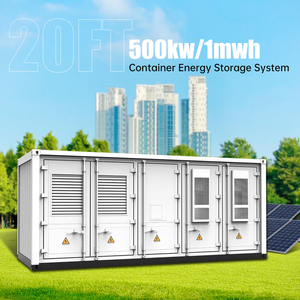
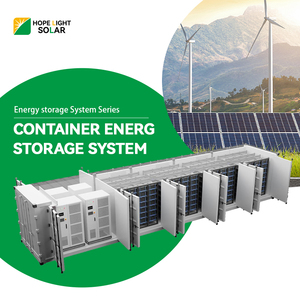
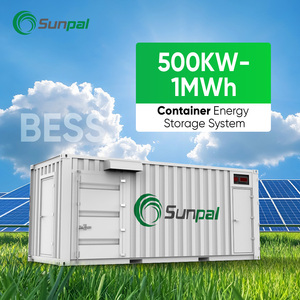
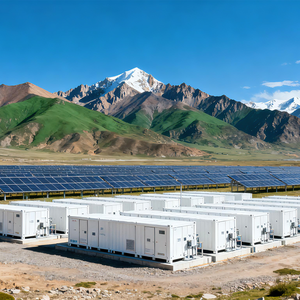
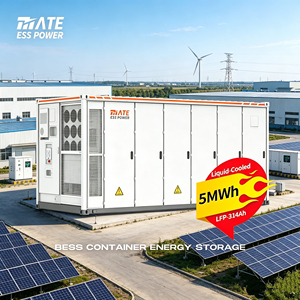
Industrial complexes across Upper Silesia (Katowice, Gliwice, Sosnowiec) utilize our 233kWh to 5MWh high-output containerized BESS for peak shaving, demand response, and mitigating steep Taryfa C commercial electricity rate spikes during peak shift shifts.
Along the windy northern coast (Pomeranian Voivodeship, Gdynia, Szczecin), rapid grid fluctuation poses stabilization challenges. Our fast-discharge SIB systems buffer volatile renewable generation and protect regional sub-stations from severe voltage dips.
Poland is CEE’s agricultural powerhouse. Cold storage warehouses in Mazowieckie and Wielkopolska rely on our sub-zero Na-Ion battery packs to power refrigerated storage facilities reliably even during grid blackout events in sub-zero winter temperatures.
Comparative analysis for Polish EPC contractors, OEM engineers, and commercial project developers.
| Performance Parameter | Sodium-Ion (Na-Ion) Pack | LiFePO4 (LFP) Pack | NMC Lithium Pack |
|---|---|---|---|
| Operating Temp Range | -40°C to +65°C | -20°C to +55°C | -20°C to +60°C |
| Capacity @ -20°C | > 88% Retention | 55% - 65% Retention | 70% - 75% Retention |
| 0V Discharge Transit | 100% Safe (0 Volts) | Not Allowed (Permanent Damage) | Not Allowed (Safety Hazard) |
| Raw Material Availability | Abundant (Abundant Na Salts) | Restricted (Lithium/Phosphorus) | Highly Volatile (Cobalt/Nickel) |
| Thermal Runaway Temp | > 260°C (Extremely Stable) | ~ 210°C | ~ 150°C |
| Max Fast Charge Rate | 3C - 5C Continuous | 1C - 2C Max | 1C - 3C Max |
| Cost Trend (2025–2030) | Rapidly Decreasing (>30% savings) | Stable / Moderate Risk | High Fluctuation Risk |
Poland's National Recovery Plan (KPO) and modern subsidy frameworks demand certified energy storage systems. Our OEM packs strictly adhere to CE, IEC 62619, and UN38.3 standards, unlocking maximum grant eligibility for commercial installations.
We provide complete Battery Passport transparency, supply chain traceability, and low-carbon manufacturing compliance essential for Polish enterprises exporting finished machinery across the EU single market.
With PSE S.A. introducing stricter demand-side response incentives, our high-voltage SIB container solutions deliver sub-second response times needed to monetize grid frequency containment reserves (FCR).
From initial chemical cell selection to intelligent BMS software engineering and enclosure fabrication.
Proprietary CANbus, RS485, and Modbus TCP communication integration supporting standard CEE inverter protocols (Victron, SMA, Deye, Sungrow, GoodWe).
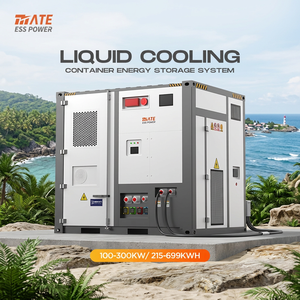
Precision HVAC and liquid-cooling loop integration guaranteeing cell-to-cell thermal uniformity under 2°C across massive 5MWh container footprints.
100% cell sorting, automated laser tab welding, vibration stress testing, and hardware-in-the-loop (HIL) safety validation before shipment.
Direct answers to technical, commercial, and logistical queries from Polish business clients.
Sodium-Ion offers superior lower-temperature operation (-40°C to -20°C), lower long-term raw material costs, higher fast-charging capabilities, and complete zero-volt transport safety, making it far safer and more reliable during Polish cold winters.
Yes. Our battery storage containers and custom pack assemblies comply fully with CE, IEC 62619, IEC 62477, UN38.3, and standard grid connection guidelines required by Polish Distribution System Operators (DSOs).
Absolutely. Our smart BMS supports customized firmware profiles for leading CEE inverter platforms, offering seamless plug-and-play communication via CAN 2.0B, Modbus RTU, and Modbus TCP.
Our industrial-grade Sodium-Ion cells achieve 4,000 to over 6,000 deep charge-discharge cycles at 80% Depth of Discharge (DoD), delivering an operational service lifespan of 12 to 15 years under standard maintenance.
Because Sodium-Ion batteries can be safely discharged to 0V without structural degradation, shipping is classified under simplified safety protocols, drastically reducing air/sea freight surcharges into ports like Gdańsk or inland rail logistics.
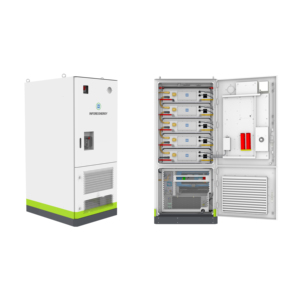
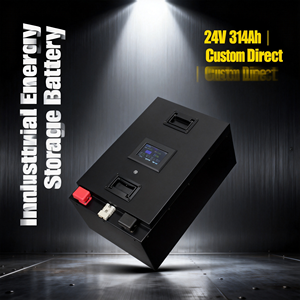
Yes. We specialize in custom OEM/ODM packaging, offering IP65/IP67 indoor/outdoor cabinets, 10ft/20ft/40ft ISO containerization, and custom rack-mountable footprints fitted with automatic fire suppression systems.
Whether you require custom rack modules, low-temperature off-grid packs, or megawatt-scale BESS container systems for the Polish market, our engineering team is ready to deliver tailored solutions.