Engineered by leading OEM/ODM China factories for heavy-load automation, smart warehouse AMRs, and high-ambient logistics center operations.
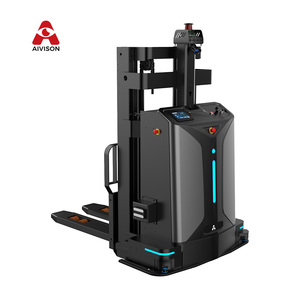
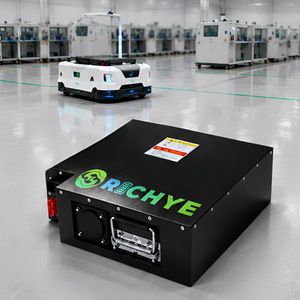
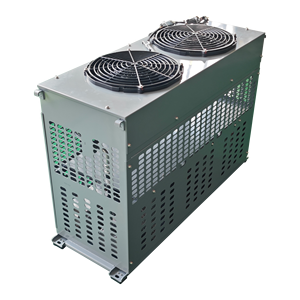
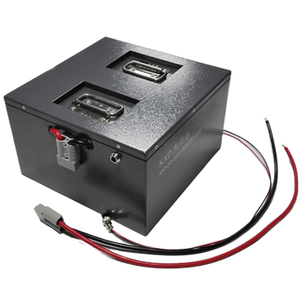
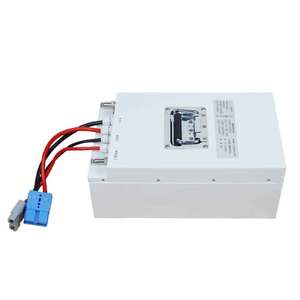
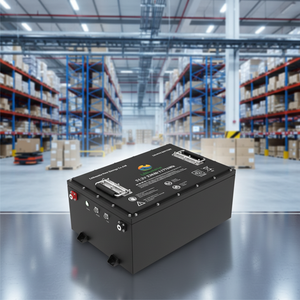
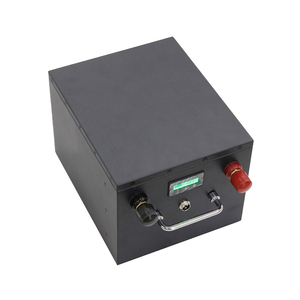
Under the framework of Saudi Vision 2030 and the National Industrial Development and Logistics Program (NIDLP), the Kingdom of Saudi Arabia (KSA) is undergoing an unprecedented structural transformation. Riyadh, Jeddah, Dammam, and giga-projects like NEOM, Red Sea Global, and SPARK (King Salman Energy Park) are accelerating the integration of fully autonomous logistics infrastructure. Central to this automated revolution are Automated Guided Vehicles (AGVs), Autonomous Mobile Robots (AMRs), and industrial electric forklifts.
However, operating energy systems within Saudi Arabia presents unique engineering hurdles. Ambient operational temperatures in industrial zones such as MODON (Saudi Authority for Industrial Cities and Technology Zones) frequently reach 50°C to 55°C during summer months. Standard lithium-ion batteries suffer rapid capacity degradation, thermal runaway hazards, and BMS shutoffs under such heat spikes. Consequently, Saudi logistics directors and automation system integrators are shifting procurement mandates toward Chinese specialized original equipment manufacturers (OEMs) capable of delivering high-temperature grade LiFePO4 (Lithium Iron Phosphate) and LMFP (Lithium Iron Magnesium Phosphate) chemistry paired with active liquid cooling BTMS (Battery Thermal Management Systems).
NEOM Oxagon and Riyadh automated fulfillment mega-hubs require 24/7 continuous AGV fleet uptime with 1C to 3C opportunity fast charging without heat buildup.
Battery packs must withstand interior warehouse ambient temperatures exceeding 45°C without triggering over-temperature safety cutoffs or cell venting.
Integration of high-capacity 100kWh+ outdoor containerized BESS with industrial AGV charging hubs powered directly by localized solar PV arrays.
Comparative technical evaluation of battery chemistry performance in high ambient temperature fulfillment environments.
Selecting the optimal battery chemistry is critical for calculated Total Cost of Ownership (TCO) in Saudi Arabian automated warehouses. While legacy NMC (Nickel Manganese Cobalt) offers high energy density, its thermal stability threshold (~210°C thermal runaway onset) makes it unstable in non-air-conditioned Middle Eastern facilities. China’s premier AGV battery factories utilize customized prismatic LiFePO4 cells and advanced LMFP formulations engineered for thermal endurance up to 270°C+ runaway thresholds.
| Technical Parameter | Standard NMC Lithium | Industrial LiFePO4 (LFP) | Next-Gen LMFP (Magnesium Enhanced) |
|---|---|---|---|
| Thermal Runaway Limit | ~210°C (High Risk) | ~270°C (Extremely Safe) | ~310°C (Ultra-Stable) |
| Cycle Life @ 45°C Ambient | 1,200 – 1,800 Cycles | 4,500 – 6,000 Cycles | 6,500 – 8,500 Cycles |
| Nominal Cell Voltage | 3.6V / 3.7V | 3.2V | 3.7V – 4.1V |
| Fast Charge Acceptance (C-Rate) | 0.5C – 1C | 1C – 2C Opportunity | 2C – 3C Ultra-Fast |
| Saudi Desert Compatibility | Requires Heavy AC | Ideal for MODON / Warehouses | Optimal for NEOM Outdoor AGVs |
Information Gain Insight: Chinese OEM manufacturers utilize 314Ah and 250Ah high-capacity prismatic cells equipped with ceramic-coated separators and aluminum casing. This construction mitigates internal short circuits caused by thermal expansion during heavy-load forklift operations.
For heavy-payload AGV carts operating in Saudi Arabia transporting 2-ton to 10-ton steel coils or standardized pallets, passive air cooling is insufficient. Modern Chinese AGV battery systems incorporate Intelligent Battery Thermal Management Systems (BTMS) with integrated liquid-chilling loops.
As Saudi industrial mobile robots scale up in payload capacity, traditional low-voltage systems (24V/48V) experience extreme copper wire resistance losses ($I^2R$ heating). China's leading battery factories now supply 400V and 750V DC modular pack architectures.
Real-world deployment frameworks for customized Chinese AGV battery solutions across KSA key sectors.
Industrial parks in Jeddah and Dammam host extensive logistics facilities handling FMCG and pharmaceuticals. Automated pallet handling AGVs equipped with 48V 250Ah LiFePO4 packs operate continuously over 3 shifts using 30-minute opportunity charges during automated shift handovers.
Heavy-duty AGVs transporting 40ft shipping containers demand immense power. China-manufactured 750V DC liquid-cooled BTMS battery platforms provide stable continuous discharge rates of 300A+ under intense ambient coastal humidity and high temperatures.
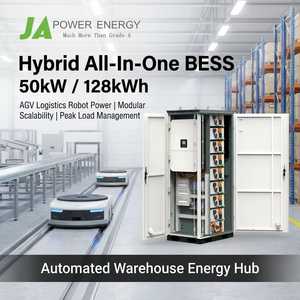
Giga-projects relying 100% on renewable energy utilize 128kWh Solar Battery All-in-One BESS systems (IP55). These units buffer solar PV power during daylight to rapid-charge autonomous robot fleets through desert nights without grid connection.
Sourcing directly from tier-1 Chinese AGV battery manufacturers provides Saudi Arabian importers and engineering procurement contractors (EPCs) with key commercial and technological advantages:
Custom mechanical dimensions, sheet metal IP67 enclosures, custom voltage (12V to 800V), and tailored BMS software algorithms designed specifically for proprietary AGV drive engines.
Factories adhere to strict international quality standards including ISO9001, ISO14001, CE, UL1973, UL2580, IEC62619, and UN38.3 transport safety validation.
Experienced export documentation teams providing valid Conformity Certificates (CoC) registered on Saudi Arabia’s SABER platform for rapid customs clearance at Dammam and Jeddah ports.
Robotic busbar laser welding ensures structural resistance against heavy shock and vibration experienced by automated carts driving over uneven warehouse joints.
Addressing common technical, logistics, and compliance inquiries from Middle Eastern procurement teams.
Partner with China's leading technical OEM factory. Access engineering CAD drawings, custom BMS protocol documentation, and competitive direct factory pricing for your Saudi warehouse or robotics project.