
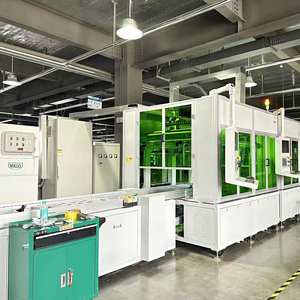
Prismatic LFP Assembly
Send an Inquiry
Industrial-grade automatic and semi-automatic production lines for prismatic, cylindrical, LFP, and ESS battery module assembly serving Boston OEMs and global manufacturing hubs.
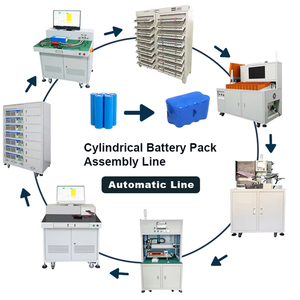
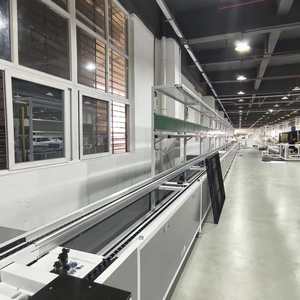
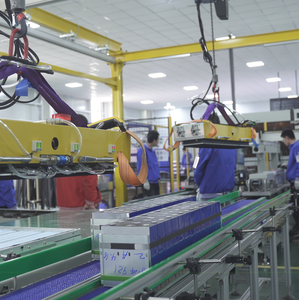
The Greater Boston industrial ecosystem—spanning the Route 128 high-tech corridor, Cambridge’s robotics and biotech clusters, and coastal oceanographic research centers—demands ultra-reliable, high-energy-density custom power systems. Procurement managers and lead systems engineers in New England face unprecedented challenges: rapid microgrid deployment, stringent urban safety mandates (such as NFPA 855), and harsh sub-zero coastal operating conditions.
Evaluating turnkey lithium battery pack assembly suppliers requires analyzing technical expertise across five critical vectors: automated cell grading/sorting, high-precision laser busbar joining, smart Battery Management System (BMS) telemetry integration, automated end-of-line (EOL) functional testing, and full traceability under ISO 13485 and AS9100D standards.
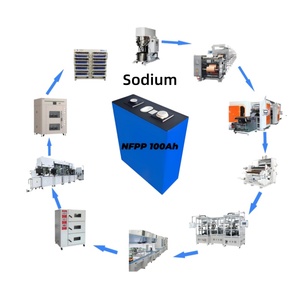
Technical Information Gain Note: Unlike off-the-shelf pack distributors, elite turnkey assembly suppliers deliver integrated cell-to-pack (CTP) and module-to-pack production equipment capable of processing prismatic LFP (Lithium Iron Phosphate), cylindrical 18650/21700/32700 cells, and emerging Sodium-ion chemistry on flexible, rapid-reconfiguration assembly lines.
Selecting the optimal automated assembly line configuration depends on cell chemistry, physical geometry, and target duty cycles. The matrix below outlines operational specs across major turnkey assembly setups serving Boston's OEM and renewable storage ecosystem.
| Assembly Line Type | Target Cell Geometries | Automation Grade | Joining Technology | Key Boston Industry Fit |
|---|---|---|---|---|
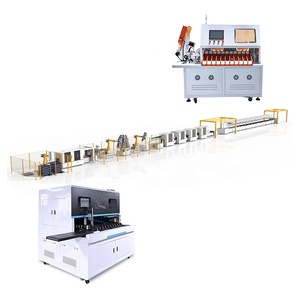
| Prismatic LFP Assembly Line | Catl-Style Prismatic, 50Ah - 300Ah | Fully Automated / Semi-Auto | High-Speed Laser Beam Welding | Commercial Microgrids, Telecom Base Stations, Grid ESS |
| Cylindrical Multi-Cell Line | 18650, 21700, 26650, 32700 | Automated Pick & Place | Pneumatic / Servo Spot Welding & Wire Bonding | Robotics, Autonomous Vehicles (AGVs), Wearable Tech |
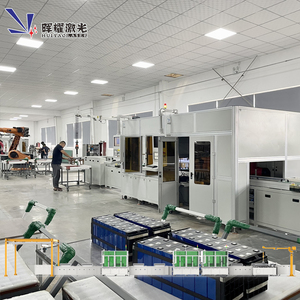
| Huiyao Laser Prismatic Line | Large Format Li-ion & NCM Prismatic | Full Robotic Automation (CNC) | Oscillating Galvanometer Laser Welding | Heavy Electric Transport, Naval Vessels, Heavy Defense |
| Hybrid Sodium-Ion / LFP Line | Prismatic & Large Cylindrical | Flexible Reconfigurable Line | Multi-Material Ultrasonic / Fiber Laser | Sub-Zero Extreme Weather Storage, Resilient Grid Backups |
The Greater Boston area presents unique operational environments requiring specialized battery thermal management, structural ruggedization, and environmental sealing IP ratings. Leading turnkey suppliers engineer assembly solutions tailored specifically for local enterprise sectors:
Boston's booming robotics market requires high-discharge cylindrical (21700/18650) packs with integrated SMBus/CANbus smart telemetry. Turnkey lines incorporate automatic voltage/IR cell sorting and vibration-resistant nickel busbar welding to handle high peak currents during rapid acceleration.
Deployments in Woods Hole, Boston Harbor, and Atlantic research vessels demand watertight sealed battery packs with conformal-coated BMS protection. Turnkey prismatic assembly lines integrate automated structural glue dispensing and helium leak detection to guarantee IP67/IP68 sealing integrity.
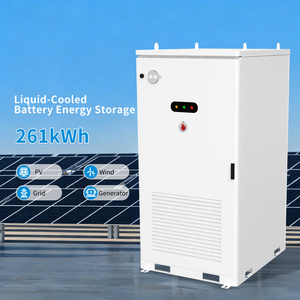
Driven by MassCEC decarbonization initiatives, urban telecom and utility substations across Boston rely on 100kWh to 261kWh containerized LFP storage units. Automated assembly lines ensure precision cell insulation wrapper application, active thermal balancing, and high-voltage safety isolation.
New England winters subject outdoor energy storage installations and electric utility fleets to temperatures well below 0°C. Standard lithium-ion chemistries suffer severe capacity degradation and lithium plating risks when charged in freezing conditions. Turnkey assembly lines serving Boston OEMs integrate automated internal PTC heating foil placement, aerogel thermal barrier insertion between prismatic cells, and smart BMS low-temperature cutoff firmware to guarantee 100% operational uptime without thermal runaway.
The City of Boston and Massachusetts state fire codes enforce rigorous NFPA 855 standards for stationary energy storage systems (ESS). Turnkey lithium pack assembly systems must implement automated module-level thermal propagation barriers. By utilizing flame-retardant polycarbonate enclosures, ceramic insulation sheets, and active aerosol fire suppression mounting during assembly, manufacturers ensure seamless municipal approval for urban commercial installs.
Assembly protocols designed for defense OEMs near Hanscom AFB and Natick Labs, adhering to AS9100 aerospace quality systems, MIL-STD-810G shock/vibration resistance, and UN 38.3 HAZMAT transport standards.
Full integration of Texas Instruments, Analog Devices, and NXP battery monitoring ICs supporting CANbus 2.0B, J1939, and Modbus RS485 communication protocols for continuous State of Charge (SOC) and State of Health (SOH) tracking.
100% end-of-line dynamic load cycling, internal resistance spectroscopy, dielectric withstand testing (Hi-Pot), and thermal imaging inspection prior to final packaging and delivery.
Emerging Power and top-tier custom assembly engineering partners combine over 120 years of collective technical expertise. Serving as authorized battery assemblers for world-class cell manufacturers—including Energizer, Amprius, and NanoGraf—our manufacturing operations leverage state-of-the-art turnkey assembly lines to deliver custom engineered battery solutions from initial prototype modeling to high-volume manufacturing.
Whether your application requires lightweight high-capacity silicon-anode cells for aerospace drones, heavy-duty prismatic LFP modules for industrial solar storage, or specialized military primary packs, turnkey assembly automation ensures minimal internal impedance, perfect spot/laser weld consistency, and long-cycle longevity.
Standard semi-automatic assembly lines typically deliver within 6 to 8 weeks, while fully automated turnkey prismatic/cylindrical production lines with integrated laser welding and EOL testing stations average 10 to 14 weeks from design sign-off to factory acceptance testing (FAT).
Reputable assembly suppliers perform full UN/DOT 38.3 testing protocols—including altitude simulation, thermal shock, vibration, 50G impact shock, external short circuit, and forced discharge testing—enabling certified air freight via Logan International Airport or ocean shipment via the Port of Boston.
Yes. Modern flexible turnkey lines utilize adaptive clamping fixtures and dual-wavelength laser welding systems capable of joining both copper/aluminum tabs used in LFP prismatic cells and the specialized current collectors of emerging Sodium-ion cell configurations without changing hardware modules.
Boston tech companies primarily request CANbus 2.0B (specifically J1939 protocols for industrial vehicles), SMBus v1.1 for medical devices, and Modbus RTU/TCP for commercial ESS setups. Advanced packs also include Bluetooth LE telemetry for real-time smartphone/tablet diagnostic monitoring.
Turnkey production equipment integrates automated application of phase-change materials (PCM), ceramic thermal insulation sheets between adjacent prismatic cells, structural epoxy potted potting, and hardware-level overcurrent micro-fuses at each parallel cell interconnect.
Connect with our senior battery design engineers to discuss your custom pack specifications, automated turnkey production lines, or localized OEM supply chain requirements in Greater Boston.