
1. Executive Summary & The Kenyan Energy Transition Landscape
Kenya has rapidly established itself as Sub-Saharan Africa’s premier hub for renewable energy innovation. With renewable resources contributing over 80% of Kenya’s electricity grid—primarily derived from geothermal, hydro, wind, and utility-scale solar projects—the nation faces a critical engineering challenge: grid stabilization, localized power quality, and peak demand management. Commercial and industrial (C&I) enterprises in Nairobi, Mombasa, Kisumu, and Eldoret frequently contend with grid frequency deviations, voltage sags, and Kenya Power (KPLC) tariff spikes during peak demand intervals.
To mitigate these energy bottlenecks, leading Kenyan Engineering, Procurement, and Construction (EPC) contractors and energy developers are aggressively integrating Smart Battery Energy Storage Systems (BESS) featuring Controller Area Network (CAN Bus) architecture. CAN Bus integration transforms static LiFePO4 battery banks into dynamic, real-time responsive assets capable of seamless communication with hybrid inverters, microgrid controllers, and remote cloud management platforms.
Information Gain Insight: Unlike standard RS485 or Modbus-only telemetry—which often suffers from master-slave polling latency in high-voltage containerized environments—CAN Bus protocol operates on a multi-master, message-prioritized broadcast bus. In Kenyan microgrids running high inductive motor loads (such as tea factories in Kericho or flower farms in Naivasha), CANbus Smart BMS provides sub-millisecond cell balancing and fault isolation, preventing catastrophic thermal runaways caused by sudden grid drops.
2. Technical Architecture: How CAN Bus Smart BMS Operates in LiFePO4 Storage
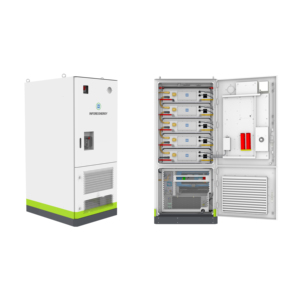
A Smart BMS (Battery Management System) serves as the primary intelligence layer of any modern Lithium Iron Phosphate (LiFePO4) storage setup. It monitors cell-level parameters, including individual cell voltage (mV precision), module temperature, state of charge (SOC), state of health (SOH), and bidirectional current flow.
Active vs. Passive Balancing
Smart BMS engineered for East Africa incorporates 2A to 5A active balancing circuits. Energy from overcharged cells is transferred directly to undercharged cells rather than dissipated as heat—essential for tropical ambient operating conditions in Kenya.
CAN 2.0B / J1939 Protocols
High-voltage battery clusters utilize differential signaling (CAN_H and CAN_L) over twisted-pair lines, isolating signal interference from high-power PCS (Power Conversion Systems) in noisy industrial environments.
Automated Fault Isolation
Upon detection of over-voltage, cell imbalance, or thermal runaway markers, the Smart BMS commands solid-state contactors (relays) to trip within microseconds while broadcasting emergency stop frames across the CAN line.
CAN Bus vs. Legacy Communication Protocols in Industrial BESS
The table below presents a comparative benchmark evaluated under field conditions typical of East African renewable energy installations:
| Protocol Parameter | CAN Bus (2.0B / J1939) | RS485 (Modbus RTU) | Ethernet (Modbus TCP) |
|---|---|---|---|
| Data Transfer Architecture | Multi-Master Broadcast | Single Master / Slave Polling | Client / Server Packet Switch |
| Transmission Speed | 250 kbps – 1 Mbps | 9.6 kbps – 115.2 kbps | 100 Mbps – 1 Gbps |
| Noise Immunity & Reliability | Extreme (Differential Pair) | Moderate | High (Galvanic Isolation) |
| Sub-Millisecond Fault Warning | Native Hardware Priority | No (Polling Latency Delay) | Software Layer Dependent |
| Inverter Compatibility in Kenya | Universal (Sunsynk, Victron, Deye, SMA) | Legacy Only | Utility Scale Systems |
3. Localized Application Scenarios Across Kenya
A. Commercial & Industrial (C&I) Peak Shaving in Nairobi & Mombasa
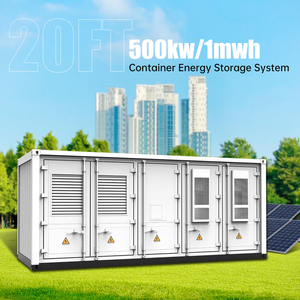
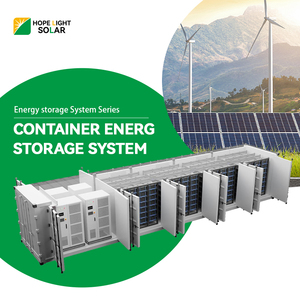
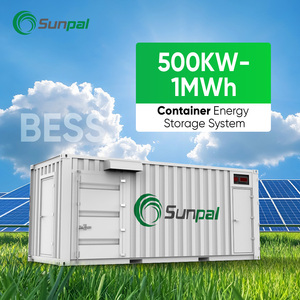
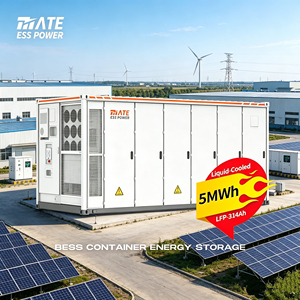
Industrial electricity tariffs in Kenya under KPLC include heavy demand charges assessed during peak windows. Manufacturing facilities along Nairobi’s Enterprise Road or Mombasa’s Shimanzi industrial area deploy 233kWh to 1MWh Containerized BESS. Integrated CANbus Smart BMS allows automated peak-shaving algorithm execution: when factory power consumption breaches preset kW thresholds, the BMS triggers instant discharge via CAN-linked inverters, capping grid demand and significantly lowering monthly energy bills.
B. Off-Grid Hybrid Microgrids for Safari Lodges & Agricultural Processing
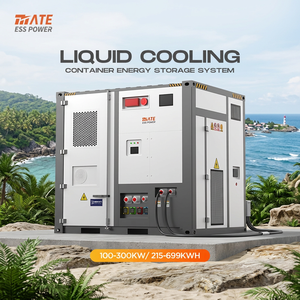
From luxury safari camps in Masai Mara to tea estate processing hubs in Kericho and Nandi Hills, diesel generator dependence represents a massive operational expense. MATE 100kW–699kWh smart battery containers paired with high-voltage LiFePO4 packs allow 100% solar fraction operation during daytime and quiet battery discharge at night. The smart BMS ensures battery cell thermal equilibrium even under tropical ambient temperatures exceeding 38°C in Northern Kenya (Turkana and Garissa).
C. Telecom Tower Backup Infrastructure (Safaricom & Airtel Sites)
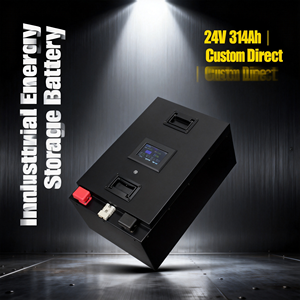
Off-grid and weak-grid telecom base transceiver stations (BTS) demand bulletproof energy availability. Custom 24V / 48V 314Ah Smart Lithium Modules with CANbus telemetry supply real-time state-of-health data directly to Network Operations Centers (NOC), enabling predictive maintenance before BTS failure occurs.
4. Key Criteria for Evaluating Smart BMS Manufacturers & Exporters for Kenya
When procuring BESS container solutions or smart battery modules for installation in Kenya, engineering teams must scrutinize manufacturers based on five essential criteria:
- Inverter Protocol Interoperability: Ensure the BMS vendor provides customizable CAN mapping files (.DBC or firmware configurations) compatible with major inverter brands deployed across East Africa (e.g., Sunsynk, Deye, Victron Energy, Growatt, Schneider Electric, SMA).
- Thermal Management Integration: In Kenyan coastal regions like Mombasa and Malindi, humidity and high ambient temperatures accelerate lithium degradation. Container systems must integrate liquid cooling or dedicated HVAC units driven directly by Smart BMS thermal logic.
- Tier-1 Automotive Grade A Cells: Specify fresh, prime LiFePO4 prismatic cells (such as 314Ah or 280Ah chemistry) rated for 6000 to 10,000 cycles at 80% Depth of Discharge (DOD).
- EPRA & KEBS Regulatory Compliance: Ensure imported energy storage systems comply with Energy and Petroleum Regulatory Authority (EPRA) requirements and Kenya Bureau of Standards (KEBS) guidelines for high-voltage DC equipment.
- Logistics & Port Clearance Support: Choose exporters experienced with freight forwarding to Kilindini Port Mombasa and customs clearance at ICD Nairobi (Embakasi Inland Container Depot).