Engineered with smart dual-channel CAN Bus BMS telemetry, automated cell balancing, and liquid/air cooling thermal protection optimized for Greek grid conditions.
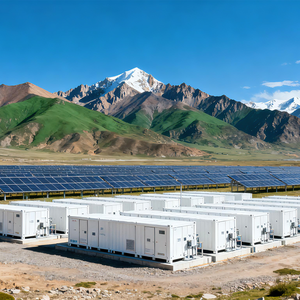
Greece stands at the epicenter of Southern Europe’s renewable energy transformation. Driven by the Hellenic National Energy and Climate Plan (NECP) targets—aiming for over 80% renewable energy penetration in electricity generation by 2030—the Greek grid is undergoing a seismic shift. However, the geographic realities of the Aegean and Ionian archipelagos, coupled with high solar irradiation in Attica, Peloponnese, and Crete, present severe grid stability challenges. Transmission bottlenecks handled by ADMIE (Independent Power Transmission Operator) and distribution constraints managed by HEDNO (DEDDIE) require fast-responding, localized Battery Energy Storage Systems (BESS).
At the core of high-performing BESS deployment in Greece is the Controller Area Network (CAN Bus) Smart Battery Management System (BMS). As high-voltage Lithium Iron Phosphate (LiFePO4) systems scaled up to megawatt-hour capacities, legacy analog or simple RS485 communication protocols failed to deliver the required noise immunity, real-time control frequency, and system-level diagnostic accuracy demanded by Greek island microgrids and commercial PV installations.
Technical Insight: CAN Bus 2.0B operating at 250kbps or 500kbps provides deterministically prioritized message arbitration. This allows the master BMS to instantly throttle charge/discharge limits during voltage spikes or thermal anomalies within 2 milliseconds—preventing catastrophic thermal runaway and eliminating grid trips on isolated Greek island power plants.
Whether powering off-grid luxury resorts in Mykonos, stabilizing agricultural microgrids in Thessaly, or delivering ancillary frequency response in the industrial zones of Aspropyrgos, high-voltage battery systems require seamless interoperability with European inverter manufacturers like Victron Energy, SMA, Kehua, Deye, and Megarevo. This interoperability relies exclusively on precision-engineered CAN Bus protocol mapping (CANopen and SAE J1939 standards).
Engineering procurement managers, EPC contractors, and project developers in Greece must carefully evaluate battery suppliers based on rigorous criteria: protocol flexibility, thermal management resilience under +45°C Mediterranean ambient conditions, salt-fog corrosion protection for island coastal sites, and local CE / IEC compliance. Below is an exhaustive industry evaluation of the leading OEM factories serving the Greek energy sector in 2026.
| OEM Manufacturer / Supplier | Core Focus & Capacity | CAN Bus Protocol Support | Thermal System | Grid & Safety Compliance |
|---|---|---|---|---|
| 1. Emerging Power / BENY ESS | 1MWh – 5MWh Utility Container | Dual CAN 2.0B, CANopen, J1939 | Liquid Microchannel Cooling | IEC 62619, CE, UN38.3, HEDNO Ready |
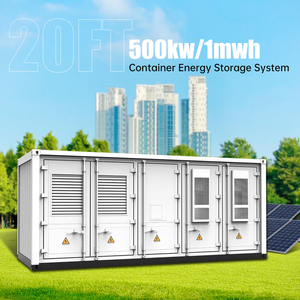
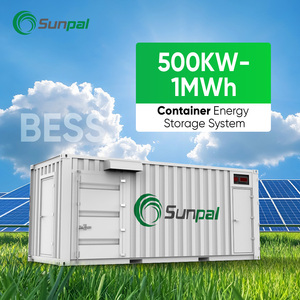
| 2. Sunpal Energy OEM Factory | 500kW / 1MWh C&I Cabinet BESS | Isolated CANbus, Modbus TCP | Smart HVAC Air Cooling | IEC 62619, CE, UL 9540A |
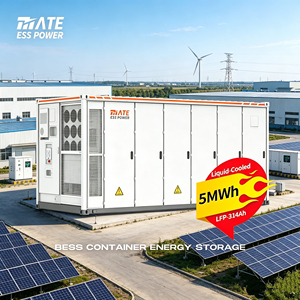
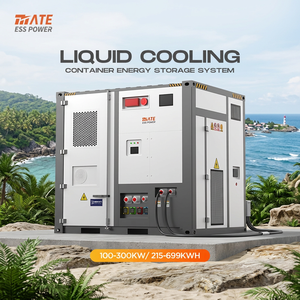
| 3. MATE LFP Energy Solutions | 100kW – 699kWh Island Modular BESS | CANopen (Victron/SMA compatible) | Heavy-Duty HVAC + C5 Coating | CE, UN38.3, IEC 61000-6-2/4 |
| 4. Amprius OEM Pack Assembly | High Energy Density Custom Cell Packs | High-Speed CAN 500kbps | Phase Change / Passive Air | UN38.3, RoHS, CE |
| 5. Narada Industrial Storage | 2MWh – 4MWh Grid Energy Containers | CAN2.0B & RS485 Dual Bus | Liquid Cooling System | IEC 62619, CE, GB/T 36276 |
| 6. Topband Energy Factory | 233kWh C&I Smart Storage Cabinets | CANopen, J1939, Custom DBC | Smart Air Forced Flow | CE, IEC 62619, UN38.3 |
| 7. CATL OEM Systems Division | Large Scale EnerOne / EnerC Containers | Proprietary High-Speed CAN | Direct Liquid Cooling | UL 9540, IEC 62619, CE |
| 8. Pylontech Commercial Division | High Voltage Rack Systems (100V-800V) | Standardized CANbus 2.0B | Rack-Integrated Fans | VDE 2510-50, IEC 62619, CE |
| 9. Kehua Tech BESS OEM | Containerized PV + Storage Systems | CAN2.0B / Ethernet Gateway | HVAC Air Cooling | CE, EN 50549, HEDNO Code |
| 10. EVLO Energy Storage | Commercial & Utility Microgrids | CANopen / DNP3 Gateway | Advanced HVAC System | UL 9540, IEC 62619, CE |
When selecting a factory partner for installation in Greece, custom engineering capability for the BMS firmware is paramount. A static, non-configurable BMS often leads to protocol mismatches when interfacing with legacy island diesel generators or regional hybrid controllers.
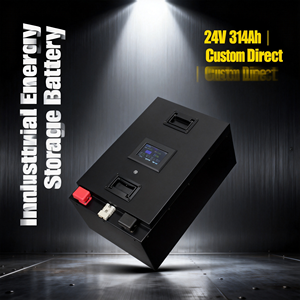
The reliability of high-voltage battery storage relies on a multi-tier master-slave BMS architecture interconnected via galvanic-isolated CAN Bus networks. In typical 1000V DC high-voltage containers (comprising 314Ah LiFePO4 cells arranged in 320S configurations), the BMS architecture is divided into three distinct functional layers:
Directly mounted on 16S or 32S cell modules. Measures individual cell voltage (±1mV accuracy) and surface temperature via NTC thermistors. Transmits data to the Slave BMS via internal CAN Bus.
Aggregates data from BMUs across a single high-voltage string. Executes active balancing routines (up to 5A balancing current) and monitors total rack voltage, current via Hall sensors, and isolation resistance.
Interfaces with external Inverters, EMS (Energy Management Systems), and SCADA via high-speed isolated CAN 2.0B / CANopen or Ethernet TCP/IP. Controls main high-voltage contactors and thermal management.
The Greek economy features diverse operating environments that test battery storage hardware. Factory-integrated CAN Bus BMS solutions must adapt to specific localized microgrid conditions:
Islands like Santorini, Mykonos, Rhodes, and Milos experience massive summer population surges that strain local diesel generators and localized PV systems. Hybrid microgrids utilize 215kWh to 1MWh containerized BESS units (such as the MATE or Sunpal LFP containers). The Smart BMS interfaces over CANopen with Victron Energy Quattro/Skylla inverters or SMA Sunny Island networks. The CAN bus delivers fast frequency-response signals within 5 milliseconds during heavy load swings, suppressing voltage flicker and allowing diesel gensets to shut down during peak daylight hours.
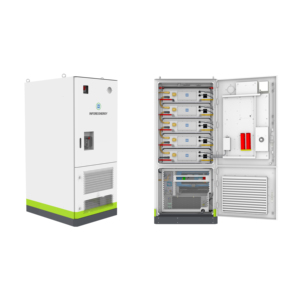
Seasonal agricultural operations in Kalamata, Crete, and Larissa demand high pulse power during harvest months. Solar PV owners operating under the Greek Net-Billing framework utilize 233kWh C&I storage cabinets. The Smart BMS uses CAN Bus telemetry to synchronize battery discharge with peak electricity tariff hours (Net-Billing offset optimization), allowing agribusinesses to avoid grid penalty charges imposed by HEDNO.
With Greece advancing the "GR-Eco Islands" green ports initiative, maritime charging infrastructure in Piraeus, Rafina, and Heraklion ports requires buffer storage. Heavy-duty 5MWh Liquid-Cooled containers equipped with C5-M anti-corrosion enclosures use high-speed CAN Bus 500kbps communication to interface with high-power DC fast chargers, insulating weak port electrical grids from extreme load spikes during vessel fast-charging.
Deploying energy storage in Greece requires compliance with European safety guidelines and Hellenic grid connection codes:
Partnering with a Tier-1 OEM factory guarantees high component quality, low failure rates, and rapid delivery to Greek ports. Recommended factory capabilities include:
Robotic Surface Mount Technology (SMT) production lines for BMS circuit boards with 100% automated optical inspection (AOI) and conformal coating application against salt moisture.
Comprehensive End-of-Line (EOL) testing using CAN hardware-in-the-loop simulators to test overvoltage, short circuit, and communication loss protocols under high ambient temperatures (+50°C).
Factory-direct sea container shipment (Dangerous Goods UN 3480 Class 9) with door-to-door customs clearance support for Greek engineering companies.
Engage with our senior battery application engineers to configure custom high-voltage LiFePO4 storage solutions engineered specifically for the Greek energy market and Mediterranean operating conditions.