High-performance LiFePO4 and Lithium-Ion energy storage solutions customized for oceanic microgrids, subsea pressure vessel housing, offshore support platforms, and heavy-duty industrial marine operations in the Adriatic and Tyrrhenian Seas.
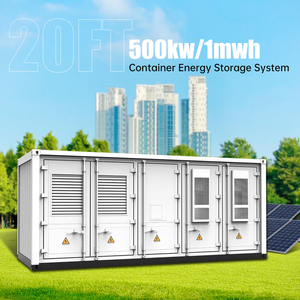
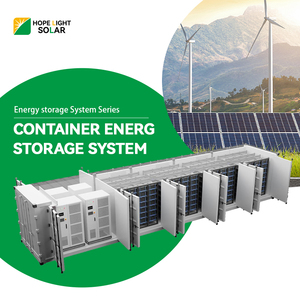
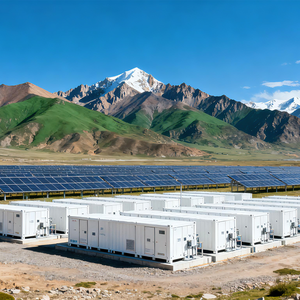
The Italian peninsula, bounded by the Tyrrhenian, Adriatic, and Ionian Seas, represents one of Europe's most dynamic marine economic corridors. As offshore activities transition from legacy subsea gas extraction in the Northern Adriatic to deep-sea oceanic research, subsea telecom cable maintenance, and floating offshore wind installations (such as projects around Sicily, Sardinia, and Apulia), the demand for high-reliability subsea battery enclosures has expanded dramatically.
Subsea power delivery presents hyper-rigorous structural and chemical engineering challenges. Operating at seabed depths ranging from 300 meters down to 4,000+ meters in deep Mediterranean trenches subjects equipment to static hydrostatic pressures up to 40 MPa (400 bar). At these pressures, standard terrestrial or marine battery enclosures fail catastrophically through mechanical implosion, seal deformation, or seawater ingress.
As a global pioneer in custom lithium energy packaging and high-durability enclosures, our engineering team supplies fully validated subsea pressure vessels, pressure-compensated oil-filled (PCOF) battery systems, and intelligent oceanographic energy banks specifically configured for Italian marine contractors, marine research institutions (such as CNR and OGS), and offshore energy integrators.
Selection of subsea battery enclosure architecture depends on mission duration, deployment depth, vehicle payload restrictions, and maintenance cycling requirements.
Constructed from high-tensile Titanium Grade 5 or forged 2507 Super Duplex steel. Hulls maintain internal atmospheric pressure (1 atm), permitting the use of standard prismatic LiFePO4 or pouch Li-Ion cells without fluid immersion. Includes precision double O-ring radial seals and finite-element (FEA) optimized wall thicknesses to eliminate buckling.
Fills the enclosure interior with non-conductive, dielectric synthetic silicon fluid linked to a flexible external elastomeric diaphragm. Internal fluid pressure continuously matches ambient seawater hydrostatic pressure, reducing hull wall weight by up to 70%. Essential for heavy-payload AUVs and long-duration seabed observatories.
Combines lightweight pressure vessel housings surrounded by engineered epoxy syntactic foam matrices. Designed for neutral buoyancy in subsea intervention vehicles and ROV tool skids, minimizing ballast adjustments during deep ocean operations in the Mediterranean basin.
Engineering specs for subsea energy deployment across Italian oceanographic and industrial offshore applications.
| Enclosure Metallurgy / Type | Depth Rating (Meters) | Max Pressure (Bar / MPa) | Compatible Battery Chemistry | Corrosion Resistance Rating | Primary Italy Application |
|---|---|---|---|---|---|
| Titanium Grade 5 (Ti-6Al-4V) | 0 – 6,000 m | 600 Bar / 60 MPa | Li-Ion / Solid-State / LFP | Immune to Mediterranean Seawater | Deep Sea Research, Trench AUVs |
| Super Duplex Stainless 2507 | 0 – 3,500 m | 350 Bar / 35 MPa | High-Density LiFePO4 (LFP) | PREN > 42 (Pitting Resistant) | Offshore Oil & Gas Seabed Trees |
| Hard-Anodized Al 6061-T6 / 7075 | 0 – 1,200 m | 120 Bar / 12 MPa | Modular Li-Ion (18650 / 21700) | MIL-A-8625 Type III Hardcoat | ROV Tool Skids & Inspection Drones |
| PCOF Flexible Elastomer Box | 0 – 4,000 m | Equalized (Zero Differential) | Dielectric Fluid-Tolerant LFP | Composite / Polyurethane Shell | Subsea Microgrids & Acoustic Node |
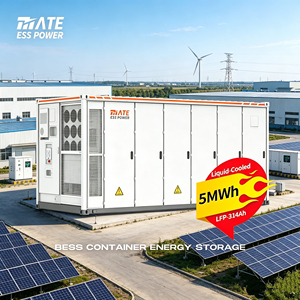
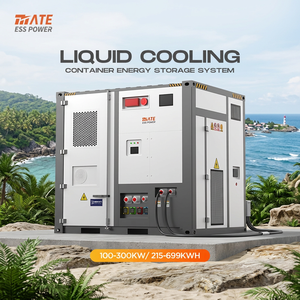
| Containerized Deck BESS Enclosure | Surface Deck / IP67 | Atmospheric (IP67 / NEMA 4X) | Containerized 314Ah LFP BESS | C5-M Marine Coating (ISO 12944) | Offshore Wind Support & Seaports |
Italy's strategic commitment to the PNRR (Piano Nazionale di Ripresa e Resilienza) and the European Green Deal has catalyzed significant capital investment into maritime decarbonization, smart port electrification (Genoa, Trieste, Augusta, Taranto), and marine renewable energy integration.
Key localized developments shaping subsea battery supply requirements include:
All battery systems exported to Italian marine and subsea sectors must conform to stringent European Norms (EN) and international maritime standards:
With over 120 years of collective engineering expertise in custom battery pack design, automated assembly, and high-reliability defense/industrial applications, Emerging Power brings unprecedented manufacturing authority to subsea energy projects.
Deep domain knowledge in lithium chemistry optimization, enclosure thermodynamics, and custom BMS firmware development.
Certified manufacturing controls ensuring absolute precision, traceability, and zero-defect quality control for oceanographic and defense applications.
Dual-redundant CANbus, Modbus RS-485, and subsea telemetry protocol integration with cell-level temperature and pressure monitoring.
Every subsea enclosure undergoes hydrostatic pressure test cycles at 1.5x working pressure and helium leak testing prior to export.
Answers to technical, logistical, and certification inquiries common among Italian maritime system integrators and oceanographic equipment buyers.
Talk directly with our subsea engineering and export specialists for technical datasheets, CAD models, and quotes.