Modular BESS Platforms & Custom Subsea Integration Enclosures for Vietnam Industrial and Marine Operations
As Vietnam accelerates its maritime economy—spanning offshore oil & gas extraction in the Nam Con Son Basin, subsea telecommunications cable landings, marine robotics deployment, and offshore wind power integration in Southern Vietnam—the demand for ultra-reliable, hyperbaric-certified subsea battery enclosures has reached an unprecedented critical mass. Operating out of Ho Chi Minh City, global OEMs, marine engineering contractors, and subsea operators require energy storage enclosures capable of enduring severe hydrostatic pressures, tropical saltwater corrosion, and continuous deep-ocean deployment cycle protocols.
We manufacture subsea battery enclosures utilizing Titanium Grade 5 (Ti-6Al-4V), Super Duplex Stainless Steel (UNS S32750), and hard-anodized marine 7075-T6 aluminum. Designed using finite element analysis (FEA) to withstand extreme crushing pressures up to 600 bar in abyssal zones.
For deep ocean deployments, our fluid-filled pressure-compensated battery modules utilize specialized synthetic ester or fluorinated dielectric fluids. This provides passive cooling, mitigates thermal runaway, and balances internal pressure with external hydrostatic forces seamlessly.
Integrated Smart BMS supports Subsea Modbus RS485, Subsea CANopen, and optical fiber interfaces. Real-time telemetry monitoring tracks individual cell voltages, state of charge (SoC), isolation resistance, internal moisture sensing, and pressure dynamics under water.
"In deep-ocean robotics and benthic power grids, a failure in hermetic containment isn't just an outage—it's catastrophic asset loss. Our subsea battery housing architectures feature dual-barrier Viton O-ring seals, wet-mateable glass-to-metal penetrators, and automated hyperbaric validation to guarantee 100% mission integrity across Vietnam’s maritime domain."
Ho Chi Minh City serves as the primary engineering procurement hub, logistical engine, and technical command center for Vietnam's marine and offshore infrastructure. Our subsea battery enclosures are directly aligned with key regional offshore sectors operating off the southern coastline:
Supplying subsea emergency shutdown (ESD) power units, seabed wellhead monitoring enclosures, and subsea control modules (SCM) operating in the Cuu Long and Nam Con Son basins managed by engineering teams in Ho Chi Minh City.
Custom payload battery enclosures designed for inspection ROVs and deep-water survey AUVs conducting bathymetric mapping, pipeline inspection, and oceanographic research across the South China Sea / East Sea routes.
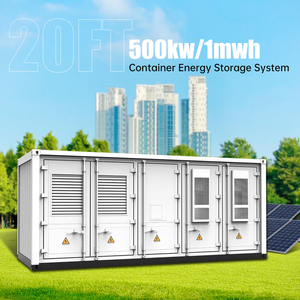
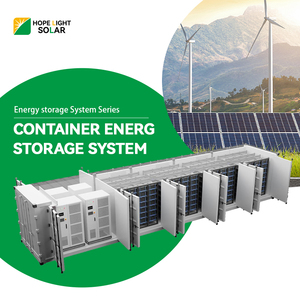
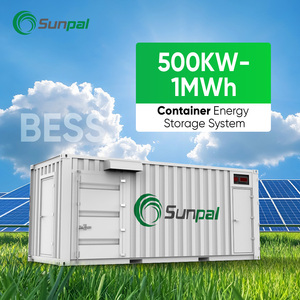
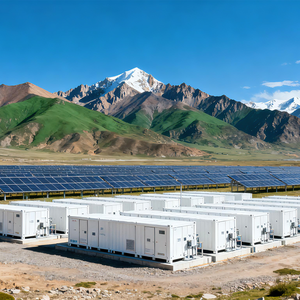
Providing heavy-duty IP68 marine battery banks and shore-side microgrid buffer containers (BESS) for offshore wind farms in Binh Thuan, Tra Vinh, and Soc Trang, routed via HCMC maritime logistics hub.
| Enclosure Series | Depth Rating | Material Construction | Sealing Mechanism | Cell Compatibility | Primary Application |
|---|---|---|---|---|---|
| DeepPower Titanium-6000 | 6,000 m (60 MPa) | Titanium Grade 5 (Ti-6Al-4V) | Dual Viton O-Rings + Metallic C-Rings | Solid-State / LiFePO4 / NMC | Deep Ocean AUVs, Benthic Stations |
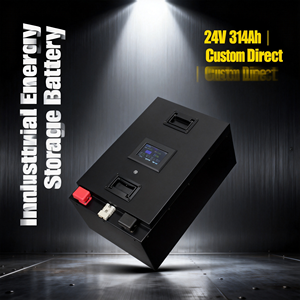
| OceanVault SuperDuplex | 3,000 m (30 MPa) | Super Duplex UNS S32750 | Glass-to-Metal Wet-Mateable Penetrator | High-Capacity LiFePO4 (314Ah) | Subsea Wellhead ESD & SCM Power |
| HydroComp Oil-Filled | 4,000 m (40 MPa) | Flexible Diaphragm + 7075-T6 Al | Pressure Compensated Dielectric Oil | Custom Prismatic LFP Modules | Long-Duration ROV Payload Batteries |
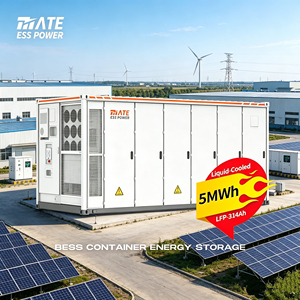
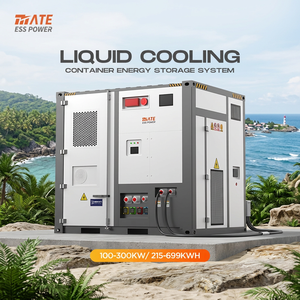
| MarineBESS Shore-Container | Surface / Splash Zone (IP67) | C5-M Marine Anti-Corrosion Steel | Multi-Point Gasket + Liquid Cooling | 1MWh – 5MWh LFP Container ESS | Offshore Wind & Port Microgrids (HCMC) |
Understanding the strategic shift in Vietnam's energy policy (PDP8) and regional subsea infrastructure modernization.
Vietnam's Power Development Plan VIII (PDP8) targets massive expansion in offshore wind generation by 2030. Subsea grid integration requires subsea battery energy storage systems (Subsea BESS) to balance intermittency right at the subsea substation level, eliminating surface cable transmission losses.
Procurement teams in Ho Chi Minh City are rapidly shifting from conventional lead-acid subsea backup banks to high-density LiFePO4 and emerging solid-state chemistries. Our enclosures feature specialized gas-management valves and thermal runaway propagation barriers tested under strict ISO 13628-6 subsea standards.
With Vietnam's participation in the EU-Vietnam Free Trade Agreement (EVFTA) and international maritime protocols, sourcing subsea equipment with fully traceable mill test reports (MTR), DNV-GL certificates, and UN 38.3 compliance allows seamless entry through Cat Lai Port in Ho Chi Minh City.
Leveraging over 120 years of collective engineering experience, state-of-the-art hyperbaric testing chambers, and full-spectrum custom battery assembly capabilities.
Our production facilities operate under strict aerospace and defense quality management protocols. Every enclosure undergoes 100% helium mass spectrometer leak detection and hydrostatic pressure proof testing before export dispatch.
Unlike standard housing vendors, we are an authorized custom battery assembler (working with tier-1 cells like Amprius, NanoGraf, and Energizer). We deliver fully turnkey systems—integrating cells, wiring harnesses, smart BMS, and hyperbaric housings under one roof.
We provide rapid engineering CAD iterations, 3D pressure simulation models, and expedited air freight directly to Tan Son Nhat International Airport (SGN) or ocean shipping directly to Ho Chi Minh City port terminals.
Addressing common engineering, environmental, and logistical queries regarding subsea battery deployment in Vietnamese waters.
A: Tropical surface waters near Vietnam can exceed 30°C, while deep benthic waters drop to 4°C. Our enclosures incorporate internal dual-zone thermal insulation and passive phase-change material (PCM) heat sinks combined with external conductive fins. This prevents battery overheating during surface transport and maintains optimal cell temperature during deep ocean immersion.
A: Yes. We offer 100% bespoke engineering. Whether your payload space requires cylindrical titanium pressure vessels, rectangular pressure-compensated oil boxes, or modular drop-in chassis, our engineering team in collaboration with your Ho Chi Minh City technical project managers will design custom CAD geometry to fit your exact ROV/AUV skid.
A: All exported subsea battery systems include Mill Test Reports (MTR EN 10204 3.1) for raw alloys, Hydrostatic Proof Pressure Certificates, UN 38.3 Lithium Transportation Test Summary Reports, MSDS, and Certificate of Origin (CO). This documentation facilitates quick customs clearance at Cat Lai Port and Tan Son Nhat Airport.
A: We utilize a multi-tier defense system: cell-level ceramic insulation barriers, internal dielectric liquid immersion or aerogel shielding, automatic over-pressure relief valves (burst discs calibrated for subsea differential pressure), and smart BMS active isolation switches.
A: Standardized subsea pressure housings and containerized energy storage units (BESS) can be dispatched within 4 to 6 weeks. Custom-engineered titanium hyperbaric battery enclosures typically range from 8 to 12 weeks, including full hyperbaric pressure chamber validation testing.
Elevate your oceanographic research, offshore oil & gas platforms, and marine robotics deployments in Ho Chi Minh City and across Vietnam. Speak directly with our senior subsea engineering specialists today to request custom CAD models, hyperbaric test data, or a turnkey project quote.