Engineered for high thermal endurance, sub-millisecond cell monitoring, and seamless KEPCO grid integration across South Korean commercial and utility deployments.
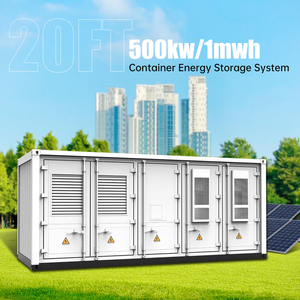
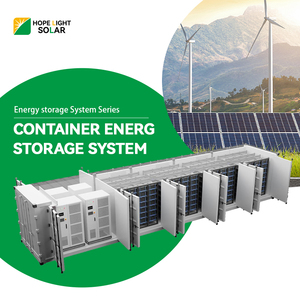
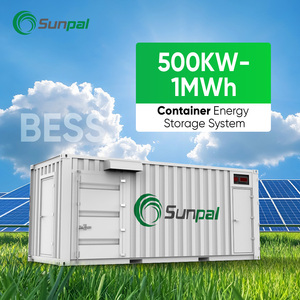
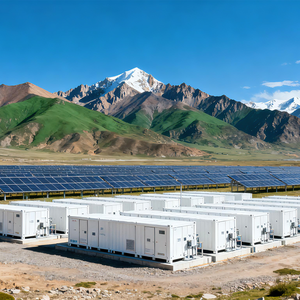
An in-depth technical analysis on solving non-linear thermal drift, state estimation inaccuracies, and high-voltage grid synchronization in South Korean battery architecture.
Modern commercial and utility-scale Battery Energy Storage Systems (BESS) deployed across South Korea—from industrial semiconductor hubs in Gyeonggi-do to large-scale solar projects in Jeollanam-do—demand highly reliable, scalable, and noise-immune management architecture. A single failure in cell voltage tracking can precipitate cascading thermal events or severe system down-times. As a dedicated Smart Battery Management System Design Manufacturer, our custom solutions utilize a three-tier hierarchical architecture designed specifically for high-capacity LiFePO4 (LFP) and high-density NCM chemistry modules.
Traditional passive balancing dissipates excess energy as heat through discharge resistors. In high-density 314Ah LFP cell arrays operating in 1MWh to 5MWh containers, passive balancing creates excessive internal heat, degrades container HVAC efficiency, and limits balancing currents to less than 100mA. This leads to severe capacity bottlenecks over 2,000+ operational cycles.
Our proprietary Smart BMS design incorporates high-efficiency bidirectional active balancing modules capable of transferring charge at up to 5A to 10A between non-adjacent cells. Utilizing high-frequency inductive or capacitive energy transfer topology, active balancing operates during both charge and discharge cycles. This reduces intra-pack cell voltage variance to under 10mV, unlocks up to 8% additional usable energy reserve, and extends total battery cycle life by over 25% in heavy daily duty-cycle applications.
Built with automotive-grade dual-core lockstep microcontrollers (ASIL-D compliant). Ensures real-time fault identification and hardware trip signals in under 2 milliseconds upon over-voltage or short-circuit detection.
Combines electrochemical model algorithms with real-time temperature telemetry to provide highly accurate State of Charge (SOC) tracking within 1.0% error margin, even under flat LFP voltage discharge curves.
Features embedded sensor interfaces for off-gas detection (CO, H2, aerosol), monitoring early cell venting prior to thermal events to trigger automated nitrogen or aerosol fire suppression systems.
Custom-engineered Smart BMS and BESS configurations adapted for South Korea’s rigorous electrical safety mandates and high-density industrial hubs.
Advanced semiconductor manufacturing lines require continuous power quality. Voltage sags lasting even milliseconds can disrupt billion-dollar production cycles. Our Smart BMS provides ultra-fast response control interfaces to PCS units, enabling instantaneous microgrid power transition while monitoring high-discharge lithium packs under strict cleanroom safety guidelines.
With South Korea’s aggressive transition toward offshore wind and solar power on Jeju Island, grid frequency fluctuations present severe operational challenges to KEPCO. Our containerized BMS systems monitor 1000V–1500V DC strings, delivering sub-second charge/discharge commands to stabilize local transmission lines while managing thermal performance during aggressive pulse power cycling.
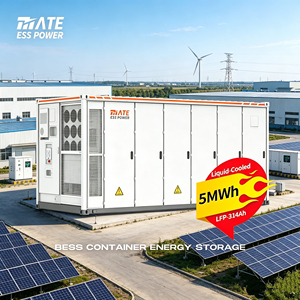
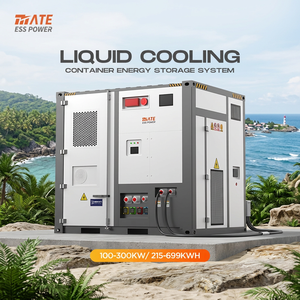
South Korea’s peak-demand electricity pricing structures force heavy industrial facilities to minimize peak power usage. Utilizing our 233kWh to 5MWh liquid-cooled containerized BESS solutions with integrated smart thermal management BMS, manufacturers dynamically reduce energy costs while meeting MOTIE safety compliance standards.
South Korean maritime clean-energy mandates require zero-emission vessel technology for coastal ports. We supply specialized BMS units featuring IP67 aluminum enclosures, conformal-coated PCBs, high vibration endurance, and DNV/KR classification compliance for electric ferries, tugboats, and port crane energy storage systems.
Key regulatory shifts, technological transitions, and safety mandates shaping battery procurement across the Korean peninsula.
Following high-profile ESS thermal incidents in previous years, South Korea’s Ministry of Trade, Industry and Energy (MOTIE) updated national ESS safety standards. Procurement requirements now demand real-time telemetry logging, multi-layered hardware isolation protection, and mandatory KC 62619 product certification. Modern Smart BMS designs serving the Korean market must incorporate independent hardware shutdown paths, embedded insulation monitoring (IMD) capable of measuring ground isolation up to several Mega-ohms, and tamper-proof black-box data logging.
While Korean tier-1 battery cell manufacturers historically led NCM (Nickel Cobalt Manganese) production for automotive applications, industrial stationary energy storage projects in Korea are rapidly transitioning to LiFePO4 (LFP) and Lithium Manganese Iron Phosphate (LMFP) due to inherent thermal stability and lower levelized cost of storage (LCOS). Because LFP cells exhibit an exceptionally flat voltage discharge plateau between 20% and 80% SOC, traditional voltage-based state estimation fails. This trend elevates the requirement for advanced BMS algorithms equipped with Coulomb counting and AI model-based EKF state observers.
South Korea’s advanced 5G telecommunication infrastructure enables widespread adoption of Cloud-connected BMS architectures. Modern Korean enterprise buyers no longer evaluate BMS units purely as protection boards; they require edge-to-cloud gateways capable of transmitting cell-level parameter streams. Our Smart BMS architecture integrates IoT edge modules, enabling Remote Prognostics and Health Management (PHM), predicting internal short circuits days before thermal degradation occurs, and calculating exact Remaining Useful Life (RUL).
Comparative structural assessment comparing standard commercial BMS designs against our high-reliability Korean enterprise-grade system.
| Architecture Feature | Standard Commercial BMS | Emerging Power Smart BMS (Korea Grade) |
|---|---|---|
| Cell Voltage Accuracy | ±5mV to ±10mV | ±1.5mV High-Precision AFE |
| Balancing Method & Current | Passive Resistive (50mA – 150mA) | Bidirectional Active Balancing (5A – 10A) |
| SOC Estimation Accuracy | ±5.0% (Voltage lookup table) | ≤ 1.0% (AI-EKF + Coulomb Counting) |
| Max System DC Voltage | Up to 750V DC | 1000V to 1500V DC High-Voltage Isolation |
| Functional Safety Standard | Non-certified or basic CE | ISO 26262 ASIL-D / IEC 61508 SIL-3 Design |
| Grid Protocol Integration | Basic RS485 / Modbus RTU | Modbus TCP, CANopen, Ethernet/IP, KEPCO EMS Native |
| Off-Gas Safety Interface | Not Included | Multi-Gas Early Venting Sensor Array Interface |
Combining over a century of collective energy leadership with agile, customized electronics manufacturing for global OEMs and industrial integrators.
Our deep engineering legacy encompasses complex defense, aerospace, medical, and high-voltage industrial battery systems. We bring unmatched domain knowledge to every custom PCB and BMS layout.
As authorized assemblers and partners with top global cell manufacturers (including Energizer, NanoGraf, and Amprius), we ensure complete raw material traceability and seamless cell-to-BMS matching.
From schematic design, multilayer PCB routing, and firmware programming to metal enclosure fabrication and UN38.3/KC safety certification support, we offer end-to-end manufacturing responsibility.
Essential insights for engineering directors, procurement managers, and system integrators sourcing custom BMS solutions for Korea.
Our Smart BMS systems are architected from the circuit level to fulfill all parameters of KC 62619 and MOTIE safety directives. This includes dual-independent voltage monitoring, embedded insulation resistance monitoring (IMD), optical isolation between high and low voltage domains, and integrated control lines for localized thermal runaway gas sensing and automatic suppression triggers.
We support native Modbus TCP/RTU, CANbus 2.0B, CANopen, Ethernet/IP, and DNP3 protocols. Our software team provides pre-configured register maps compatible with standard Power Conversion Systems (PCS) and Energy Management Systems (EMS) operated across Korean public and commercial grids.
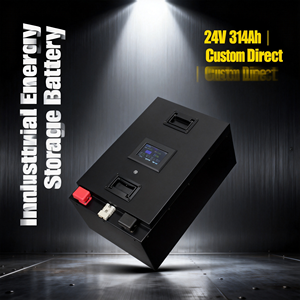
Yes. Our bidirectional active balancing BMS is custom engineered for high-capacity 280Ah and 314Ah LFP prism cells. Delivering up to 10A of dynamic transfer current, it resolves intra-pack cell divergence rapidly, minimizing capacity loss during high-C-rate industrial peak shaving cycles.
The BMS acts as the master thermal coordinator, continually analyzing ambient, cell, and coolant loop sensor data. It controls variable-speed liquid pumps, chillers, and 3-way valves via proportional PID algorithms to maintain uniform intra-container thermal profiles (≤3°C cell-to-cell delta).
Standard custom schematic adaptations and PCB prototyping typically require 4 to 6 weeks. Full validation, firmware customization, and functional testing are completed within 8 to 12 weeks depending on ISO functional safety certification requirements.
Yes. We collaborate closely with Korean system integrators, providing direct engineer-to-engineer technical consultation, custom firmware flashing, protocol adaptation, and comprehensive documentation to streamline local system deployment.
Partner with an industry-leading manufacturer trusted by global OEMs. Contact our senior battery engineering team today to review your project specifications, request sample schematics, or evaluate custom BESS container options.
Send an Inquiry