1. Technical Fundamentals of Engineering Custom Pouch Cell Battery Packs
Pouch cell lithium-ion architectures represent the pinnacle of volumetric packaging efficiency and thermal surface heat dissipation in modern energy storage engineering. Unlike rigid metallic cylindrical cells (e.g., 18650 or 21700 forms) or heavy prismatic aluminum enclosures, pouch cells utilize flexible aluminum-laminated foil enclosures. This design eliminates unnecessary weight and structural dead space, allowing device designers to achieve gravimetric energy densities exceeding 280 Wh/kg and volumetric energy densities upwards of 650 Wh/L.
However, transforming raw lithium pouch cells (NMC, LFP, or High-Silicon Anode chemistries) into mission-critical battery packs requires specialized mechanical, electrical, and thermal engineering. As a leading manufacturer and supplier serving OEMs across Slovakia and the broader Visegrád Group (V4), Emerging Power integrates over 120 years of collective expertise into every custom battery packaging assembly.
Core Engineering Rule: Pouch cells experience volumetric expansion (swelling) of 4% to 10% over their operational lifespan due to lithium intercalation stresses and electrolyte gassing. Precision mechanical pack design must incorporate dynamic swelling force compensation—utilizing compressed micro-cellular foam cushions and rigid end-plates—to maintain ideal inter-cell compression (0.3 MPa to 0.5 MPa) without inducing internal separator breakdown.
Advanced Ultrasonic Tab Welding & Interconnect Mechanics
Unlike cylindrical cells that rely on point-spot welding or single-wire bonding, pouch cell construction features flat copper (anode) and aluminum (cathode) current-collector tabs. Emerging Power utilizes multi-head ultrasonic metal welding systems to join stacked pouch tabs to custom heavy-copper busbars. This process produces zero heat-affected zones, preserving electrolyte integrity while achieving internal resistance metrics under 0.3 mΩ per connection. Low internal resistance minimizes localized thermal hotspots during high C-rate continuous discharge cycles.
2. Architecture Comparison: Pouch vs. Cylindrical vs. Prismatic Form Factors
When specifying custom power sources for advanced industrial systems, medical machinery, or e-mobility fleets in Slovakia, selecting the optimal cell geometry directly dictates payload capacity, cooling efficiency, and enclosure footprint.
| Engineering Attribute |
Pouch Cell Architecture |
Cylindrical Cell (21700/32700) |
Prismatic Hard-Case Cell |
| Packaging Efficiency |
Superior (90-95%) |
Moderate (65-75%) |
High (80-85%) |
| Gravimetric Energy Density |
Highest (260 - 310 Wh/kg) |
High (220 - 270 Wh/kg) |
Moderate (180 - 240 Wh/kg) |
| Thermal Dissipation Area |
Optimal (Large flat surfaces) |
Limited (Point contact) |
Moderate (Thick side walls) |
| Mechanical Complexity |
Requires Swelling Cushion Frames |
Simple Radial Support |
Simple Module Clamping |
| Custom Shape Versatility |
High (Tailored L/W/H) |
Fixed Dimensions |
Fixed Standard Sizes |
| Thermal Runaway Mitigation |
Pouches venting safely at pouch seals |
High pressure top-valve release |
Explosion-proof vent burst |
3. Localized Application Scenarios Across Slovakia’s Industrial Sectors
Slovakia has established itself as the world's highest per-capita automotive producer, driven by major industrial clusters in Bratislava, Trnava, Nitra, and Žilina. Concurrently, Central Europe's rapid push toward industrial automation, microgrid energy independence, and green transition has accelerated demand for highly reliable pouch cell battery systems tailored to harsh continental climates.
Automotive Sub-Suppliers & Automated Guided Vehicles (AGVs)
In the logistics and assembly lines of Western Slovakia’s manufacturing hubs (e.g., Volkswagen Bratislava, Jaguar Land Rover Nitra), heavy-duty AGVs and autonomous mobile robots (AMRs) demand high C-rate pouch packs capable of 3C continuous discharge and 15-minute ultra-fast opportunity charging. Our custom pouch designs integrate dual CANbus (J1939/CANopen) telemetry for real-time state-of-charge tracking on warehouse management networks.
Containerized Commercial & Industrial BESS
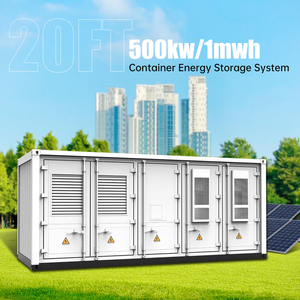
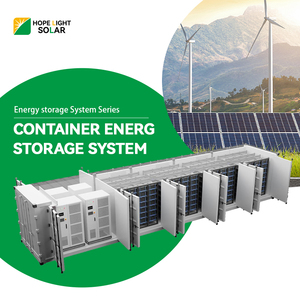
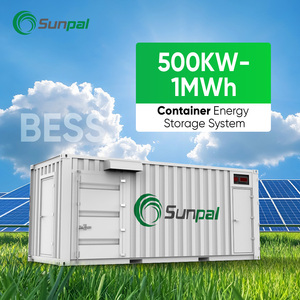
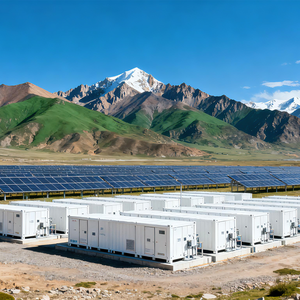
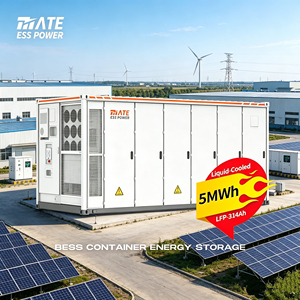
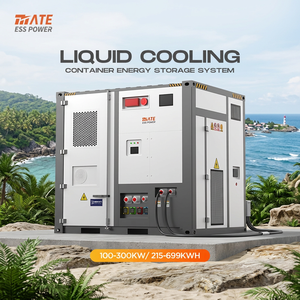
Solar photovoltaic installations across the Danubian Lowlands (Podunajská nížina) and Eastern Slovakia demand high-capacity containerized energy storage systems (1MWh to 5MWh). Pouch LFP cell arrays equipped with liquid-cooling cold plates maintain tight temperature differentials (<2.5°C across all cells), preventing thermal degradation during summer peak shaving and winter grid-support operations under SEPS (Slovenská elektrizačná prenosová sústava) grid codes.
Portable Medical Devices & Healthcare Robotics
Precision medical equipment manufacturers in Martin and Košice require light-weight, highly reliable, ISO 13485-compliant smart pouch battery packs. Featuring redundant SMBus/I2C fuel gauges, hardware-level overvoltage lockouts, and flame-retardant silicone encapsulation, these custom packs deliver uninterrupted backup power for mobile surgical carts, oxygen concentrators, and field ventilators.
Defense, Avionics & Unmanned Aerial Vehicles (UAVs)
Slovakia’s expanding defense engineering sector utilizes our ITAR-registered and AS9100-certified pouch battery pack designs for tactical communication rigs, rugged field sensors, and long-endurance reconnaissance drones. High-energy pouch cells paired with carbon-fiber reinforced composite shells withstand extreme shock, vibration (MIL-STD-810H compliance), and operating temperatures down to -30°C.
4. Market Trends & Technological Innovations Shaping the Central European Battery Ecosystem
The European energy landscape is undergoing regulatory and technological shifts. Buyers and original equipment manufacturers (OEMs) in Slovakia must align their product development with stricter EU environmental mandates while remaining cost-competitive on the global stage.
Compliance with EU Battery Regulation 2023/1542 & Battery Passport
The enforcement of EU Regulation 2023/1542 mandates full supply chain transparency, carbon footprint declarations, and recycled content minimums for industrial and traction battery packs sold within the European Single Market. Emerging Power works directly with European importers and OEMs to provide comprehensive material passports, recycled cobalt/nickel verification, and cradle-to-grave compliance documentation.
Thermal Management Progressions: Liquid Cooling vs. Phase Change Materials (PCM)
High-performance pouch packs generate concentrated thermal loads during fast charging. Traditional forced-air cooling is increasingly replaced by ultra-thin liquid cold-plates sandwiched directly between pouch cell pairs. For constrained spaces where active liquid circulation loops are unfeasible, our engineering team integrates graphite thermal spreaders and micro-encapsulated Phase Change Materials (PCM). PCM absorbs latent heat spikes during high discharge bursts, preventing thermal runaway propagation cell-to-cell.
Transition toward High-Silicon Anodes & Solid-State Pouch Architectures
Emerging Power’s strategic positioning as an authorized assembler for industry-leading silicon-anode pioneers (including Amprius and NanoGraf) gives our Slovakian client base direct access to next-generation pouch cell chemistries. By incorporating silicon-nanowire anodes, cell gravimetric density reaches up to 450 Wh/kg—enabling defense and aerospace devices to halve their onboard battery weight without compromising run time.
5. Frequently Asked Questions (FAQ) for Slovakian OEM & Industrial Buyers
Below are technical and logistical answers to standard inquiries encountered when sourcing custom pouch cell battery packs for deployment in Slovakia and the EU.
Q1: How do you manage customs duty, EU regulatory compliance, and logistics to Slovakia?
Emerging Power delivers customized logistics solutions including DDP (Delivered Duty Paid) directly to your facility in Bratislava, Trnava, Košice, or Žilina. All battery shipments fully adhere to UN 38.3 transport testing regulations, ADR dangerous goods transport guidelines for European roads, and CE/RoHS/REACH directives.
Q2: How does your pouch pack design mitigate mechanical swelling and electrolyte leakage over time?
We employ precision-engineered aluminium alloy compression frames combined with closed-cell silicone foam pads between each pouch. This mechanical assembly exerts a constant, uniform pre-load (approx. 0.3-0.4 MPa), counteracting swelling forces over 2,000+ deep charge/discharge cycles. Furthermore, our laser-welded structural enclosures and double-sealed foil edges eliminate electrolyte moisture ingress and gas release risks.
Q3: Can your engineering team customize the Smart BMS to support specialized communication protocols?
Yes. Our in-house electronics department designs custom PCM/BMS hardware with configurable firmware supporting CANbus 2.0B, CANopen, Modbus RTU/TCP, SMBus, and Bluetooth Low Energy (BLE) telemetry. We provide custom EDID/MBD software files and API documentation to integrate seamlessly with your vehicle control unit (VCU) or industrial PLC network.
Q4: What are the typical Prototype-to-Mass Production lead times for a custom pouch battery project?
Initial 3D mechanical CAD designs and electrical schematics are typically completed within 1 to 2 weeks. Engineering prototypes (samples) with 3D-printed enclosure mockups and sample BMS boards are delivered in 4 to 6 weeks. Following design validation testing (DVT) and UN 38.3 certification approval, mass automated production scales in 8 to 12 weeks depending on cell chemistry availability.
Q5: How do your pouch cell packs handle cold-climate sub-zero temperatures in Northern Slovakia?
For installations operating in winter conditions (-20°C to -30°C), we integrate flexible ultra-thin polyimide heating elements managed directly by the smart BMS. The BMS activates internal heating circuits prior to charging or high-drain operations, ensuring the pouch lithium chemistry remains above 0°C to eliminate dangerous lithium plating risks.
Q6: What is the Minimum Order Quantity (MOQ) for custom OEM/ODM pouch battery projects?
We offer flexible NRE (Non-Recurring Engineering) structures to support high-value, specialized projects. While prototype batches can be as small as 5 to 50 units for flight, medical, or defense qualification, scalable production tiers begin at 500 units per order batch. Contact our engineering sales team to evaluate your specific production scope.
6. Core Enterprise Advantages: Why Partner with Emerging Power
Sourcing custom power solutions requires an enterprise partner with proven technical depth, rigorous quality management systems, and financial stability. Emerging Power brings over a century of cumulative engineering mastery to every customer engagement.
AS9100D & ISO 9001:2015
Our manufacturing facilities adhere to aerospace-grade quality management protocols. Every pouch cell lot undergoes strict incoming inspection, 100% capacity matching, and internal resistance sorting.
In-House BMS Firmware Engineering
We design proprietary protection circuitry from hardware level (MOSFET safety cutoffs, fuse arrays) to high-level microcontrollers featuring active cell balancing and fuel gauging routines.
Comprehensive Safety & NDT Testing
Pouch pack designs undergo extensive environmental cycling, vibration shaking, drop testing, thermal shock, short-circuit simulation, and X-ray non-destructive testing of weld joints.
Tier-1 Authorized Cell Assembler
Authorized partner status with world-leading battery cell manufacturers ensures direct access to top-tier A-grade pouch and cylindrical cells with guaranteed supply longevity and batch traceability.
Engage Our Custom Pouch Pack Engineering Team Today
Whether you are developing a next-generation medical device, an autonomous warehouse fleet for Central European industrial hubs, or a containerized solar storage grid in Slovakia—our engineers are ready to assist with custom mechanical CAD, smart BMS architecture, and rapid prototyping.