Factory-direct OEM/ODM modular cabinets, liquid-cooled containerized BESS, and high-voltage long-cycle systems designed for seamless Indian grid integration.
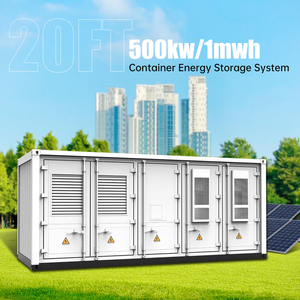
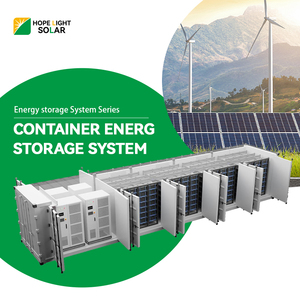
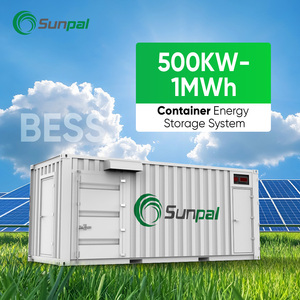

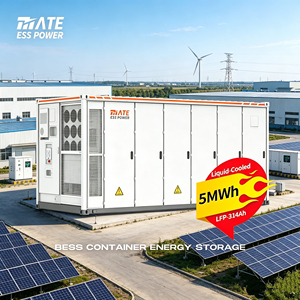
India’s commercial and industrial (C&I) sectors are experiencing a seismic shift toward clean energy independence. Driven by rising grid tariffs (ranging from ₹7.5 to ₹12.5 per kWh in states like Maharashtra, Gujarat, and Tamil Nadu), frequent voltage fluctuations, and strict state-level carbon reduction mandates, enterprises are turning to high-capacity Lithium Iron Phosphate (LiFePO4) Battery Energy Storage Systems (BESS).
However, standard off-the-shelf lithium-ion systems designed for moderate European or North American climates frequently suffer premature degradation in the Indian sub-continent. Operating energy storage units under Indian ambient temperatures—often breaching 45°C to 50°C during peak summer months—demands robust thermal management, customized BMS control loops, and specialized cell chemical stabilization.
"Deploying energy storage in India is not merely an exercise in cell assembly; it is an engineering challenge of thermal containment, microgrid frequency stabilization, and long-term cost-per-cycle minimization under extreme environmental and grid stresses."
LiFePO4 (LFP) chemistry inherent thermal stability withstands temperatures up to 270°C before exothermic decomposition, eliminating risks associated with NMC chemistries under harsh tropical climates.
Indian distribution transformers suffer frequent low-voltage sags and high-frequency surges. Our OEM PCS (Power Conversion Systems) feature wide input voltage windows (±20%) and sub-10ms grid transition.
Delivering 6,000 to 8,000+ deep charge/discharge cycles at 80% DOD, our factory systems drive levelized cost of storage down to ₹2.10 - ₹2.80/kWh over a 15-year operational lifecycle.
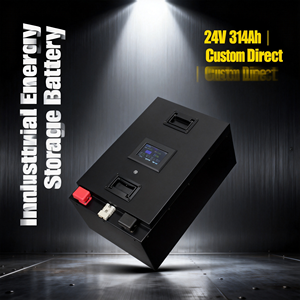
As a direct OEM/ODM factory partner for Indian EPC developers, system integrators, and industrial clients, we build storage systems around high-density prismatic 314Ah and 280Ah LiFePO4 cells. Utilizing heavy-gauge laser-welded copper busbars and intelligent active-balancing BMS (Battery Management Systems), our designs ensure minimal internal resistance and uniform heat distribution across multi-megawatt array strings.
For utility-scale and large C&I installations in warm regions (such as Rajasthan, Maharashtra, NCR, and Telangana), selecting the right cooling architecture directly dictates system life and parasitic power loss.
| Architecture Feature | OEM Liquid Cooling Container BESS (Recommended) | Standard Air-Cooled Cabinet BESS |
|---|---|---|
| Temperature Uniformity | Cell-to-Cell ΔT ≤ 2.5°C (Prevents localized degradation) | Cell-to-Cell ΔT ≤ 6.0°C (Causes uneven capacity fade) |
| Parasitic HVAC Power Consumption | 30% - 40% Lower operational auxiliary power draw | High energy consumption during peak ambient (>40°C) |
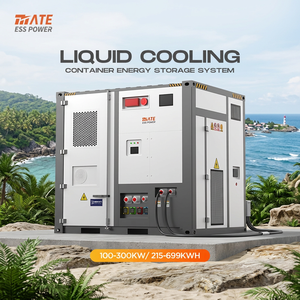
| Volumetric Energy Density | Up to 5MWh per 20ft container (314Ah high-density cells) | Max 2.5MWh - 3.3MWh per 20ft container footprint |
| Dust & Dust-Storm Protection | IP65 Sealed liquid loop; no ambient dust ingestion | IP54 Filters require frequent cleaning in dusty zones |
| Design Life Expectancy in India | 15 - 20 Years (Maintains cell health under 50°C ambients) | 8 - 10 Years (Accelerated aging due to thermal hot-spots) |
Our OEM/ODM factory configurations are actively tailored to address specific infrastructure needs across India’s high-growth industrial belts.
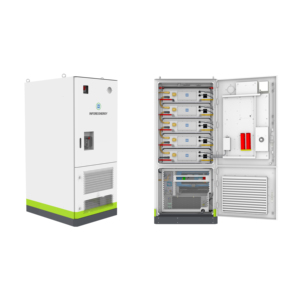
Textile mills in Coimbatore and chemical factories in Ankleshwar face steep maximum demand charges from state DISCOMs. Our high-voltage 233kWh - 1MWh LiFePO4 cabinets dynamically discharge during peak tariff slots, dropping peak kVA demand fees by up to 35% monthly.
In response to Commission for Air Quality Management (CAQM) bans on unretrofitted diesel gensets in NCR, our containerized 1MWh to 5MWh BESS provides instantaneous zero-emission backup power for critical servers, reducing corporate carbon footprints.
Off-grid operations in harsh terrain rely on hybrid PV + Storage systems. Our IP65 custom containers integrate directly with multi-MPPT solar inverters, ensuring continuous 24/7 power output without grid availability.
Ultra-fast DC EV chargers impose severe shock loads on local Indian grid infrastructure. BESS acts as a power buffer, charging slowly from the grid during off-peak hours and discharging at 300kW+ to vehicles during peak demand.
Importing and integrating battery systems into India requires rigorous adherence to statutory quality standards set by the Bureau of Indian Standards (BIS) and the Central Electricity Authority (CEA).
Mandatory safety requirements for secondary cells and batteries containing alkaline or other non-acid electrolytes. Our OEM factory provides full testing documentation for smooth customs clearance.
Compliance with power quality, voltage flicker, anti-islanding, and harmonic distortion bounds required under Indian Grid Code regulations for utility BESS tie-ins.
We collaborate with domestic Indian system integrators under Production Linked Incentive (PLI) initiatives by offering CKD (Completely Knocked Down) and SKD manufacturing supply modes.
We empower Indian EPCs, brand owners, and system integrators with comprehensive private-labeling, hardware engineering, and firmware adaptation services.
Evaluation of site-specific kW/kWh demand curves, solar generation profiles, ambient heat indexes, and localized grid stability parameters.
Grading Grade-A 314Ah prismatic LFP cells. Programming cloud-connected Smart BMS supporting Modbus TCP, CAN 2.0B, and IEC 61850 protocols.
Building IP55/IP65 fire-rated cabinets or 20ft/40ft ISO containers equipped with aerosol/FM200 fire suppression and liquid cooling loops.
Full power burn-in, thermal chamber validation, UN38.3 shipping certification, and direct sea transport to Nhava Sheva, Mundra, or Chennai ports.
Clear answers to key commercial, engineering, and logistics questions raised by Indian procurement heads and solar EPC contractors.
We strictly utilize 100% brand-new, Tier-1 manufacturer Grade-A prismatic Lithium Iron Phosphate (LiFePO4) cells in 280Ah and 314Ah capacities. Every cell undergoes automated internal resistance (IR) sorting and voltage matching to guarantee >6,000 to 8,000 cycles at 80% Depth of Discharge (DOD).
Our OEM designs incorporate dual thermal management options: precision HVAC forced-air cooling for medium-sized indoor cabinets, and micro-channel liquid plate cooling for containerized systems. The liquid cooling maintains cell temperature variance below 2.5°C, preventing thermal degradation during peak summer conditions.
Yes. We offer complete White-Label and OEM solutions, including custom exterior powder coating matching your corporate branding, custom-branded EMS/BMS interfaces, localized serial number tracking, and customized documentation for Indian tender submissions.
We provide complete UN38.3 transport test reports, MSDS, IEC 62619, IEC 62133, and CE certifications. For projects requiring mandatory BIS (IS 16046) compliance, our engineering team works directly with certified testing laboratories in India to streamline your registration process.
Production lead time for standard cabinets (100kW-300kW) is 25-30 days; containerized systems (1MWh-5MWh) take 35-45 days. Transit time from our factory port to major Indian ports—such as Nhava Sheva (Mumbai), Mundra (Gujarat), and Chennai—typically ranges between 14 to 20 days.
We supply 5-to-10-year standard performance warranties backed by factory spare-parts kits (including plug-and-play BMS modules, power fuses, sensors, and contactors). We also support local technician training and offer remote cloud diagnostic assistance 24/7.
Partner directly with an established OEM/ODM LiFePO4 factory. Contact our engineering team today to request product spec sheets, factory pricing, customized containerized designs, or technical catalog access.