Explore our high-voltage utility containerized solutions, modular industrial ESS enclosures, and OEM LTO/LFP configurations optimized for West Coast commercial grid applications.
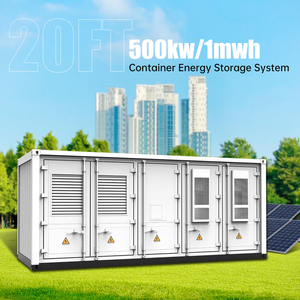
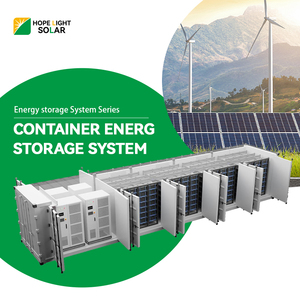
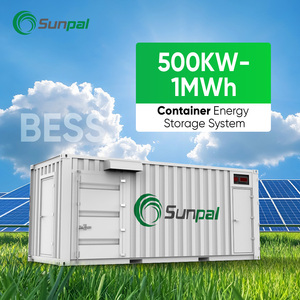
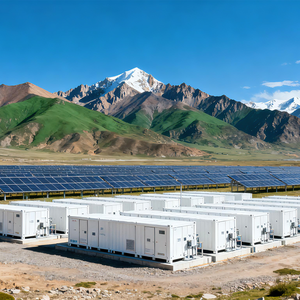
The San Francisco Bay Area stands at the global epicenter of clean energy innovation, grid modernization, and strict environmental compliance. Driven by California's aggressive decarbonization mandates—such as Senate Bill 100 requiring 100% clean electricity by 2045, strict California Public Utilities Commission (CPUC) storage targets, and local City of San Francisco Climate Action Plans—commercial, industrial, and municipal energy stakeholders are rapidly scaling battery energy storage systems (BESS). However, urban density, vulnerable coastal coastal fog environments, extreme high-power charging demands, and stringent local fire safety codes (NFPA 855 and San Francisco Fire Department regulations) present unique operational challenges that conventional lithium-ion chemistries (such as NMC or standard LiFePO4) cannot fully resolve.
As a leading Lithium Titanate (LTO) battery module manufacturer and global exporter serving the San Francisco market, we engineer state-of-the-art battery modules and rack systems powered by Lithium Titanate Oxide (Li4Ti5O12) electrochemistry. LTO represents the ultimate technological pinnacle for applications requiring zero-tolerance safety, extreme high-power C-rates (fast charge/discharge within 6 to 10 minutes), operational longevity exceeding 25 years without cell degradation, and uncompromised sub-zero thermal performance.
San Francisco’s critical infrastructure—spanning the electrified Port of San Francisco, Silicon Valley edge data centers, transit hubs like SFMTA and BART, microgrid resilience systems against CAISO Duck Curve grid volatility, and heavy-duty automated guided vehicles (AGVs)—demands energy storage solutions that eliminate thermal runaway risks completely while offering continuous duty cycling. This whitepaper details the electrochemistry, engineering metrics, San Francisco-specific localized applications, regulatory compliance pathways, and total cost of ownership (TCO) advantages of integrating custom OEM LTO battery modules into West Coast energy ecosystems.
To evaluate why LTO battery modules are becoming the preferred solution for high-value San Francisco industrial projects, one must analyze the fundamental electrochemistry at the anode interface. In standard Lithium Iron Phosphate (LiFePO4) or Nickel Manganese Cobalt (NMC) batteries, graphite is used as the anode host material. Graphite undergoes a ~10% volume expansion and contraction during lithium intercalation and de-intercalation cycles. Over thousands of cycles, this mechanical strain causes micro-cracking, solid-electrolyte interphase (SEI) growth, lithium plating (dendrite formation), thermal degradation, and eventual capacity fade.
Lithium Titanate ($Li_4Ti_5O_{12}$) features a spinel crystal structure that exhibits near-zero structural volume change (<0.2%) during charge and discharge. This physical stability prevents mechanical degradation of the electrode, allowing LTO cells to deliver over 20,000 to 30,000 full 100% Depth of Discharge (DoD) cycles with minimal capacity loss.
LTO operates at an anode potential of ~1.55V vs. $Li/Li^+$, significantly higher than graphite’s 0.1V. This prevents lithium metal plating and dendrite growth—the primary cause of internal short circuits and violent thermal runaway—even during 10C ultra-fast charging or severe physical impact.
Due to high lithium-ion mobility within the titanate spinel lattice, LTO modules maintain full operational discharge capabilities from -40°C up to +65°C (-40°F to 149°F) without requiring parasitic thermal heating systems in cold coastal conditions or thermal throttling under scorching loads.
| Performance Metric | Lithium Titanate (LTO) | Lithium Iron Phosphate (LFP) | Nickel Manganese Cobalt (NMC) |
|---|---|---|---|
| Nominal Cell Voltage | 2.3V - 2.4V | 3.2V - 3.3V | 3.6V - 3.7V |
| Cycle Life (100% DoD) | 20,000 – 30,000 Cycles | 3,500 – 6,000 Cycles | 1,500 – 3,000 Cycles |
| Continuous C-Rate (Charge/Discharge) | 6C – 10C (Peak 30C) | 1C – 2C (Peak 3C) | 1C – 3C (Peak 5C) |
| Full Charge Duration | 6 to 10 Minutes | 60 to 120 Minutes | 45 to 90 Minutes |
| Operating Temperature Range | -40°C to +65°C | -20°C to +55°C | -20°C to +55°C |
| Thermal Runaway Initiation Temp | > 240°C (Extremely Stable) | ~270°C | ~210°C (Thermal Risk) |
| Lithium Dendrite Risk | Zero Risk (1.55V Anode) | Moderate under cold charge | High under fast cold charge |
| 25-Year Levelized Cost of Storage (LCOS) | Lowest (Zero Battery Swaps) | Medium (1-2 Module Swaps) | High (3-4 Module Swaps) |
The San Francisco Bay Area presents distinct geological, infrastructural, and economic conditions. From dense urban utility networks operated by Pacific Gas and Electric (PG&E) to maritime operations along the Embarcadero and high-frequency Silicon Valley tech hubs, our custom LTO battery modules are designed to solve critical local challenges:
San Francisco’s waterfront decarbonization initiatives demand high-power energy storage for vessel shore-power buffering, electric ferry fast-charging, and automated container handling equipment (AGVs, RTG cranes). Standard batteries cannot tolerate the thousands of micro-cycles and continuous 10C power surges needed when large electric vessels dock. Our custom rack-mounted LTO modules absorb multi-megawatt regenerative power spikes during crane lowering operations and provide ultra-fast 10-minute flash charging for hybrid and zero-emission ferries operating across the San Francisco Bay.
High-density AI computing infrastructure in the Bay Area requires mission-critical uninterrupted power supplies (UPS). Traditional VRLA lead-acid or NMC lithium systems present thermal runaway fire risks inside dense data centers. Our fire-safe LTO modules offer instant sub-millisecond response for fast frequency regulation under CAISO ancillary markets, while serving as a ultra-reliable 15-minute high-power discharge backup during PG&E Public Safety Power Shutoff (PSPS) events—all packaged in fire-impervious enclosures safe for urban subterranean vaults.
San Francisco Municipal Transportation Agency (SFMTA) bus depots and regional electric transit fleets face immense local feeder constraints when charging dozens of electric buses simultaneously. Integrating an LTO-based buffer storage container allows fleets to draw a continuous low-kw grid charge from PG&E lines while outputting 500kW to 1.5MW pantograph charging bursts directly to transit vehicles. LTO’s ability to perform 30+ full charge-discharge cycles per day without degradation makes it the only viable buffer chemistry for continuous transit operations.
Northern California experiences severe solar overgeneration during mid-day followed by steep evening grid ramps (the CAISO Duck Curve). San Francisco commercial facilities utilize our LTO modules for rapid energy arbitrage—charging rapidly during low-cost solar windows and discharging during peak evening demand hours (4 PM – 9 PM) under PG&E Time-of-Use (TOU) tariffs. LTO’s 98% round-trip efficiency (RTE) minimizes energy conversion losses, maximizing financial returns under California’s Self-Generation Incentive Program (SGIP).
Deploying energy storage in San Francisco requires navigating some of the most rigorous building, environmental, and fire safety codes in North America. Commercial installations inside the City and County of San Francisco must strictly comply with California Building Code (CBC), California Fire Code (CFC), NFPA 855 (Standard for the Installation of Stationary Energy Storage Systems), and UL 9540/UL 9540A certification standards.
How Our LTO Modules Accelerate San Francisco Permitting & Interconnection:
As a global premier manufacturer and direct exporter serving San Francisco system integrators, OEMs, and EPC contractors, we combine automated precision manufacturing with fully customized battery engineering services. We bridge the gap between high-capacity Asian chemical manufacturing and strict US engineering standards.
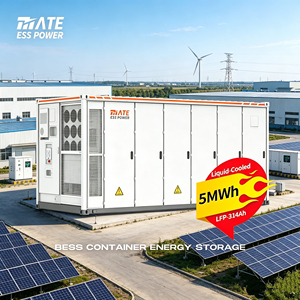
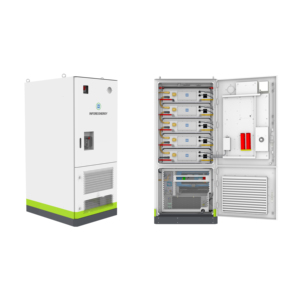
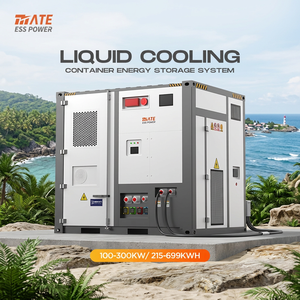
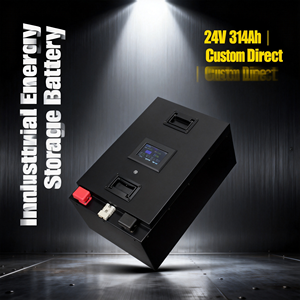
We supply raw LTO prismatic/cylindrical cells (e.g., 2.3V 30Ah, 40Ah, 55Ah, 100Ah) as well as fully assembled 12V, 24V, 48V, 19-inch rack-mount, and high-voltage containerized BESS systems (up to 1500V DC). Our engineering team collaborates directly with San Francisco clients to customize BMS firmware, CANbus/RS485/Modbus communication protocols, cold-plate liquid cooling jackets, and heavy-duty IP67 aluminum enclosures.
Exporting to the San Francisco Bay Area requires seamless logistics handling through the Port of Oakland or San Francisco International Airport (SFO). All of our battery shipments adhere to UN 38.3 transport testing, Class 9 Dangerous Goods certification, and US DOT compliance. We offer DDP (Delivered Duty Paid) door-to-door shipping solutions, delivering pre-tested, plug-and-play LTO modules directly to your Bay Area job site.
Address key technical, financial, and regulatory questions common among San Francisco engineering buyers, project developers, and procurement leads.
Whether you are engineering a high-power maritime fast-charging dock, a mission-critical data center UPS, or an ultra-durable commercial microgrid, our technical team is ready to deliver tailored Lithium Titanate solutions.