The rapid electrification of Israel's transportation and micro-mobility sectors represents one of the most dynamic technological transitions in the Middle East. As urban congestion escalates in major metropolitan corridors such as Gush Dan (Tel Aviv-Yafo), Haifa, and Jerusalem, the demand for Light Electric Vehicles (LEVs)—encompassing 2-wheel e-scooters, 3-wheel cargo trikes, 4-wheel micro-utility vehicles, and agricultural LEVs—has experienced exponential growth. However, operating LEV fleets within Israel presents a uniquely challenging matrix of environmental, regulatory, and mechanical stress factors.
Israel's geographic location exposes battery systems to extreme thermal environments. Ambient temperatures in the Negev Desert, Jordan Valley, and Eilat frequently exceed 45°C during summer peak months, while high coastal humidity in Tel Aviv and Ashdod accelerates atmospheric corrosion and thermal runaway risks. Furthermore, Israel's strict national standard regulations under the Standards Institution of Israel (SII), combined with European UN ECE certification requirements, mandate that original equipment manufacturers (OEMs), fleet aggregators, and industrial vehicle builders source battery modules built with compromised-free safety margins, precise thermal management, and intelligent Battery Management Systems (BMS).
As a specialized Tier-1 Light Electric Vehicle LEV Battery Modules Manufacturer & Engineering Partner serving Israel, our manufacturing facilities engineer bespoke Lithium Iron Phosphate (LiFePO4) and Nickel Manganese Cobalt (NMC) battery packs. By combining automated laser-welded cell interconnects, aluminum alloy heat sinking, IP67/IP68 sealed enclosures, and cloud-integrated CAN-bus/Modbus BMS architectures, our factories deliver the high-density energy and rugged reliability needed by Israeli OEMs, municipal service fleets, defense contractors, and commercial LEV operators.
Information Gain Key Insight: Unlike standard off-the-shelf battery packs designed for mild European climates, our Israeli-spec LEV modules integrate phase-change material (PCM) heat sinks and active cell-balancing BMS algorithms. This prevents capacity degradation up to 55°C, ensuring full operational availability during heatwaves and fast-charging cycles.
Selecting the optimal lithium chemistry is a fundamental engineering decision when customizing LEV battery modules for Israeli deployment. Operating parameters such as volumetric energy density (Wh/L), gravimetric density (Wh/kg), cycle life, and thermal decomposition limits must be carefully calibrated against operational intent.
For high-utilization commercial LEVs—such as last-mile delivery trikes operated by Israel Post, cargo delivery fleets in Bnei Brak and Petah Tikva, and agricultural utility vehicles in Kibbutzim—LiFePO4 serves as the ultimate chemistry. LiFePO4 features an inherently stable olivine crystal structure with P-O covalent bonds that resist oxygen release up to 500°C, rendering thermal runaway virtually impossible under standard physical impact or overcharge events.
Our LiFePO4 LEV battery modules (available in 24V, 36V, 48V, 60V, 72V, and 96V configurations up to high-voltage industrial BESS buffers) deliver over 4,000 to 6,000 continuous charge-discharge cycles at 80% Depth of Discharge (DOD). This longevity drastically reduces the Total Cost of Ownership (TCO) for Israeli commercial fleets, enabling 5 to 8 years of daily operational service without battery replacement.
In applications where spatial volume and pack weight are severely restricted—such as swappable e-scooter networks in Tel Aviv or lightweight passenger micro-cars—high-density NMC battery modules (utilizing 21700 or 18650 cylindrical cells with silicon-alloy anodes) provide superior gravimetric energy density up to 260–300 Wh/kg. To mitigate thermal risks inherent to NMC chemistry in Israeli summer heat, our factories implement liquid-cooling jackets, aerogel insulation barriers between adjacent cells, and micro-channel aluminum extrusion cold plates.
| Performance Metric | Heavy-Duty Commercial LiFePO4 | Ultra-Light Urban NMC | Israeli Operational Relevance |
|---|---|---|---|
| Gravimetric Energy Density | 160 – 190 Wh/kg | 240 – 300 Wh/kg | Crucial for payload capacity on delivery trikes vs. range on light scooters. |
| Thermal Runway Point | ~500°C (Extremely Safe) | ~210°C (Requires Aerogel) | Vitally important for operation in Negev & Eilat (45°C ambient). |
| Cycle Life (80% DOD @ 35°C) | 4,000 – 6,000 Cycles | 1,200 – 2,000 Cycles | Determines fleet payback period & multi-year TCO in Israeli logistics. |
| Fast Charge Capability | 1C to 3C Continuous | 0.5C to 1.5C Continuous | Enables rapid 15-minute top-ups during peak delivery shifts. |
| SII & UN 38.3 Compliance | Fully Certified | Fully Certified | Mandatory for legal importation and Israeli port customs clearance. |
A battery module is only as resilient as its mechanical isolation and monitoring circuitry. Our direct-factory manufacturing process integrates state-of-the-art structural protection and digital telematics engineered explicitly for Israeli operational realities.
Coastal humidity in coastal cities like Tel Aviv, Ashdod, and Netanya carries fine airborne marine salt particles that rapidly oxidize standard steel housings and un-coated copper busbars. Our LEV battery modules feature die-cast aluminum alloy or structural stainless-steel outer enclosures finished with anti-corrosive powder coatings. Gasket sealing systems ensure IP67 or IP68 ingress protection against high-pressure water jets, winter torrential rain, and sandstorm dust penetration in southern Israel.
Every LEV battery system produced serving Israel incorporates a customized Smart Battery Management System (BMS) with dedicated CAN-bus (CANopen/J1939) or Modbus RS485 communication protocols. The BMS continuously monitors individual cell voltages, state-of-charge (SOC), state-of-health (SOH), internal temperature arrays, and instantaneous current draw.
For Israeli micro-mobility fleet managers operating hundreds of assets simultaneously, our Smart BMS seamlessly interfaces with IoT telematics modules via cellular 4G/5G gateways. Fleet managers gain real-time visibility into battery location, thermal anomalies, automated fault alerts, and predictive maintenance schedules—preventing thermal runaway events before they occur.
Delivering packages in heavy traffic zones across Tel Aviv, Ramat Gan, and Giv'atayim requires compact 48V/72V cargo trikes. Our high-discharge LiFePO4 battery modules feature modular quick-swapping mechanisms, enabling 24/7 continuous delivery shifts with zero charging downtime during peak retail seasons.
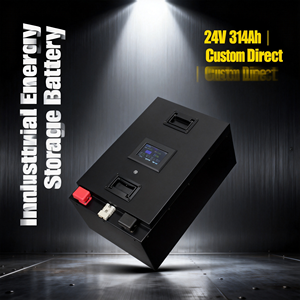
Israel's famous Kibbutz agricultural communities rely on rugged 4-wheel utility LEVs for orchard harvesting, equipment transport, and intra-farm movement in the Galilee and Negev regions. Our dust-sealed, vibration-proof 72V 314Ah modules withstand intense dirt tracks and rough off-road shocks.
Securing major commercial hubs at the Port of Haifa, Port of Ashdod, and regional border checkpoints requires stealthy, silent light electric patrol vehicles. Our military-grade custom NMC/LFP packs offer ITAR-compliant construction options, low thermal signature, and extended duty-cycle endurance.
With the expansion of the Dankal Light Rail in Tel Aviv and the Jerusalem Light Rail network, commuter feeder LEVs (e-scooters and micro-scooters) bridge the first/last mile gap. Our high-cycle swappable packs integrate tamper-proof Smart RFID locks and rapid charging capabilities.
In logistics hubs located near Ben Gurion Airport and logistics parks in Modi'in, automated guided vehicles (AGVs) and AMRs demand fast 2C-3C opportunistic charging during 3-minute idle windows. Our specialized zero-maintenance 24V/48V modules ensure continuous warehouse automation.
The Israeli market for light electric vehicles is undergoing unprecedented expansion, fueled by targeted governmental policies and market incentives. Understanding these regulatory tailwinds is essential for OEMs looking to secure market leadership in Israel.
The Israeli Ministry of Energy and Ministry of Transport have committed to phasing out new internal combustion engine (ICE) light commercial vehicles and two-wheelers by 2030. Municipalities such as Tel Aviv-Yafo have introduced zero-emission zones (ZEZ) restricting diesel delivery vehicles in city centers, forcing commercial parcel and food delivery companies (such as Dominos Israel, Wolt, and local courier networks) to fully electrify their LEV fleets.
Israel's "Green Tax" system scores imported vehicles and power systems based on emission performance and battery recyclability. By supplying certified high-efficiency LEV battery modules that conform to European Directive 2006/66/EC and upcoming EU Battery Passport traceability norms, our factory helps Israeli importers maximize tax exemptions while fulfilling environmental compliance obligations.
Navigating Israeli customs and obtaining SII approval requires strict verification of UN 38.3 transport safety testing, IEC 62133 safety standards for portable lithium cells, and UN ECE R100/R136 electrical safety directives for electric power units. Our factory provides complete testing documentation packages, UN 38.3 test summaries, MSDS, and drop-test certifications to streamline Israeli port clearance.
Our engineering team brings over a century of combined electrochemical design, BMS programming, and mechanical isolation mastery serving global Tier-1 OEMs.
Zero micro-cracking and ultra-low internal resistance copper-nickel busbar joining using high-precision CNC laser welding automation for maximum current throughput.
Tailor-made voltage ranges (24V to 800V), capacity configs, custom sheet-metal or plastic extruded casings, and tailored software CAN-bus protocol maps.
100% cell sorting within 5mV voltage and 1mΩ resistance tolerance, ultrasonic weld inspection, dynamic thermal chamber burn-in, and full functional testing.
Our Israeli-spec LEV battery modules feature dual-layer thermal protection. Mechanically, we integrate high-conductivity aluminum phase-change heat-sink plates and flame-retardant silicone thermal pads between cell matrixes. Electronically, our Smart BMS monitors localized thermal sensors, automatically throttling charge/discharge C-rates if internal temperatures approach 55°C, preventing thermal runaway while maintaining vehicle drivability.
Our manufacturing plants operate under ISO 9001 quality management, ISO 14001 environmental management, and AS9100 aerospace quality standards. All LEV battery modules supplied to Israel carry full UN 38.3 transportation safety clearance, IEC 62133 CB scheme certificates, CE compliance, and UN ECE R100/R136 safety compliance, ensuring smooth inspection by the Standards Institution of Israel (SII).
Yes. Our in-house BMS firmware engineering team regularly customizes CANbus (CANopen, J1939, or proprietary messaging structure) and Modbus protocols to match your vehicle control unit (VCU), motor inverter, or digital dashboard display. We provide full DBC files and documentation for rapid software integration.
For custom engineering projects, initial prototype samples are typically delivered within 4 to 6 weeks following CAD lock and schematic approval. Mass production lead times range between 3 to 5 weeks. We accommodate flexible MOQ arrangements for OEM development stages, scaling up to high-volume containerized shipments.
All structural metal enclosures undergo multi-stage surface pretreatment and UV-stabilized anti-corrosion epoxy powder coating tested to withstand 1,000-hour salt spray exposure. Internal PCB assemblies receive conformal moisture-proof coatings, and nickel-plated copper busbars are insulated against galvanic salt corrosion.
Yes. We manufacture complete battery swapping modules featuring heavy-duty blind-mate connectors, anti-vibration guide rails, RFID authentication chips, and electronic lock latches designed for automated swap stations deployed in urban micro-mobility fleets.