Exceeding Japanese JIS C 8712 safety standard benchmarks. Fully integrated with advanced BMS, forced internal short-circuit protection, and localized CANbus/Modbus protocols.
Navigating the battery procurement lifecycle in Japan requires an acute technical understanding of how international safety benchmarks intersect with domestic regulatory frameworks. Under the Ministry of Economy, Trade and Industry (METI), portable and industrial lithium-ion batteries imported into Japan must demonstrate uncompromising compliance with national safety directives, specifically the Electrical Appliance and Material Safety Law (DENAN Act).
While IEC 62133-2:2017 serves as the baseline global gold standard for secondary cells and battery packs containing alkaline or other non-acid electrolytes, Japan enforces stringent national deviations harmonized under JIS C 8712 and JIS C 8714. Navigating this environment demands hardware engineered beyond basic electrical safety.
Technical Superiority: Our IEC 62133 certified battery architectures undergo mandatory forced internal short-circuit testing (JIS C 8714 compliance protocol) where a small nickel particle is mechanically forced into the electrode stack under precise pressure to guarantee zero thermal runaway propagation.
To assist Japanese Original Equipment Manufacturers (OEMs) and trading partners (Shousha) in verifying regulatory readiness, the technical parameters of our certified battery assemblies are structured as follows:
| Testing Standard / Standard Code | Primary Regulatory Body | Thermal Runaway Isolation | Forced Internal Short Test | Export & METI Filing Status |
|---|---|---|---|---|
| IEC 62133-2:2017 | IECEE / International Standard | Cell-to-Cell Insulation Barriers | Optional / Standardized | Globally Accepted Base CB Scheme |
| JIS C 8712 (Japan Standard) | JISC / Japanese Industrial Standard | Non-propagating Aerogel Sheeting | Mandatory (Nickel Particle Test) | Direct Qualification for DENAN Act |
| PSE Circle Mark (Circle PSE) | METI (Ministry of Economy, Trade & Industry) | BMS Dual Overcharge Protection | Compliant via JIS Testing | Required for Japanese Commercial Sales |
| UN 38.3 Transport Directive | UN Committee of Experts | Vibration, Shock & Altitude Chamber | Impact & Crush Verification | Fully Certified for Ocean/Air Freight |
Japan’s unique geographic, industrial, and environmental landscape demands battery systems engineered for extreme thermal resilience, seismic stability, and compact spatial efficiency.
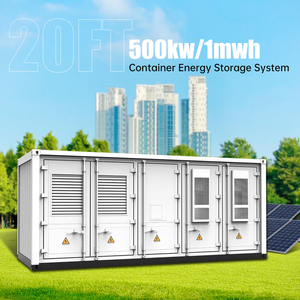
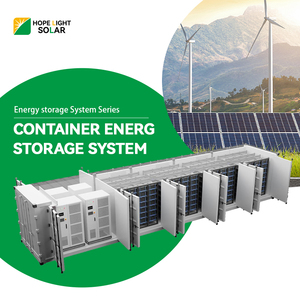
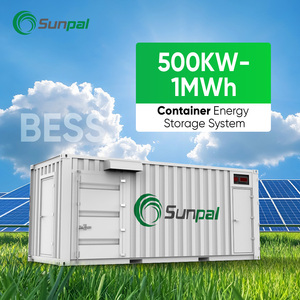
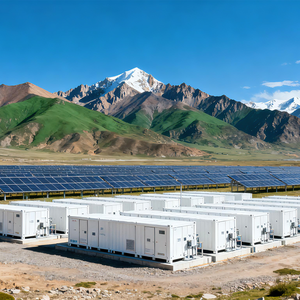
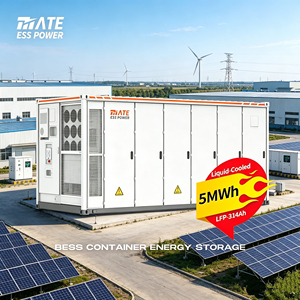
Japan is prone to natural disasters such as earthquakes and typhoons. Municipalities and critical infrastructure rely heavily on autonomous battery microgrids. Our 1MWh to 5MWh containerized LiFePO4 systems supply instantaneous backup power to evacuation centers, municipal water facilities, and telemetry networks during grid collapse.
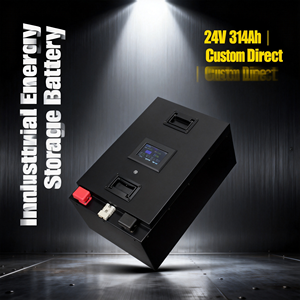
In Japanese smart factories (located across key manufacturing belts in Aichi, Shizuoka, and Kanagawa), space-constrained AGVs operate 24/7. Our custom 24V 314Ah and 48V modular IEC 62133 certified lithium packs support ultra-fast 1C charging, high charge/discharge efficiency, and continuous vibration resilience.
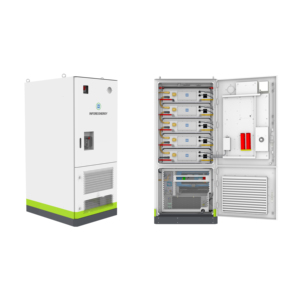
Under Japan’s Green Transformation policy, industrial facilities face rising grid electricity tariffs and stringent carbon reduction mandates. Our 233kWh high-power outdoor cabinets allow Japanese commercial complexes to shave peak electricity demand, store inexpensive off-peak solar power, and hit corporate zero-carbon targets.
Medical facilities require total electrical stability. Our IEC 62133 certified smart battery packs feature medical-grade isolated BMS circuitry, eliminating electromagnetic interference (EMI) while delivering uninterrupted back-up energy for mobile MRI units, life-support carts, and specialized clinical devices.
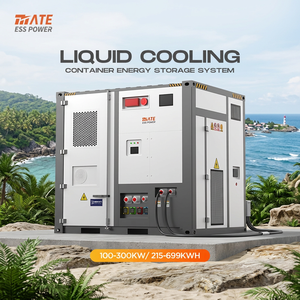
From the Ryukyu Islands to remote maritime lighthouses in Hokkaido, off-grid power installations require salt-mist resistant, C5 corrosion-class battery enclosures. Our MATE 10ft/20ft microgrid containers feature active thermal management to maintain optimal cell health in humid tropical or sub-zero climates.
5G tower sites across Japan demand high energy density within standard 19-inch rack enclosures. Our custom high-voltage lithium battery packs provide dense energy storage with real-time remote monitoring via SNMP, RS485, and CANbus protocols compatible with major Japanese telecom networks.
As Japan accelerates toward its 2050 Carbon Neutrality vision, significant architectural shifts are transforming battery design expectations.
Historically, traditional Japanese backup systems utilized Valve-Regulated Lead-Acid (VRLA) chemistries. Today, Japanese OEMs are rapidly replacing lead-acid with Lithium Iron Phosphate (LiFePO4). LFP offers triple the energy density, a 10-year operational life, zero heavy metal toxicity, and superior safety profile during seismic disruptions.
In high-capacity commercial installations (233kWh to 5MWh), liquid-cooled thermal management has superseded traditional forced-air cooling. Liquid cooling maintains cell-to-cell thermal variance within ≤2.5°C across the entire container, drastically lowering parasitic auxiliary energy draw and extending overall system service life.
Japanese power networks demand absolute data transparency. Modern smart battery packs feature dual-redundant BMS microcontrollers capable of real-time State-of-Health (SoH), State-of-Charge (SoC), and predictive internal resistance monitoring transmitted via Cloud-connected Modbus TCP and CANbus interfaces.
Addressing critical technical, regulatory, and logistics queries from Japanese OEMs, system integrators, and trading partners (商社 - Shousha).
With over 120 years of collective engineering experience across our technical leadership team, we specialize in high-reliability battery design, custom BMS programming, and global export operations. We serve as an authorized pack assembler and partner for leading global battery cell OEMs.
Ready to deploy certified, high-reliability battery systems for the Japanese market? Contact our senior battery engineering team for immediate technical consultation, customized engineering proposals, and competitive factory-direct quotations.
Get a Quote