Explore our certified modular LiFePO4 battery containers, custom commercial cabinets, and high-voltage BESS engineered for seamless integration across Turkish industrial sectors.
As the Republic of Turkey accelerates its comprehensive green transformation under the National Energy Plan (2022–2035), the demand for certified, high-reliability lithium-ion and lithium iron phosphate (LiFePO4) battery packs has surged. Original Equipment Manufacturers (OEMs), Engineering, Procurement, and Construction (EPC) contractors, and commercial system integrators across Turkey face rigorous technical requirements governed by the Turkish Standards Institution (TSE) and the Energy Market Regulatory Authority (EPDK). Central to fulfilling these mandates is securing full compliance with international safety protocols—most notably IEC 62133-2 (Edition 2.0).
As an established high-precision custom battery pack designer, authorized assembler, and global supplier with over 120 years of collective engineering experience, our organization bridges the gap between state-of-the-art battery chemical engineering and Turkey’s specific operational landscapes. We manufacture fully compliant, customized secondary cell battery packs and multi-megawatt industrial Battery Energy Storage Systems (BESS) designed to withstand the harsh thermal profiles of Central Anatolia, the high-humidity coastal zones of Marmara and Izmir, and the demanding continuous duty cycles of organized industrial zones (OSBs).
Turkey’s geographic positioning as an energy corridor between Europe and Asia, paired with its rapid deployment of renewable energy generation (target: 30 GW Solar PV and 5 GW storage capacity by 2035), creates a unique market dynamic. Importing or assembling battery storage systems within Turkey requires a deep understanding of local import regulations, market-specific tariffs, and rigorous standard harmonization.
Under EPDK grid integration mandates, renewable energy installations integrated with storage must utilize battery chemistry and management architecture capable of active frequency regulation, voltage support, and peak shaving. Certification under IEC 62133-2 ensures that the secondary cells will not undergo thermal runaway under dynamic grid transients.
Turkey's Risk-Based Control System in External Trade (TAREKS) strictly inspects battery imports against European directives. Having IEC 62133 CB Scheme certificates, issued by accredited ILAC-MRA testing laboratories, accelerates custom clearance through Ambarlı, Mersin, and Izmir ports without costly destructive sampling by TSE inspectors.
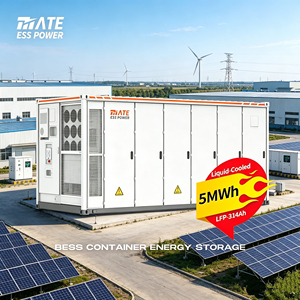
Organized Industrial Zones (Organize Sanayi Bölgeleri - OSBs) in regions like Gebze, Bursa, and Gaziantep suffer from elevated time-of-use grid tariffs. Turkish manufacturers are installing 233kWh to 5MWh containerized BESS to mitigate peak demand charges, requiring industrial-grade packs engineered for high ambient heat and constant C-rate switching.
Furthermore, Turkey’s alignment with the EU Customs Union dictates that CE marking, RoHS, REACH, and battery safety directives mirror EU legislation. Buying from an OEM battery pack manufacturer fluent in IEC 62133 testing protocols ensures Turkish engineering teams remain immune to sudden regulatory rejections at border points.
Battery design cannot follow a one-size-fits-all methodology. Operating environments across Turkey vary immensely, demanding customized battery pack topologies, dynamic thermal management systems, and specialized communications interfaces.
| Turkish Target Sector | Geographic / Operational Context | Recommended Battery Configuration | IEC 62133 & Safety Relevance |
|---|---|---|---|
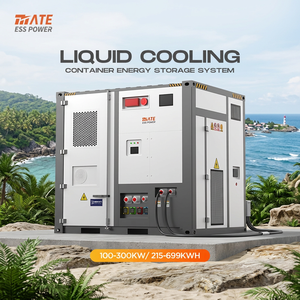
| C&I Industrial Manufacturing | Gebze, Dilovası, Bursa OSB Heavy Machinery & Automotive Factories | High Voltage 233kWh - 2MWh LiFePO4 Containers with Liquid Cooling | IEC 62133-2 thermal stress resistance during intensive 1C discharge cycles. |
| PV Hybrid Generation | Central Anatolia (Konya, Karapınar), Southeastern Solar Belt | 1MWh to 5MWh Air/Liquid Cooled Integrated ESS Containers | Overcharge & external short-circuit protection under ambient heat exceeding 45°C. |
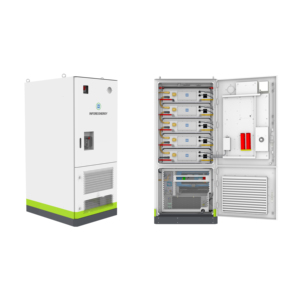
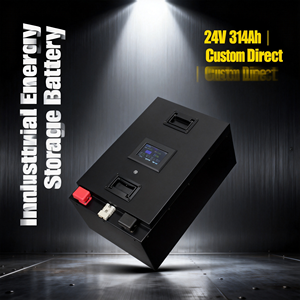
| Telecom & IoT Infrastructure | Remote Base Stations across Eastern Anatolia & Mediterranean Corridors | Custom 24V / 48V 314Ah Modular Rack-Mount LFP Packs with Smart BMS | Mechanical drop/shock & vibration resistance compliant with IEC 62133 clause 7.3.2. |
| Maritime & Defense Vehicles | Tuzla Shipyards, Black Sea Patrol, E-Ferries in Istanbul Bosphorus | IP67 Sealed Custom Li-Ion & LFP Packs with Dual-BMS Redundancy | Salt fog corrosion protection, hermetic seal integrity, dynamic internal pressure relief valves. |
| Medical & Portable Scanners | Private & Public Hospital Networks in Ankara & Istanbul | Custom Smart RRC Packs (Li-Ion 18650 / 21700 / Pouch) with SMBus/CANbus | Strict compliance with IEC 62133-2 for patient proximity, zero risk of cell swelling or gas leak. |
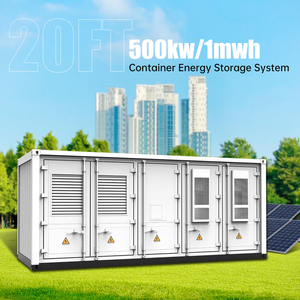
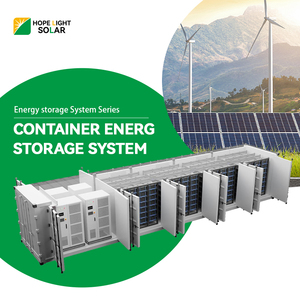
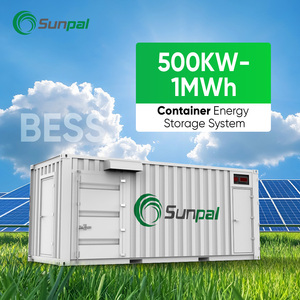
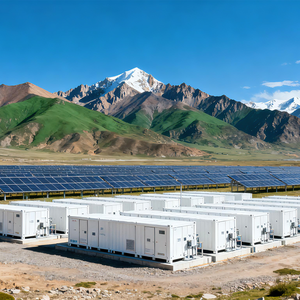
In high-irradiance areas such as the Konya Basin, solar power plants experience sharp production ramps followed by sudden curtailments. Integrating 20ft and 40ft containerized 5MWh liquid-cooled LiFePO4 systems allows plant operators to store excess mid-day energy and discharge it into the TEİAŞ (Turkish Electricity Transmission Corporation) grid during evening peak tariff windows. Our IEC 62133-certified 314Ah cells utilize advanced prismatic architecture, offering 6,000 deep cycles and integrated fire suppression modules (Novec 1230/Aerosol) that exceed municipal safety codes across Turkish municipalities.
The standard IEC 62133-2:2017 establishes stringent safety testing requirements for portable sealed secondary cells and packs containing alkaline or non-acid electrolytes. Achieving true certification requires engineering excellence at every mechanical, chemical, and electronic layer of the battery pack design.
Our packs undergo intense mechanical stress testing: high-altitude low-pressure simulation, 3-axis sinusoidal vibration testing, and heavy-impact drop tests (1.0m onto concrete). This guarantees that structural components, spot-welded busbars, and cell holder arrays endure the transport shock encountered on rugged Anatolian highways.
Each custom pack integrates multi-tiered electronic protections against continuous overcharging, high-current short circuits, and forced internal discharge. Hardware-level fuses paired with firmware-controlled MOSFETs isolate faults in micro-seconds before cell swelling or vent release can initiate.
IEC 62133 mandates that cells withstand 130°C thermal exposure for 10 minutes without exploding or catching fire. We optimize internal cell spacing using fire-retardant polycarbonate/ABS enclosures, structural silicone potting, and phase-change materials (PCM) to isolate potential single-cell thermal runaways.
Central to our custom battery pack solutions is our in-house engineered Smart Battery Management System (BMS). Capable of handling high-voltage system architectures up to 1500V DC, our BMS communicates seamlessly via RS485, CANbus 2.0B, and Modbus TCP protocols—enabling native integration with leading inverter brands widely deployed in Turkey, such as Huawei, Sungrow, SMA, and Growatt.
With over a century of collective experience, our manufacturing infrastructure combines automated cell sorting, precision laser welding, and automated computerized diagnostic testing. As an authorized battery pack assembler for global chemistry pioneers (including Energizer, NanoGraf, and Amprius), we apply defense-grade quality management systems to every commercial project.
Every cell batch undergoes 100% automated capacity sorting, voltage matching (±2mV), and internal impedance grading (±0.05mΩ). This strict cell pairing prevents premature string degradation in large containerized ESS installations.
Every battery pack features unique barcoded serialization linking to raw material mill certificates, BMS firmware build logs, automated weld inspection reports, and UN38.3/IEC 62133 test records for streamlined auditability.
Our internal mechanical engineering team utilizes 3D CAD simulation, FEA structural stress modeling, and CFD thermal modeling to design custom aluminum, stainless steel, or heavy-gauge powder-coated IP65/IP67 enclosures built for outdoor Anatolian deployment.
Under Turkish customs regulations enforced via TAREKS, imported secondary batteries (lithium and nickel chemistries) are subjected to mandatory compliance verification against EU Harmonized Standards (EN 62133-2 / IEC 62133-2). Providing a valid CB Test Certificate and CB Test Report from an accredited ILAC laboratory allows your customs broker to obtain automatic clearance without submitting physical samples to TSE laboratories for destructive testing, cutting import delays from 4-6 weeks down to 48 hours.
IEC 62133 was split into two distinct parts in 2017: IEC 62133-1 governs nickel-based chemistries (Ni-Cd and Ni-MH), whereas IEC 62133-2 explicitly dictates safety protocols for portable sealed secondary lithium cells and battery packs (Li-Ion, LiFePO4, Li-Polymer). For modern BESS, industrial equipment, and smart devices imported into Turkey, IEC 62133-2 compliance is mandatory.
Yes. Central Anatolia experiences freezing winter temperatures down to -20°C, while summer temperatures in southern Turkey exceed +45°C. Our 1MWh to 5MWh container systems feature dual-HVAC or liquid-cooling thermal management systems coupled with internal insulation layers (rockwool/polyurethane). The integrated BMS activates internal heating film arrays prior to low-temperature charging to prevent lithium dendrite formation, maintaining cell temperatures within an optimal window of 20°C to 25°C.
We supply a comprehensive technical documentation pack necessary for EPDK license applications and TEİAŞ grid interconnection reviews. This includes IEC 62133-2 CB reports, UN 38.3 transport test summaries, MSDS sheets, CE declaration of conformity, flash test data sheets, single-line electrical diagrams (SLD), and Modbus register maps for SCADA integration.
Absolutely. Our core capability is custom battery pack design. We build custom-shaped lithium packs (curved, ultra-thin pouch, or multi-module stacks) tailored to your mechanical footprint. Our software team configures BMS firmware to communicate natively over CANopen, J1939, SMBus, Modbus RTU/TCP, or custom proprietary protocols based on your master controller requirements.
We offer full UN 3480 / UN 3481 certified dangerous goods (DG) packaging for sea freight ocean transit. Average transit time to Turkish ports (Ambarlı/Istanbul, Mersin, or Alsancak/Izmir) ranges from 18 to 28 days depending on the selected shipping line, with expedited air freight options available for custom prototype quantities.
Whether you require custom prototype battery packs for new medical devices, modular 48V rack units for telecom sites, or multi-megawatt containerized energy storage for Turkish industrial plants—our engineering team is ready to deliver.
Inquire Now