Explore our engineered lithium battery pack architectures and industrial containerized storage systems optimized for Brazil’s grid and tropical operating conditions.
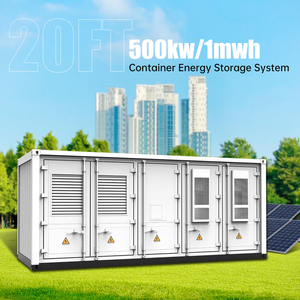
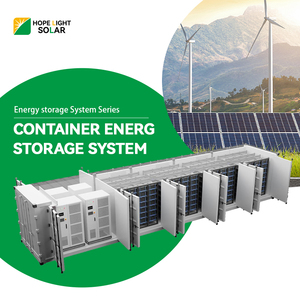
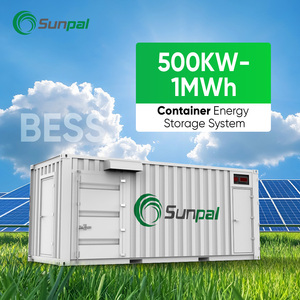
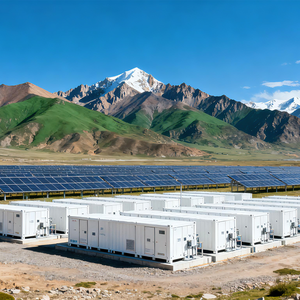
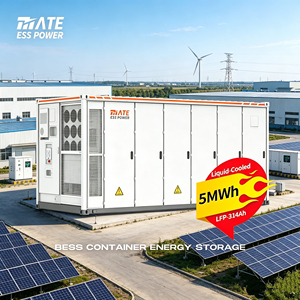
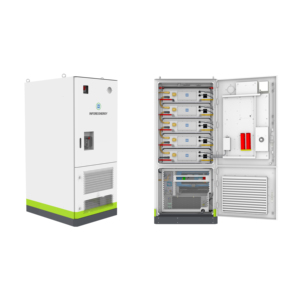
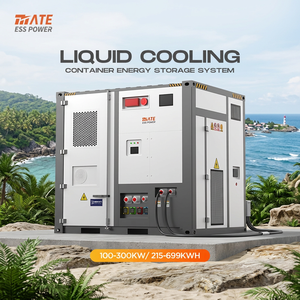
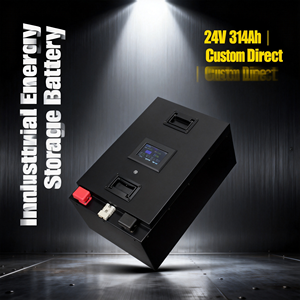
Brazil is undergoing a transformative energy transition, propelled by the enactment of Law 14.300/2022 (Marco Legal da Geração Distribuída) and shifting utility tariff structures. As solar energy installation accelerates across key economic hubs—from the agricultural belts of Mato Grosso and Paraná to industrial zones in São Paulo and Minas Gerais—the reliance on unstable main grids is driving unprecedented demand for custom lithium battery pack assemblies.
As a specialized high-capacity 18650 battery assemblies exporter and modular energy system supplier, our technical architecture solves critical localized challenges. Industrial users in Brazil face steep peak-demand tariffs (TUSD Fio B), making behind-the-meter (BTM) storage and peak-shaving systems essential for operational cost control. Furthermore, remote agribusiness operations and telecommunications networks across the Amazonian and Cerrado regions require robust energy storage solutions capable of enduring extreme ambient temperatures and high relative humidity without thermal runaway or capacity loss.
Mitigating grid curtailment and maximizing self-consumption under Brazil's restructured net-metering laws using active-balancing battery management systems (BMS).
Deploying 18650, 21700, and 314Ah high-density lithium assemblies to reduce maximum demand charges during peak tariff hours (Horário de Pico).
High-voltage rack-mounted and modular battery assemblies supplying reliable DC power to telecom towers across sub-tropical and equatorial zones.
Exporting custom battery assemblies to Brazil demands uncompromising electro-chemical precision. A standard 18650 cell pack is only as reliable as its weakest series connection. Our engineering team utilizes fully automated cell sorting, impedance matching within ±1.5mΩ, and capacity sorting within ±10mAh prior to array spot welding or laser busbar bonding.
Depending on your application footprint, discharge C-rate requirement, and localized enclosure dimensions, we assemble custom configurations spanning cylindrical 18650/21700 matrices up to liquid-cooled 314Ah LFP containerized blocks.
| Engineering Specification | High-Density 18650 Assemblies | Heavy-Duty 21700 Packs | 314Ah Prismatic BESS Racks |
|---|---|---|---|
| Cell Chemistry | NMC / LiFePO4 (LFP) | High-Nickel NMC / LFP | Ultra-Long Life LiFePO4 |
| Gravimetric Energy Density | 240 – 280 Wh/kg | 260 – 300 Wh/kg | 160 – 180 Wh/kg |
| Nominal Cell Voltage | 3.6V – 3.7V / 3.2V | 3.6V / 3.2V | 3.2V |
| Thermal Mitigation | Phase Change Material (PCM) + Air Cooling | Inter-Cell Aerogel Insulators | Integrated Liquid Cooling Loop |
| BMS Communication | CANbus 2.0B / RS485 / Modbus | CANbus / Bluetooth 5.0 IoT | Industrial Ethernet / Modbus TCP |
| Target Applications in Brazil | Medical Devices, E-Mobility, Portable Tools | Drones/UAVs, AGV, Heavy Robotics | Solar Utility, Factory Backups, Microgrids |
Operating high-capacity battery assemblies in cities like Manaus or Cuiabá exposes battery chemistry to persistent ambient temperatures exceeding 38°C with humidity above 85%. Unmitigated heat drastically accelerates solid electrolyte interphase (SEI) layer growth, reducing cycle life. Our exported assemblies feature tropicalized protective conformal coatings on all PCBs, flame-retardant polycarbonate/ABS cell holders (UL94-V0), and dynamic liquid or active air-cooling channels to ensure continuous operation within optimal electro-chemical thermal windows (20°C to 30°C).
With over 120 years of collective engineering expertise, our organization serves as a single-source custom battery designer, authorized assembler, and global exporter. Partnering with top-tier cell producers (including Amprius, NanoGraf, and Energizer), we supply tier-1 Original Equipment Manufacturers (OEMs) and Contract Manufacturers (CMs) across North and South America.
All 18650 and modular battery assemblies shipped to Brazil comply fully with international safety baselines including UN38.3 (Dangerous Goods Transport), IEC 62133, UL 1973, and CE. We assist local Brazilian importers with regulatory pathways aligned with INMETRO Portaria standards and ANATEL approval for integrated telecommunication batteries.
Our battery assemblies feature multi-tier protection circuits regulating Over-Voltage, Under-Voltage, Over-Current, Short Circuit, and Thermal Drift. Advanced telemetry modules support remote Monitoring & Data Acquisition (SCADA) integration via CANbus, allowing grid operators in Brazil real-time visibility into cell state-of-charge (SoC) and state-of-health (SoH).
Lithium batteries are classified under UN3480 / UN3481 Class 9 Dangerous Goods. We manage certified UN-tested wooden crates, air/sea freight logistics directly to major Brazilian entry points including Port of Santos, Port of Paranaguá, and Viracopos International Airport, guaranteeing seamless customs clearance under NCM classification 8507.60.00.
Every pack undergoes strict quality assurance protocols prior to export: 100% full-cycle thermal burn-in, vibration testing according to military specifications (MIL-STD-810G), helium leak detection for IP67 enclosures, and high-voltage insulation dielectric resistance checks.
Ready to deploy customized, reliable, and certified lithium energy storage for your industrial project, solar farm, or commercial application in Brazil? Connect with our senior engineering team today.