Direct-from-factory high voltage, liquid-cooled, and high discharge battery solutions certified for Swiss industrial, commercial, and utility grid deployment (CE, UN38.3, IEC 62619).
In modern energy storage and industrial automation, the discharge rate parameter—commonly referred to as the C-Rate—determines the precise rate at which a lithium-ion or lithium iron phosphate (LiFePO4) battery pack can be discharged relative to its maximum nominal capacity ($C = I / Q$). A 1C rate implies that the entire stored energy is discharged in exactly one hour, whereas a high C-rate (3C, 5C, 10C, or peak 30C discharge pulse) demands extraordinary electrochemical integrity, low internal resistance ($R_{int}$), advanced tab-welding architecture, and ultra-responsive BMS protection.
High C-rate discharges produce internal Joule heating proportional to the square of current ($P = I^2 R$). Our packs utilize ultra-thin foil current collectors and multi-tab cell construction to minimize internal resistance below $0.5\,\text{m}\Omega$, curtailing thermal dissipation during heavy discharge.
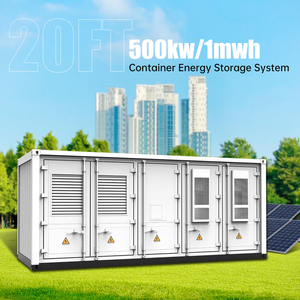
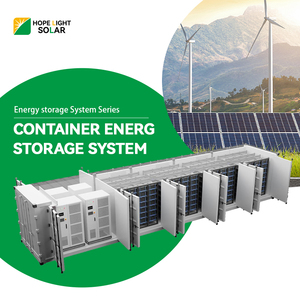
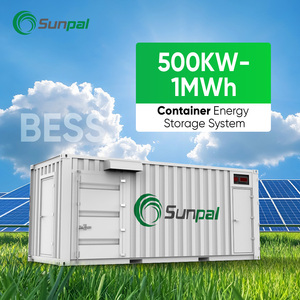
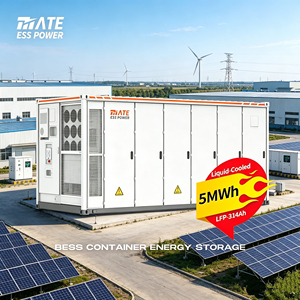
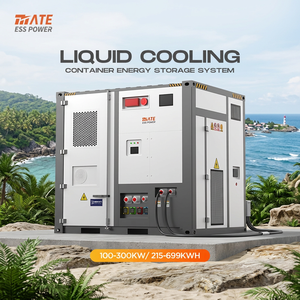
For containerized BESS operating under continuous high C-rate cycles (e.g., frequency regulation), air cooling is insufficient. Our 5MWh liquid-cooled systems maintain cell-to-cell thermal variance under $2.5^\circ\text{C}$, preventing localized thermal runaway.
Integrated master-slave BMS architectures execute over 1,000 telemetry checks per second. High C-rate discharge curves are controlled via field-programmable MOSFET/IGBT gates that prevent over-current stress and voltage sagging.
The following data matrix outlines key technical metrics for high C-rate lithium battery packs engineered by our facility for Swiss industrial integrators and European grid operators:
| Battery Architecture | Nominal Cell Voltage | Continuous C-Rate | Peak Pulse C-Rate (10s) | Cycle Life (80% DOD) | Thermal Stability Limit |
|---|---|---|---|---|---|
| High C-Rate LFP (LiFePO4) | 3.2 V | 3C – 5C | 10C – 15C | > 6,000 Cycles | 270°C (Highest Safety) |
| Ultra High-Power NMC | 3.6 V / 3.7 V | 5C – 10C | 25C – 30C | > 3,000 Cycles | 210°C (Requires Liquid Cooling) |
| Standard ESS LFP (314Ah) | 3.2 V | 0.5C – 1C | 2C | > 8,000 Cycles | 270°C |
| Heavy Industrial LTO (Titanate) | 2.3 V | 10C – 20C | 50C | > 20,000 Cycles | 300°C |
Switzerland’s unique alpine terrain, stringent environmental mandates, and high precision manufacturing infrastructure demand specialized battery engineering that excels under sub-zero temperatures and severe dynamic loads.
In high-altitude Cantons like Valais and Graubünden, ski lift operations and isolated mountain stations require instantaneous burst power during peak mechanical startup and emergency stopping routines. Our high C-rate LiFePO4 packs deliver high pulse currents down to -30°C with automated heating pads.
Swiss industrial hubs in Neuchâtel, Jura, and Zurich deploy automated guided vehicles (AGVs) and precision CNC robotics requiring fast 15-minute opportunity charging (3C-4C continuous charge rate). Our lightweight lithium packs eliminate production bottlenecks with zero maintenance.
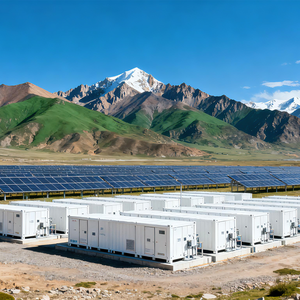
To comply with Swissgrid frequency stabilization mandates, commercial energy plants utilize containerized BESS systems (1MWh to 5MWh). These systems absorb and inject high-capacity power into the 50Hz grid within milliseconds during frequency spikes.
Commercial maritime vessels operating across Lake Geneva (Lac Léman), Lake Lucerne, and Lake Zurich require fast charging infrastructure and heavy acceleration burst power. Our high C-rate liquid-cooled NMC/LFP hybrid systems provide heavy discharge resilience with IP67 marine enclosures.
Aligning with the Swiss Federal Office of Energy (SFOE / BFE) decarbonization roadmap and ESTI safety standards.
Under Switzerland's Energy Strategy 2050, the phased retirement of nuclear power combined with rapid expansion of Alpine solar installations (such as solar arrays on dam walls) creates high power intermittency. Grid operators require localized, high power-density battery installations to prevent network congestion.
High C-rate battery packs act as critical buffers for Swiss industrial plants, preventing severe grid penalty tariffs caused by peak load demands. By injecting stored energy in fractions of a second during heavy industrial machinery startup, Swiss factory owners significantly lower operational expenditures.
From raw material electrochemistry verification to customs clearance at Basel Rhine Port—we deliver uncompromised quality and technical engineering depth.
Eliminate intermediary markups. Our automated cell-matching and pack assembly lines ensure tight voltage grading (<5mV) and internal resistance matching for long cycle life.
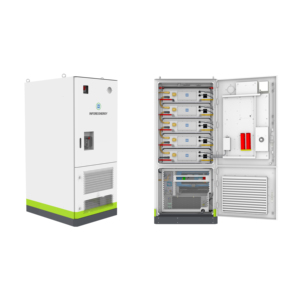
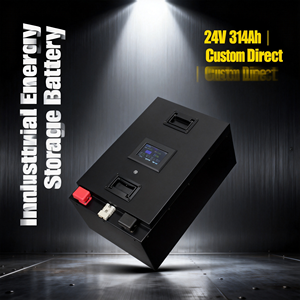
Tailored physical enclosures, customized BMS protocols (CAN open, Modbus TCP, BACnet), specific voltage ranges (24V up to 1000V DC), and flexible discharge C-rates.
Integrated gas-phase and aerosol fire suppression systems certified under international storage safety guidelines, featuring off-gas detection sensors.
Heavy insulation layers, anti-condensation internal heating circuits, and IP65/IP66 weather-sealed enclosures designed specifically for extreme altitude weather variations.
End-to-end logistics solutions delivering directly to cantons via Rhine river ports (Basel) or rail freight, complete with Swiss customs documentation and UN38.3 hazardous transport clearance.
Every battery module undergoes full charge-discharge load testing under continuous elevated C-rate conditions prior to shipment, logged in a digital quality tracking system.
Answers to common engineering, logistics, and compliance inquiries from Swiss engineering firms, OEMs, and project managers.
High C-rate battery packs are engineered with internal foil collectors, low-impedance chemistry, and multi-tab welding that allow them to discharge heavy current (3C to 10C continuous, 30C pulse) without excessive voltage drop or thermal runaway. Standard ESS packs typically operate at 0.5C to 1C.
Our cold-climate battery packs feature built-in PTC thermal management and smart insulation jackets. Before a high C-rate discharge or charge cycle begins, the integrated BMS warms the internal cell core to above 0°C using minimal auxiliary energy, preserving cycle life and power density.
Yes. Our Smart BMS supports standard industrial communication protocols including Modbus TCP, Modbus RTU, CANbus 2.0B, and Ethernet/IP. This allows seamless telemetry exchange with controllers from Siemens, ABB, Schneider Electric, and custom PLC systems.
Standard custom battery modules take 3–5 weeks for production, while containerized BESS systems take 6–8 weeks. We offer complete DDP (Delivered Duty Paid) shipping to all Swiss Cantons, handling customs clearance through Basel or Zurich logistics hubs.
All our exported battery packs carry full compliance documentation, including UN 38.3 transport reports, IEC 62619 for industrial lithium batteries, CE EMC certification, and UL 9540A fire safety test reports required by Swiss electrical inspectors.
We provide a standard 5 to 10-year linear performance warranty depending on the chosen chemistry (LFP vs. NMC) and cycle profile. We provide remote software diagnostics, spare part dispatch within 48 hours, and dedicated engineering assistance.