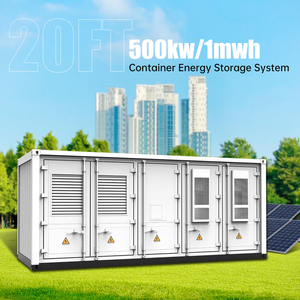
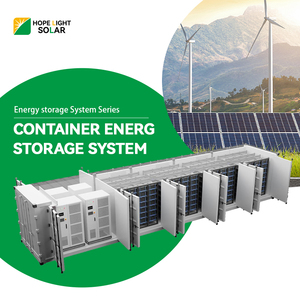
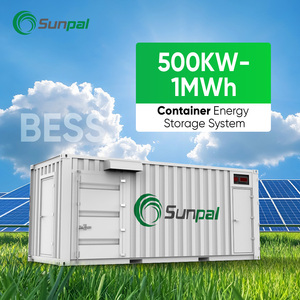
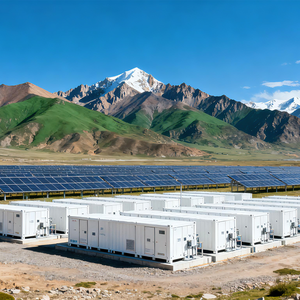
Custom containerized BESS power hubs, high-voltage LFP modules, and rapid-discharge energy storage systems tailored for deployment across Greater Sydney and New South Wales.
Unmanned Aerial Vehicles (UAVs) deployed across Sydney, the Blue Mountains, and the Southern Highlands operate within a uniquely demanding atmospheric envelope. While coastal Sydney sits at sea level, critical infrastructure inspection, forestry management, emergency search-and-rescue, and mining operations frequently ascend into microclimatic zones elevated between 1,000 meters and 1,300 meters above sea level. This elevation gain triggers significant thermodynamic and aerodynamic penalties that exponentially increase power drain on standard battery architectures.
Information Gain Key Metric: At an altitude of 1,200 meters (typical for Blue Mountains ridge line missions), atmospheric pressure drops by approximately 13%, accompanied by a corresponding decrease in air density ($\rho$). To generate equivalent lift, drone rotors must increase RPM by 8% to 12%, escalating motor power consumption by up to 28% due to the cubic relationship between rotor speed and aerodynamic power requirement ($P \propto n^3$).
Standard off-the-shelf lithium-polymer (LiPo) or standard lithium-ion packs experience severe thermal runaway vulnerabilities, rapid voltage sagging, and reduced capacity utilization when subjected to high C-rate continuous discharge under thin-air conditions. Furthermore, Sydney’s maritime climate introduces high relative humidity near Port Jackson and Botany Bay, contrasting sharply with intense solar radiation and high ambient ground temperatures (>42°C) in Western Sydney (Penrith, Blacktown). This creates an extreme dual threat: internal heat accumulation due to high current draw during thin-air hover, combined with external atmospheric humidity and salt spray exposure.
To overcome these high-altitude aerodynamic penalties, battery systems designed for Sydney exporters and operators must move beyond conventional commercial chemistries. Our engineering team utilizes advanced cell matching algorithms and thermal management systems to optimize energy delivery:
Offering gravimetric energy densities reaching 350 Wh/kg. Solid polymer electrolytes drastically eliminate thermal runaway risks during high-current high-altitude hover spikes while maintaining 85% capacity retention down to -20°C in elevated alpine conditions.
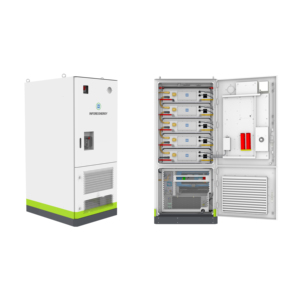
Engineered for tethered drone ground power stations and mobile BESS hubs. With over 6,000 deep charge cycles and superior chemical stability, LFP ensures uncompromised safety during continuous mega-watt ground-to-air energy transfer.
Utilizing 100% active silicon-alloy anodes to achieve exceptional burst-discharge rates (up to 25C continuous, 45C pulse). Designed specifically for heavy-lift multirotor platforms carrying LIDAR and thermal sensor payloads.
Comparative performance metrics of custom custom battery architectures vs standard commercial drone batteries operating under Australian high-altitude environmental stress test profiles (1,200m ASL, 38°C Ambient, 15m/s wind gust resistance):
| Performance Parameter | Standard Commercial LiPo | High-Altitude Solid-State | Containerized Tethered Ground BESS |
|---|---|---|---|
| Gravimetric Density (Wh/kg) | 180 - 210 Wh/kg | 320 - 360 Wh/kg | 160 - 180 Wh/kg (LFP Optimized) |
| Voltage Sag @ 10C Discharge | Severe (> 0.45V per cell) | Minimal (< 0.12V per cell) | Negligible (Active Bus Bar Stabilized) |
| Thermal Rise Rate (°C/min) | 4.8°C / min (Air Cooled) | 1.1°C / min (Phase-Change Material) | 0.3°C / min (Liquid Chiller Loop) |
| Operational Ceiling (Altitude) | Max 600m ASL without de-rating | Up to 4,500m ASL Fully Rated | Unlimited (Ground Base Station) |
| Corrosion Resistance Rating | IP54 Standard Enclosure | IP67 Hermetic Anti-Salt Spray | C5 Industrial Marine Containerized |
| Cycle Life (80% DOD) | 300 - 500 Cycles | 1,200+ Cycles | 6,000 - 8,000 Cycles |
During peak summer bushfire seasons, Rural Fire Services (RFS) contract heavy-payload drones for multispectral infrared thermal imaging across rugged mountain ridges. Our high-voltage packs incorporate phase-change thermal barriers that prevent thermal runaway even when ambient temperatures exceed 50°C in smoke plumes.
Drones operating near Sydney Harbour and Botany Bay face severe airborne salt-fog corrosion. Our battery packs feature nickel-gold plated busbars, potted PCB assemblies, and anodized aluminum enclosures tested under ISO 9227 salt spray conditions to eliminate electrical shorting and moisture ingress.
Inspecting high-voltage electrical grids requires drones to fly within high electromagnetic field (EMF) environments. Emerging Power’s custom Smart BMS is shielded with Mu-metal magnetic shielding, preventing CANbus communication disruption and telemetry corruption.
Building upon over 120 years of collective engineering heritage, Emerging Power stands as a premier US-based custom battery manufacturer and authorized assembler for world-leading battery cell chemical brands (including Energizer, Amprius, and NanoGraf).
We specialize in direct-to-destination sea freight and air express compliance for high-capacity lithium battery systems shipped to Sydney Port, Newcastle, and Kingsford Smith Logistics Hubs.
All Emerging Power drone battery solutions are manufactured with integrated dual-redundancy Smart Battery Management Systems (BMS) that comply with CASA dangerous goods safety advisories. Integrated cell-level thermal monitoring, auto-balancing, and black-box data logging ensure full compliance for commercial UAV operators in Australia.
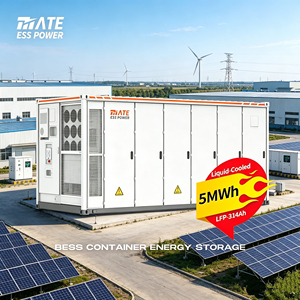
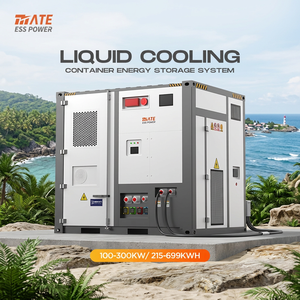
Yes. Our 10ft, 20ft, and 40ft High-Voltage Containerized BESS solutions (such as BENY and MATE series) serve as mobile, off-grid automated drone charging hubs. They allow continuous rapid charging of high-altitude drone fleets in remote areas of NSW without relying on localized grid infrastructure.
We employ both active liquid cooling micro-channels and passive Phase Change Material (PCM) heat sinks. These systems maintain individual cell temperatures below 45°C even during prolonged high C-rate discharge in 40°C+ ambient Sydney weather, effectively preventing accelerated capacity loss.
Standard prototype engineering cycles range from 4 to 6 weeks. Mass-production containerized systems are packed in UN-certified dangerous goods sea freight crates, fully compliant with Class 9 Dangerous Goods (UN 3480 / UN 3481) regulations, and cleared directly through Sydney customs.
Absolutely. Our smart BMS firmware supports custom CANbus protocol mapping (including Mavlink 1.0/2.0 SMBus specifications). This allows real-time cell voltage, remaining capacity, thermal state, and health metrics to display directly on operator Ground Control Stations (GCS).
For tethered systems, we design high-voltage, small-cross-section onboard power buffer packs paired with high-efficiency ground station power supplies. These buffer modules smooth out voltage drops across long tether cables during sudden altitude maneuvers.
Consult directly with our senior battery design engineers. Whether you require lightweight solid-state UAV flight packs or mobile containerized ground station BESS units for deployment in Sydney, our team delivers uncompromised performance, reliability, and E-E-A-T certified quality.