High-voltage Lithium Iron Phosphate (LiFePO4) & Lithium-ion battery systems certified for maritime export via the Port of Barcelona and compliant with Spanish grid regulations.
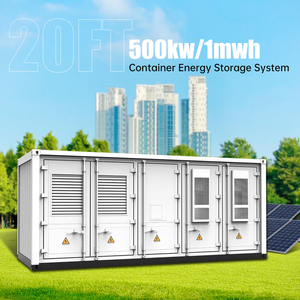
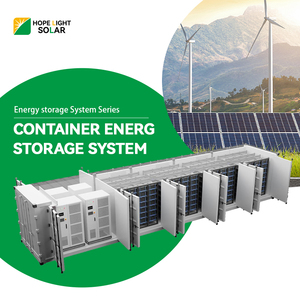
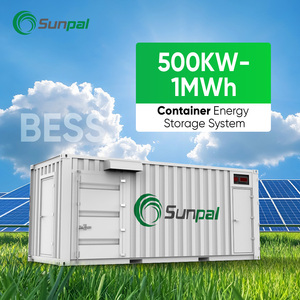
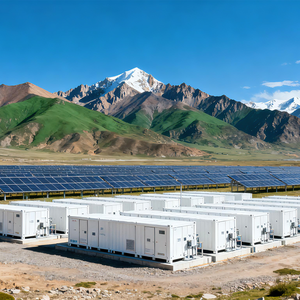
The metropolitan region of Barcelona, alongside Catalonia’s broader industrial corridors (including Zona Franca, Martorell, and the Port of Barcelona maritime hub), is undergoing one of Southern Europe's most aggressive decarbonization transformations. Under Spain’s updated Plan Nacional Integrado de Energía y Clima (PNIEC 2023-2030) and Catalonia’s ICAEN energy directives, commercial and industrial enterprises are rapidly adopting battery energy storage systems (BESS), electrified port equipment, and high-density stationary power banks.
However, integrating custom OEM Lithium-ion (Li-ion) and Lithium Iron Phosphate (LiFePO4/LFP) battery systems into European markets mandates stringent safety engineering, strict transport compliance, and verifiable legal certification. Foremost among these compliance gateways is the United Nations Manual of Tests and Criteria, Part III, subsection 38.3 (UN ST38.3). Without UN 38.3 certified design validation, lithium battery exports face catastrophic customs blockages at European sea ports, immediate rejection by shipping lines operating out of the Port of Barcelona, and total denial of commercial transport under ADR dangerous goods regulations.
As an established tier-1 OEM factory, customized battery assembler, and certified dangerous goods exporter, our organization bridges advanced cell chemical engineering with rigorous testing compliance. This whitepaper details our specialized manufacturing processes, in-house laboratory testing protocols under UN ST/SG/AC.10/11/Rev.7, custom Battery Management System (BMS) architectures, and localized export strategies for engineering contractors, system integrators, and OEM procurement managers across Catalonia and Spain.
Every cell, module, containerized rack, and fully integrated BESS unit exported to Barcelona must withstand 8 rigorous environmental and mechanical abuse tests under UN 38.3 Revision 7.
Simulates unpressurized aircraft cargo conditions at 11.6 kPa for >6 hours at 20°C ± 3°C. Ensures zero mass loss, zero leakage, no venting, and voltage retention above 90%.
Subjects battery packs to extreme thermal shock cycles from -40°C to +75°C (10 cycles, 6 hours per extreme). Critical for verifying seal integrity and structural expansion tolerance.
Simulates rough maritime transport via container vessels. Sinusoidal vibration sweep from 7 Hz to 200 Hz back to 7 Hz over 15 minutes, repeated for 3 hours per axis (X, Y, Z).
Applies half-sine shock pulses (150g peak acceleration, 6ms duration for small packs; 50g peak, 11ms for large industrial containers) across 6 directions to guarantee physical stability.
Packs are short-circuited at 57°C ± 4°C with an external resistance <0.1 ohm until internal temperature cools. Cases must not exceed 170°C, with zero rupture or fire within 6 hours.
Cell-level mechanical integrity testing. A 9.1 kg mass is dropped from 61 cm, or a 13 kN crushing force is applied. Verifies separator resilience against internal short circuiting.
Rechargeable packs are subjected to 2x maximum continuous charge current at 2x max charge voltage for 24 hours. Evaluates protection circuit (BMS) cut-off speed and robustness.
Primary or secondary cells undergo forced reverse discharge at 1C rate. Ensures cells do not suffer catastrophic thermal runaway under total string fault conditions.
Deploying energy storage in Catalonia presents unique geographical, regulatory, and urban challenges. Our custom OEM engineering tailored for the Barcelona ecosystem focuses on four core application pillars:
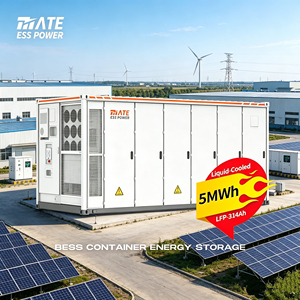
High-voltage 1MWh–5MWh liquid-cooled containerized BESS solutions designed for Onshore Power Supply (OPS) systems. Enables berthed cruise ships and container freighters to shut down diesel generators, suppressing emissions in accordance with Port de Barcelona's Plan de Electrificación de Muelles.
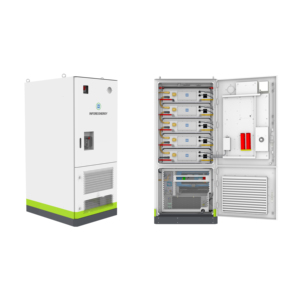
Industrial parks in Zona Franca, Gran Via L'Hospitalet, and Vallès Occidental face elevated grid tariffs during peak operational windows (P1/P2 rates under Spanish electricity billing structure). Our 233kWh to 1MWh storage cabinets provide rapid millisecond response peak shaving and power factor correction.
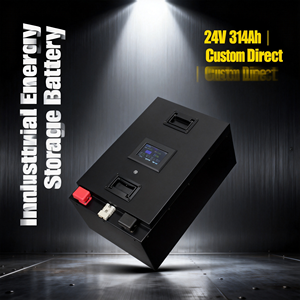
Inland agricultural processing facilities across Lleida, Girona, and Tarragona rely heavily on hybrid photovoltaic microgrids. Custom 24V/48V 314Ah high-density LiFePO4 modules integrate seamlessly with hybrid solar inverters to provide off-grid resilience during grid outages.
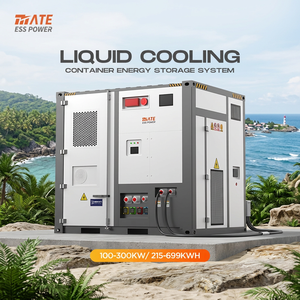
Summer ambient temperatures in coastal Catalonia can trigger high ambient heat risks inside outdoor enclosure cabinets. Our proprietary Smart BMS utilizes dual-loop liquid cooling (or direct air-cooling HVAC with thermal phase-change materials) to keep internal cell temperatures strictly between 22°C and 28°C. Integrated Modbus TCP and CANbus 2.0B protocols allow real-time telemetry streaming to local SCADA systems and cloud monitoring platforms.
With over 120 years of collective engineering experience across our technical leadership team, our factory operates state-of-the-art automated cell sorting, laser welding, and automated inspection lines. As an authorized assembler for world-leading cell chemistry developers (including high-density 314Ah LFP prismatic cells, 18650, and 21700 formats), we provide full turn-key manufacturing customized to exact client specifications.
When purchasing custom lithium batteries for installation in Spain, local procurement officers must adhere to multiple layers of legal standards. Our products ship with comprehensive factory certification packages:
| Certification / Standard | Scope & Regulatory Focus | Barcelona / EU Legal Requirement | Factory Verification Document |
|---|---|---|---|
| UN ST/SG/AC.10/11/Rev.7 §38.3 | Transport Safety (Air, Sea, Road) | Mandatory for sea freight into Port of Barcelona & ADR road transport. | UN 38.3 Test Report + Summary (RMS) |
| EU Battery Regulation 2023/1542 | Carbon Footprint, Battery Passport, Recyclability | Mandatory CE compliance for all industrial batteries sold in the EU market. | CE DoC + Digital Battery Passport Data |
| IEC 62619 / EN 62619 | Industrial Lithium Battery Thermal & Electrical Safety | Required by Spanish electrical installation safety regulations (REBT). | TÜV / Intertek Certificate |
| UN 3480 / UN 3481 Dangerous Goods | Hazard Class 9 Packaging & Labeling | Mandatory compliance for maritime carriers (Maersk, MSC, Cosco) at customs. | Dangerous Goods (DG) Declaration + MSDS |
| ISO 9001 / AS9100 / ITAR | Quality Management & Manufacturing Traceability | Ensures batch-to-batch cell consistency and complete materials audit trails. | ISO Audit Certificates |
Addressing technical, logistics, and legal questions regarding direct factory importation of custom UN 38.3 tested battery systems into Catalonia.
Since January 2020, international maritime dangerous goods regulations (IMDG Code) and Spanish customs mandate that manufacturers provide a standardized UN 38.3 Test Summary upon request. Without this document, shipping lines will refuse vessel loading, and Spanish customs (Agencia Tributaria - Aduanas) will impound container shipments at the port terminal.
Yes. For urban or industrial installations in high-density areas such as Barcelona city or Hospitalet, our 10ft, 20ft, and 40ft BESS containers are equipped with multi-stage fire suppression systems (NOVEC 1230 / FK-5-1-12 or aerosol-based), per-cell gas detection (off-gas venting detection), and aerosol explosion-proof venting doors compliant with NFPA 855 and EN 50272.
Standard manufacturing and assembly lead time for custom containerized systems ranges from 4 to 6 weeks (including UN 38.3 batch testing and burn-in aging). Ocean freight transport from our factory port to the Port of Barcelona typically takes 24 to 28 days via direct maritime shipping lines.
Our OEM manufacturing workflow integrates supply chain auditing to trace raw material origins (lithium, iron, phosphate), guarantees a minimum 80% capacity retention over specified cycle lifetimes, and provides full digital data readiness for the upcoming EU Battery Passport requirements.
Absolutely. Beyond large MWh containerized systems, we manufacture custom 24V 314Ah, 48V 100Ah, and high-voltage rack-mounted modules customized for specialized industrial machinery, AGVs in logistics warehouses, and off-grid telecommunication towers across Spain.
Under UN 38.3 rules, any change in pack mass exceeding 20% or modification to the internal electrical/structural design requires delta validation testing. Our in-house UN 38.3 test facility allows us to perform rapid design iteration and re-certification in under 10 business days, drastically reducing your product time-to-market.
Partner with a trusted battery manufacturer specializing in custom LiFePO4 / Lithium-ion containers, smart BMS engineering, and guaranteed shipping compliance to Barcelona and European markets.