Discover our factory-direct custom lithium-ion and LiFePO4 battery storage platforms, engineered with advanced thermal management and high-energy cells for African operational environments.
In the evolving landscape of advanced portable power and utility-scale energy storage, energy density serves as the primary benchmark for engineering capability. Standard graphite-anode lithium-ion cells have reached an asymptotic ceiling, typically offering gravimetric energy densities between 240 Wh/kg and 280 Wh/kg. For OEM integrators operating in demanding environments—such as the expanding industrial, commercial, and off-grid microgrid sectors in Ghana—traditional chemistry introduces unwanted weight, volume, and thermal management constraints.
As a premier custom battery pack manufacturer and authorized battery assembler backed by over 120 years of collective technical expertise, Emerging Power integrates game-changing cell chemistry into tailored OEM battery packs. At the core of this revolution is the Amprius Silicon-Nanowire Anode 18650 platform. By replacing conventional intercalating graphite anodes with pure silicon nanowires, Amprius achieves a theoretical specific capacity of 4,200 mAh/g—nearly ten times that of synthetic graphite (372 mAh/g).
Nanowires connect directly to the substrate, preventing mechanical pulverization during lithiation/delithiation cycles and resolving historical volumetric expansion issues associated with silicon anodes.
Delivering up to 450 Wh/kg and 1,150 Wh/L at the cell level. OEM pack designs require fewer cells in parallel, reducing overall mechanical casing weight and points of electrical failure.
Customized with specialized electrolytes and flame-retardant separators. Engineered to operate efficiently under ambient equatorial operating temperatures without premature solid-electrolyte interphase (SEI) breakdown.
| Performance Metric | Standard Graphite 18650 (NMC) | Commercial LiFePO4 (Prismatic) | Amprius Silicon-Nanowire 18650 |
|---|---|---|---|
| Gravimetric Energy Density | 240 – 270 Wh/kg | 160 – 190 Wh/kg | 400 – 450+ Wh/kg |
| Volumetric Energy Density | 650 – 700 Wh/L | 350 – 420 Wh/L | 1,100 – 1,150 Wh/L |
| Nominal Cell Voltage | 3.6V – 3.7V | 3.2V | 3.6V – 3.7V |
| Fast Charging Capability | 0.5C to 1C (60-90 Mins) | 1C (60 Mins) | Up to 3C (<20 Mins to 80%) |
| Pack Weight Reduction Potential | Baseline (0%) | +30% Weight Penalty | -45% Weight Reduction |
| Target OEM Applications | Consumer Electronics, Light E-Mobility | Heavy Stationary BESS Containers | Aerospace, UAVs, Portable Defense, High-Capacity C&I |
Ghana's rapid industrialization—anchored by the Ghana Integrated Aluminium Development Corporation (GIADEC), extensive gold extraction in the Western Region, and growing technological hubs in Accra and Kumasi—demands reliable, localized power infrastructure. The regional electrical grid, managed by GRIDCo and ECG, faces periodic stability challenges, voltage fluctuations, and supply deficits known locally as Dumsor. OEM systems powered by high-capacity Amprius 18650 cells and robust BESS containers serve as crucial energy buffers.
Our custom OEM manufacturing capabilities bridge the gap between high-tech cell chemistry and heavy-duty, climate-adapted deployment across West Africa.
Heavy mining machinery, underground communication sensors, and remote safety equipment rely on uncompromised auxiliary power. Traditional heavy battery packs add unnecessary payloads to underground transport vehicles. Integrating Amprius high-energy 18650 packs reduces battery system mass by up to 45%, providing long runtime for critical gas detection sensors, heavy-duty cordless extraction tools, and emergency back-up telemetry units exposed to high ambient humidity and dust.
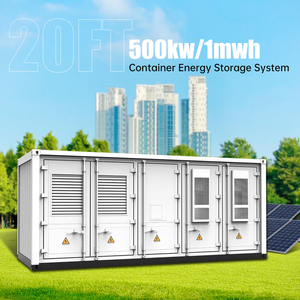
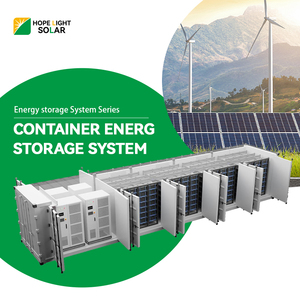
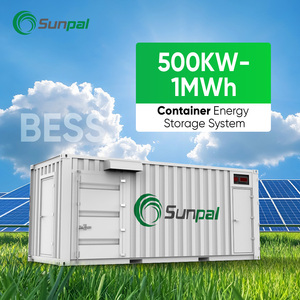
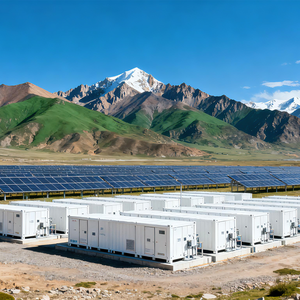
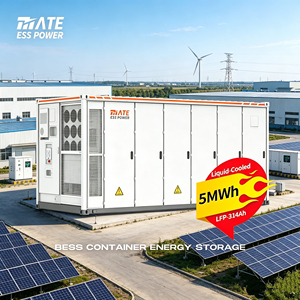
In agrarian regions such as Tamale and Bolgatanga, solar irradiation is abundant, yet grid connectivity is intermittent. Custom-engineered BESS containers (1MWh to 5MWh) utilizing modular lithium packs stabilized by advanced Smart BMS buffer daytime solar generation. These systems dispatch stable 415V three-phase power for cocoa processing facilities, cold storage hubs, and rural water pumping systems, completely isolated from grid drops.
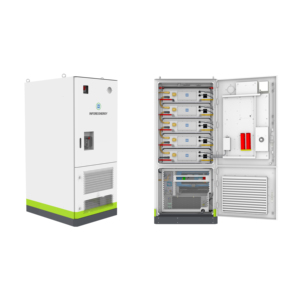
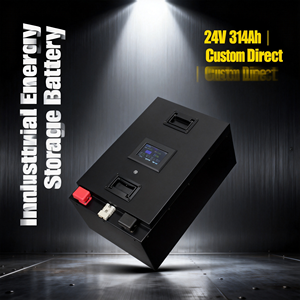
Telecom operators in Accra and along transit corridors face frequent diesel generator fuel overheads due to grid failure. High-density custom 24V and 48V Amprius/LiFePO4 rack-mounted energy storage modules replace legacy Lead-Acid banks. They offer fast 1-hour recharge cycles during brief grid availability, zero thermal degradation up to 50°C, and remote Modbus/CANbus telemetry monitoring for operation centers.
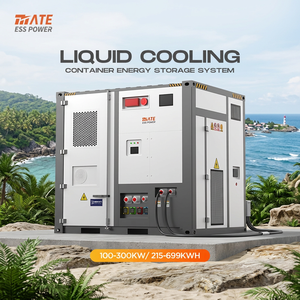
Automated assembly lines, logistics ports, and commercial facilities in Tema require seamless UPS integration. Containerized liquid-cooled BESS units (such as our 233kWh and 5MWh solutions) execute microsecond millisecond peak-shaving and seamless transfer switches, ensuring continuous operation without voltage sags damaging sensitive manufacturing equipment.
Procuring custom lithium-ion battery assemblies for deployment in Ghana requires thorough alignment with local energy policies, maritime logistics, and environmental regulatory frameworks. Understanding these localized search intents ensures that system integrators and procurement directors select compliant, resilient equipment.
Ghana aims to increase renewable energy capacity in the national energy mix to 10% by 2030. This initiative drives massive demand for OEM microgrid systems, solar-plus-storage utility configurations, and localized energy storage manufacturing partnerships.
All imported energy storage equipment and battery components must comply with strict electrical safety guidelines enforced by the Ghana Standards Authority (GSA) and the Energy Commission, requiring IEC 62619 and UN 38.3 certifications.
As Class 9 Dangerous Goods (UN 3480 / UN 3481), lithium battery shipments entering West Africa via Tema Port require certified heavy-duty packaging, hazardous material documentation, and thermal-insulated container transport to prevent heat stress during transport.
When engineering high-energy silicon-anode Amprius cell packs or multi-megawatt LiFePO4 containerized BESS, component selection is only half the battle. Thermal management, structural architecture, firmware safety controls, and battery management system (BMS) integration dictate operational longevity in tropical environments.
Our proprietary Battery Management Systems feature active cell balancing, precision State-of-Charge (SOC) and State-of-Health (SOH) algorithms, dual-temperature sensing per module, and seamless Modbus/CANbus interface for remote cloud monitoring in West Africa.
Emerging Power operates defense-grade manufacturing infrastructure in the USA. With 120+ years of collective engineering experience, our quality management systems adhere to AS9100 aerospace and defense standards, guaranteeing flawless quality control.
Integrating phase-change materials (PCM), aerogel insulation barriers, and liquid-cooling plates. Our high-density Amprius 18650 packs are protected against cascading propagation under extreme impact, puncture, or electrical overload conditions.
From 3D CAD enclosure prototyping, custom nickel-tab spot welding, automated cell sorting and matching, to full UN 38.3 vibration and thermal shock testing—we deliver turn-key OEM solutions tailored for direct integration.
Addressing critical engineering, logistical, and environmental questions commonly posed by procurement directors, EPC contractors, and system integrators operating in West Africa.