Finland’s extreme geographical demands—spanning Arctic winter temperatures down to -55°C, remote subsea research deployments in the Baltic Sea, and extensive IoT-enabled smart forestry networks—require non-rechargeable (primary) lithium battery systems with unmatched reliability. Standard battery chemistries suffer from rapid capacity degradation, internal impedance spikes, and catastrophic voltage drops under freezing temperatures.
Information Gain Insights for Finnish OEM Procurement: Achieving a 15-to-20-year maintenance-free lifespan in Lapland or offshore Nordic grids demands specialized Lithium Thionyl Chloride ($\text{Li-SOCl}_2$) and Lithium Manganese Dioxide ($\text{Li-MnO}_2$) cell selection, precise passivation layer management, and customized Battery Management Systems (BMS) with automated pulse-current depassivation routines.
Engineered for mission-critical industrial, smart utility, commercial BESS, and remote telematics deployments in the Finnish market.
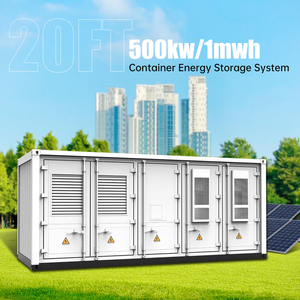
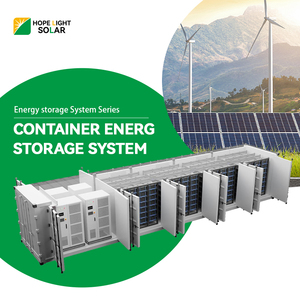
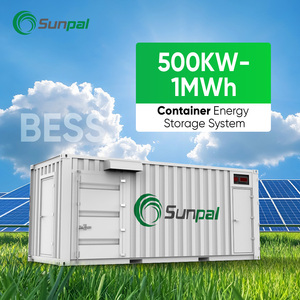
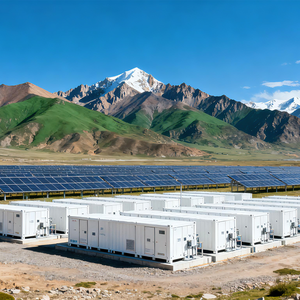
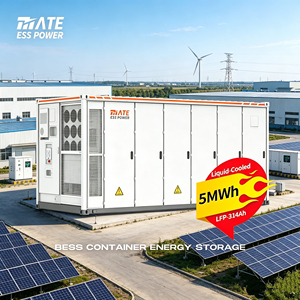
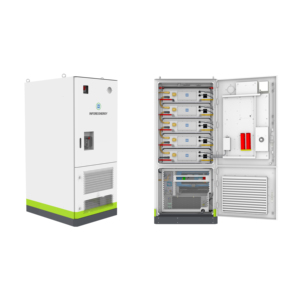
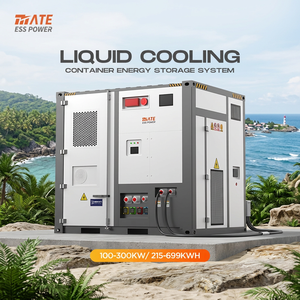
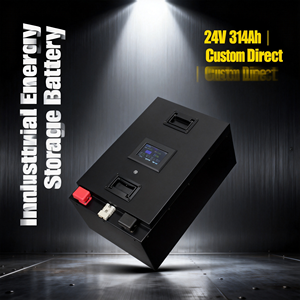
Custom lithium primary battery packs serve non-rechargeable, high-energy-density requirements where long-term field maintenance is cost-prohibitive due to Finland’s vast forest terrain and harsh winter landscapes.
Finland’s national roll-out of Automated Meter Reading (AMR) across municipal water and district heating grids demands reliable operation inside unheated basement chambers. Our custom $\text{Li-SOCl}_2$ bobbin cells feature an ultra-low self-discharge rate (<1% per year at 20°C), providing steady 3.6V power for up to 20 years.
Heavy forestry machinery operating in Northern Ostrobothnia and Lapland relies on low-power GPS trackers and IoT strain sensors attached to timber harvesters. Engineered with spiral-wound $\text{Li-MnO}_2$ cells, our packs withstand intense physical vibration and operate reliably down to -40°C.
Subsea acoustic release mechanisms and marine environmental monitoring sensors deployed in the Gulf of Bothnia require hermetically sealed, non-magnetic battery packs. Glass-to-metal seals prevent electrolyte leakage under high pressure, maintaining structural integrity in saltwater conditions.
Sensors deployed along Finland’s extensive railway and highway infrastructure transmit high-peak pulse currents during cellular data transmission. We integrate Hybrid Layer Capacitors (HLC) in parallel with primary lithium packs to absorb high pulse loads without causing voltage delay.
Supplying Finnish defense integrators with ITAR-compliant, high-density energy packs. Our assemblies utilize stainless steel housings and flame-retardant potting materials that satisfy stringent military environmental standards (MIL-STD-810H) for remote perimeter defense nodes.
Chemical processing plants and bio-refineries located in Kotka and Porvoo require explosion-proof primary batteries. Our battery packs are customized with current-limiting fuse protection, thermal cutoffs, and encapsulation compliant with ATEX Zone 0 and Zone 1 standards.
Selecting the optimal primary cell chemistry is critical to balancing pulse power requirements, operating temperature ranges, and passivation dynamics.
| Chemistry System | Nominal Voltage | Energy Density | Operating Temp Range | Self-Discharge Rate | Ideal Application Scenario |
|---|---|---|---|---|---|
| Li-SOCl2 (Bobbin Construction) | 3.6 V | Up to 650 Wh/kg | -55°C to +85°C | < 1% / Year | AMR Smart Water/Gas Meters, Long-term Micro-power Sensors |
| Li-SOCl2 (Spiral Construction) | 3.6 V | Up to 450 Wh/kg | -40°C to +85°C | 1% - 2.5% / Year | High Pulse RF Transmitters, Tactical Military Equipment |
| Li-MnO2 (Lithium Manganese) | 3.0 V | Up to 280 Wh/kg | -40°C to +70°C | < 1% / Year | No-Passivation IoT Nodes, Medical Monitoring, Asset Tracking |
| Li-FeS2 (Lithium Iron Disulfide) | 1.5 V | Up to 300 Wh/kg | -40°C to +60°C | < 1.5% / Year | Heavy-Duty Portable Instruments, Extreme Cold Replacement for AA/AAA |
| Li-SOCl2 + HLC Hybrid Pack | 3.6 V - 3.9 V | Hybrid High Power | -40°C to +85°C | < 1.5% / Year | Sub-Zero Cellular/Satellite IoT (5G/NB-IoT Pulsing up to 3A) |
Technical Note on Passivation Layer Management: $\text{Li-SOCl}_2$ chemistry forms a thin Lithium Chloride ($\text{LiCl}$) film on the anode. While this passivation layer guarantees a 20-year shelf life, it introduces an initial voltage delay under heavy load. Our factory integrates specialized pulse-discharge testing circuits during quality inspection to pre-condition cells before assembly for Finnish clients.
Finnish technology OEMs operate under rigorous European environmental directives and strict corporate sustainability mandates.
Our custom lithium primary battery manufacturing process fully complies with the latest EU Battery Regulation (EU 2023/1542). We provide complete supply chain transparency, non-conflict mineral documentation, REACH declaration, and RoHS compliance certificates for seamless customs clearance into Finland.
Aligning with Finland’s national circular economy goals, our battery packs are engineered with modular encapsulation and flame-retardant structural materials that facilitate straightforward cell breakdown and material recovery at local Finnish recycling facilities (e.g., Fortum Recycling & Waste).
Modern trends in Finnish forestry and ambient sensor design require battery enclosures with integrated Aerogel insulation layers. Our engineering team designs custom outer casings that minimize thermal energy loss during sudden arctic temperature drops down to -55°C.
Combining over 120 years of collective engineering expertise with automated production facilities, we deliver precision, security, and quality to global technology leaders.
Our core engineering team brings decades of specialized battery pack design experience across medical, military, aerospace, and remote industrial sectors. We convert complex client specifications into certified production-ready solutions.
Every primary cell undergoes 100% automated internal resistance (IR), open-circuit voltage (OCV), and high-temperature storage aging tests. Only cells matching tight capacity tolerance bands are selected for battery pack assembly.
Our factory is equipped with climate chambers, 3-axis vibration tables, and high-altitude simulation chambers. We subject prototype battery assemblies to thermal shock tests (-55°C to +85°C) to guarantee zero failure rates in the field.
Operating under rigorous ISO 9001 and AS9100 quality management frameworks. Complete material traceability, batch-level serialization, and formal Failure Mode and Effects Analysis (FMEA) reporting accompany every production run.
Primary lithium batteries are categorized as Class 9 Dangerous Goods. We manage full UN 38.3 transport certification, custom IATA/IMDG compliant packaging, and direct logistics shipping to technology hubs in Helsinki, Tampere, and Oulu.
From 3D CAD enclosure design (IP67/IP68) to custom PCB circuit design for depassivation and fuel gauging, our engineering studio provides complete end-to-end rapid prototyping within 2 to 3 weeks.
Addressing common engineering, regulatory, and logistics queries from Finnish product designers and procurement managers.
Consult with our senior battery engineers today. We analyze your load profile, pulse current requirements, environmental operating bounds, and enclosure constraints to deliver a production-ready custom battery specification.