Explore our flagship modular battery containers, liquid-cooled industrial cabinets, and high-voltage off-grid battery packs deployed across Tokyo's high-tech corridors.
Tokyo stands at the nexus of Japan’s ambitious Zero Emission Tokyo Strategy 2050 and the Ministry of Economy, Trade and Industry (METI) Green Transformation (GX) roadmap. As urban density increases and demand for decentralized microgrids, high-frequency trade data centers, and advanced autonomous robotics accelerates, original equipment manufacturers (OEMs) and commercial facilities across Greater Tokyo demand specialized battery solutions.
Standard off-the-shelf battery packs frequently fail to satisfy Tokyo's stringent spatial, thermal, and regulatory constraints. Our rapid prototyping ecosystem bridges this critical gap. Combining over 120 years of collective battery engineering expertise with state-of-the-art multi-chemistry assembly, we empower Tokyo-based engineers to move seamlessly from initial 3D CAD modeling to functional, certified, field-ready battery prototypes within 14 to 21 business days.
From seismic-resilient commercial building basements in Chiyoda to automated logistics hubs surrounding Tokyo Bay, our custom battery packs are architected specifically for Japan's unique operating environments.
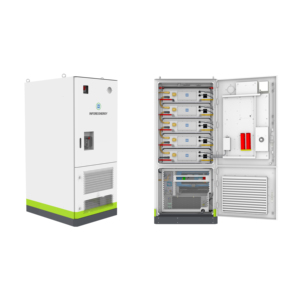
Tokyo's core financial sector demands zero-downtime Business Continuity Planning (BCP). We prototype compact, high-discharge (C-rate up to 5C) rack-mounted LiFePO4 battery modules equipped with fast-switching BMS that transition from TEPCO grid utility to battery backup in under 4 milliseconds.
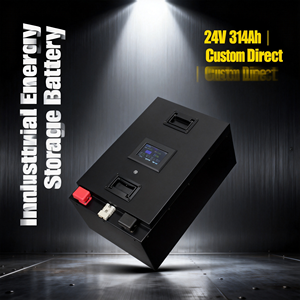
Serving Tokyo’s premier precision machining and robotics manufacturers in Ota Ward, we supply low-profile, shock-resistant 24V and 48V custom lithium battery packs with high cycle stability, supporting fast opportunity charging for 24/7 autonomous warehouse fleets.
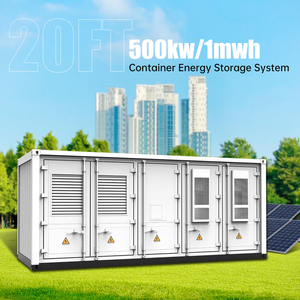
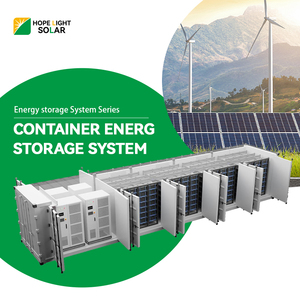
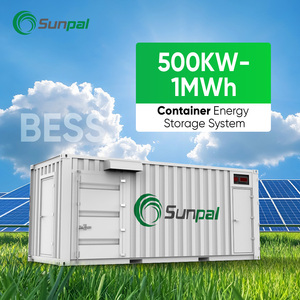
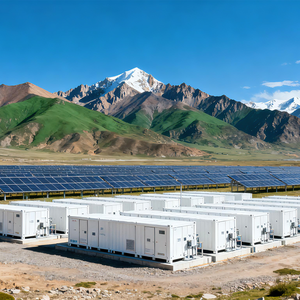
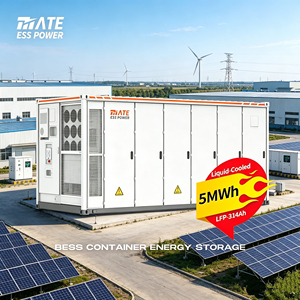
In alignment with the Tokyo Metropolitan Government’s earthquake preparedness policies, our 100kWh to 5MWh containerized BESS solutions provide off-grid resilience during natural disasters, incorporating Tokyo Fire Department-approved gas suppression systems.
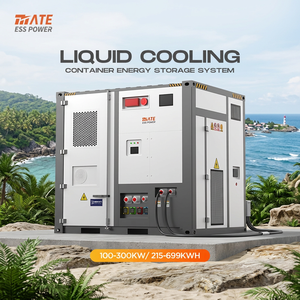
Heavy-duty, IP67-rated 699kWh to 1MWh liquid-cooled lithium battery containers designed for coastal anti-corrosion performance, enabling heavy harbor cranes, tugboats, and delivery trucks to zero out operational carbon emissions.
Deploying robust 10ft / 20ft containerized solar BESS units to island microgrids administered by Tokyo Metropolitan Government, reducing reliance on costly diesel imports and stabilizing island solar-plus-storage microgrids.
High-reliability smart battery packs compliant with IEC 60601-1 medical device standards. Designed for portable diagnostic equipment used in Tokyo’s world-class university hospitals and specialized research clinics.
Exporting battery systems to Japan or manufacturing locally within Tokyo requires strict adherence to safety certifications and grid interconnection protocols enforced by METI and TEPCO.
| Regulatory Standard / Policy | Governing Body | Technical Scope & Compliance Requirement | Our Engineering Assurance |
|---|---|---|---|
| PSE Mark Approval | METI (Ministry of Economy, Trade & Industry) | Mandatory electrical safety testing for lithium-ion cells with energy density >400 Wh/L. Covers overcharge, short circuit, and mechanical drop tests. | Cell selection certified under METI DENAN law, with complete factory inspection reports and PSE labeling ready for Tokyo distribution. |
| JIS C 8715-2 | JISC (Japanese Industrial Standards Committee) | Safety requirements for industrial lithium secondary cells and batteries used in stationary, industrial, and micro-mobility applications. | BMS firmware programmed with dual-layer voltage and temperature cutoffs, fully compliant with JIS structural and electrical parameters. |
| Tokyo Fire Code (消防法) | Tokyo Metropolitan Fire Department | Stationary battery systems exceeding 4,800 Ah·V (approx. 17.28 kWh) must comply with strict fire isolation distance and auto-extinguishing rules. | Pre-engineered fire suppression options (Novec 1230 / Aerosol) integrated into cabinet enclosures with certified thermal runaway isolation layers. |
| TEPCO Grid Interconnection | Tokyo Electric Power Company (TEPCO) | Grid-tied industrial energy storage must support grid frequency stabilization, reactive power control, and islanding protection during blackout events. | Custom hybrid inverter-matched BMS with Modbus RTU / SunSpec protocol support for instantaneous TEPCO demand response signals. |
| UN 38.3 & Class 9 Hazmat | International Civil Aviation / Maritime Org | Transport safety certification covering altitude simulation, thermal shock, vibration, impact, external short circuit, and forced discharge. | Every prototype pack ships with full UN 38.3 test summary reports (TSR) and UN-certified hazardous goods packaging for fast sea/air transit. |
In Tokyo’s fast-moving tech environment, time-to-market is the ultimate competitive advantage. Our integrated prototyping factory accelerates conventional 6-month battery development cycles down to just weeks.
Finite Element Analysis (FEA) and Computational Fluid Dynamics (CFD) simulation of cell thermals under high C-rate discharge.
PCB layout design featuring Texas Instruments or Analog Devices ICs, programmed for state-of-charge (SOC) precision under 1% margin.
CNC aluminum housing fabrication, nickel ribbon laser spot welding, and IP67 silicone gasket sealing.
Complete environmental chamber cycling, short-circuit validation, and air-freight door-to-door shipping directly to Tokyo.
In high-density Tokyo installations (such as commercial building basements or sub-ground server vaults), thermal runaway prevention is non-negotiable. Our engineering incorporates multi-layered thermal defense:
Selecting the appropriate cell chemistry depends heavily on your application's volumetric constraints, cycle life expectations, operating temperature range, and budget target.
| Battery Chemistry | Energy Density (Wh/kg) | Cycle Life (80% DOD) | Nominal Voltage | Thermal Safety Limit | Best Fit Tokyo OEM Application |
|---|---|---|---|---|---|
| Lithium Iron Phosphate (LiFePO4) | 160 – 190 Wh/kg | 4,000 – 6,000+ Cycles | 3.2 V | 270°C Thermal Runaway Threshold | Industrial BESS, Commercial Container Energy Storage, Telecom Backup. |
| Nickel Manganese Cobalt (NMC) | 240 – 280 Wh/kg | 1,500 – 2,500 Cycles | 3.6 V – 3.7 V | 210°C Thermal Runaway Threshold | Robotics, AGVs, Medical Portable Devices, High-Rate Drones. |
| Silicon Anode (Amprius Technology) | 360 – 450 Wh/kg | 800 – 1,200 Cycles | 3.6 V – 3.7 V | Advanced Protective BMS Layer Required | UAVs, Military Tactical Gear, Aerospace, Ultra-compact Wearables. |
| Lithium Titanate (LTO) | 80 – 110 Wh/kg | 15,000 – 20,000+ Cycles | 2.3 V | Extreme Thermal Stability (>300°C) | Subway Trains, Heavy Industrial Fast-charge Cranes, Extreme Cold Storage. |
Leveraging decades of contract manufacturing prowess, authorized distributor channels, and rigorous quality assurance.
Our seasoned battery designers and firmware architects bring deep experience across medical, military (ITAR-registered standards), aerospace (AS9100 certified practices), and industrial grid infrastructure.
Direct tier-1 strategic partnerships and authorized battery assembly for leading global cell brands including Energizer, Amprius, and NanoGraf (18650-M38 cell technology).
From initial component selection to mass manufacturing scaling, regulatory filing assistance (PSE, UN38.3, CE), and long-term end-of-life battery recycling consultation.
Addressing key technical inquiries regarding rapid prototyping turnaround, shipping logistics, certification support, and customization flexibility.
Our standard rapid prototyping cycle takes 14 to 21 business days from CAD final approval to functional pack assembly. Air freight shipping to Haneda (HND) or Narita (NRT) airports typically takes an additional 3 to 5 business days via certified UN38.3 dangerous goods air cargo carriers.
Yes. For battery packs targeted for consumer or specified industrial distribution in Japan, we utilize cells compliant with the Electrical Appliance and Material Safety Law (DENAN Law). We also provide full test documentation required for METI reporting and PSE labeling.
Absolutely. Our software engineering team programs Smart BMS hardware supporting CANbus 2.0B, Modbus RTU, RS485, and SMBus. We tailor message frames and baud rates to match your PLC controllers, TEPCO inverter interfaces, or proprietary robotic bus systems.
We employ a multi-barrier defense strategy: Grade-A LiFePO4 chemistry, 1.5mm thermal aerogel insulation between individual cells, physical pressure release valves, active temperature monitoring at every cell parallel group, and optional Novec/Aerosol automatic fire extinguishing modules compliant with Tokyo Fire Department standards.
We support agile hardware development and offer low-MOQ rapid prototyping options (starting from as few as 1 to 5 prototype units) for engineering validation testing (EVT) and design validation testing (DVT) before scaling up to high-volume commercial production.
Yes. We engineer bespoke CNC aluminum, stainless steel, or 3D-printed enclosures tailored precisely to your physical volumetric envelope. All enclosures are designed to meet IP65, IP67, or IP68 ingress protection standards depending on your operating requirements.
Consult directly with our senior battery engineers today. Receive technical CAD feedback, thermal analysis, and a detailed commercial quote within 24 hours.