Factory-direct liquid-cooled and air-cooled BESS containers, high-voltage battery cabinets, and modular LFP packs configured for Mexico City's industrial microgrids and GDMTH tariff peak shaving.
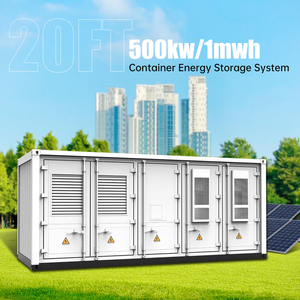
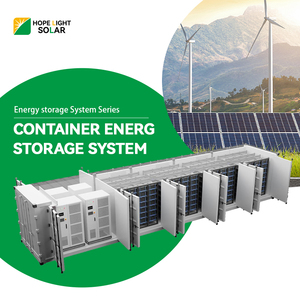
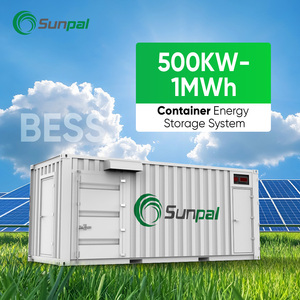
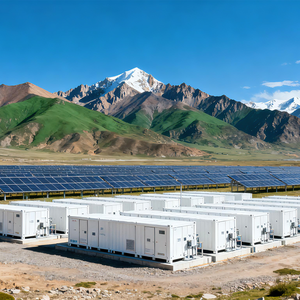
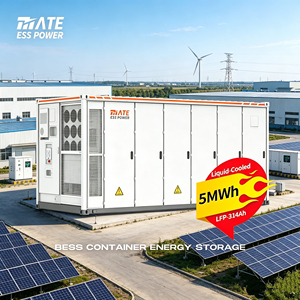
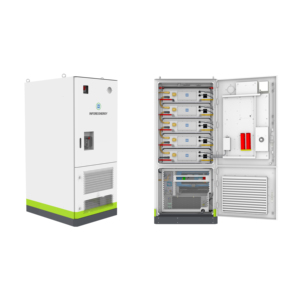
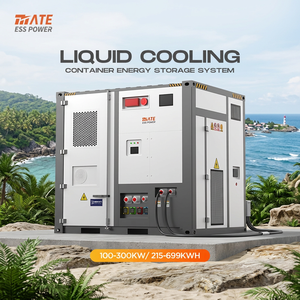
The Metropolitan Area of Mexico Valley (ZTVM) and Mexico City (CDMX) represent the industrial and commercial heartbeat of Mexico. Driven by the unprecedented expansion of the Nearshoring mega-trend, manufacturing plants, logistics centers, data hubs, and commercial complexes across industrial corridors such as Vallejo i.4.0, Naucalpan, Tlalnepantla, and Iztapalapa are expanding at record speeds. However, this growth has strained the regional electrical transmission grid operated by CFE (Comisión Federal de Electricidad).
Industrial enterprises operating under the GDMTH (Gran Demanda Media Tensión Horaria) tariff structure face severe financial exposure due to steep peak energy pricing (Tarifa de Pico) and high capacity charges (Cargos por Capacidad y Demanda Máxima). Furthermore, frequency volatility, power quality degradation, and localized blackout events threaten seamless factory production. Commercial Solar Battery Storage Systems (BESS) engineered by top-tier exporters and OEM factories offer the primary technological countermeasure, enabling peak shaving, demand charge management, power quality mitigation, and seamless emergency backup.
Mexico City sits at an average altitude of 2,240 meters (7,350 feet) above sea level. At this altitude, air density drops by approximately 22% compared to sea level. Standard air-cooled energy storage cabinets suffer from compromised heat exchange efficiency, resulting in thermal derating. Tier-1 BESS exporters supplying CDMX must utilize advanced Liquid-Cooling Thermal Management Systems or specifically calibrated high-CFM HVAC units to prevent thermal runaway and maintain cycle life across 314Ah LiFePO4 cells.
Automatically discharge stored solar power during mandatory CFE peak hours (typically 18:00 to 22:00) to eliminate expensive peak kilowatt-hour charges and reduce demand spikes.
Millisecond-level transfer (< 10ms) from grid tied to islanding mode, protecting sensitive CNC machinery, automated packaging lines, and cold-storage refrigeration in CDMX factories.
Seamlessly interface high-voltage DC bus container systems with rooftop PV solar arrays (up to 500kWp under CRE distributed generation limits) and diesel gensets.
Commercial energy storage projects in CDMX require stringent compliance with both international quality frameworks and Mexican national standards (NOM - Normas Oficiales Mexicanas). Exporting factories must build BESS units with multi-tiered hardware safety, smart Battery Management Systems (BMS), and robust grid-tie capabilities.
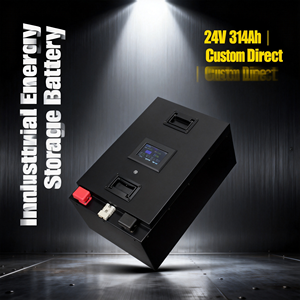
For commercial and utility applications (233kWh cabinets up to 5MWh containers), 314Ah and 280Ah LiFePO4 prismatic cells are the industry gold standard. LFP chemistry offers inherent thermal stability (decomposition temperature > 270°C), extended cycle durability (over 6,000 to 8,000 cycles at 80% Depth of Discharge), and zero reliance on hazardous cobalt. Advanced internal active balancing prevents cell voltage divergence across long battery strings (up to 1500V DC).
While traditional 10ft, 20ft, and 40ft containers relied on air conditioning HVAC systems, high-density 5MWh container systems utilize Liquid-Cooling Technology. Liquid thermal management routes glycol-water coolant directly through cold plates sandwiched between 314Ah cell packs. This ensures a uniform temperature gradient (≤ 2.5°C difference between cells across the entire container), reducing cooling energy consumption by up to 30% while extending total battery lifespan by 20% compared to traditional air cooling in Mexico City's low-density air atmosphere.
Selecting the ideal BESS architectural configuration depends on facility load profile, footprint constraints, and environmental elevation factors. Below is a engineering comparison matrix provided by tier-1 export engineers:
| Technical Parameter | Standard Air-Cooled BESS (215kWh - 1MWh) | Next-Gen Liquid-Cooled BESS (233kWh - 5MWh) | High-Voltage Cabinet (100kW - 300kW) |
|---|---|---|---|
| Cell Type & Capacity | 280Ah LFP Prismatic Cells | 314Ah High-Energy Density LFP | 280Ah / 314Ah Premium LFP |
| System Energy Density | Standard (~75 kWh/m²) | Ultra-High (> 135 kWh/m²) | Compact Footprint (~90 kWh/m²) |
| CDMX Altitude Derating | Requires +15% HVAC Airflow Compensation | Zero Derating (Enclosed Fluid Loop) | Minimal Derating with Oversized Fan |
| Temperature Variance (ΔT) | ≤ 5°C Cell-to-Cell | ≤ 2.5°C Cell-to-Cell | ≤ 4°C Cell-to-Cell |
| Protection & Fire Safety | IP55, FM200 / Aerosol Suppression | IP65 Enclosure, Pack-Level Liquid/Gas Suppression + UL 9540A | IP55 Cabinet, Integrated Aerosol Fire Extinguisher |
| Target Application | Medium Warehouses, Commercial Centers | Heavy Industrial Plants, Automotive Assembly, 1MW+ Microgrids | Small Industrial Workshops, EV Charging Hubs |
| Expected Payback (GDMTH Tariff) | 3.8 to 4.5 Years | 3.2 to 3.9 Years | 3.5 to 4.2 Years |
In Mexico City, electricity billing for medium and high-voltage commercial customers under CFE GDMTH is calculated based on three key metrics:
By deploying a 1000kW / 2150kWh Containerized Lithium Energy Storage System connected behind-the-meter (BTM) alongside a rooftop solar array, an industrial plant in Naucalpan can achieve comprehensive demand charge clipping:
When sourcing commercial BESS equipment from global factories for export to Mexico, engineering rigors must match aerospace and high-reliability industrial benchmarks. Leading OEM manufacturing plants leverage key enterprise strengths:
Laser-welded busbars, automated 3D optical inspections, and cell-sorting machinery ensure internal resistance (IR) matching within 0.05 mΩ across all battery modules.
Mexico City lies in a high seismic hazard zone (Zone 3 geotechnical subsoil). Export containers are structural steel reinforced to withstand PGA > 0.4g earthquake events.
Dual-stage detection (off-gas VOC monitoring + smoke/heat sensing), target aerosol or Novec 1230 gas flooding, and per-pack water sprinkler injection connections compliant with NFPA 855 and UL 9540A.
Navigating the regulatory land-space in Mexico requires strict adherence to energy guidelines established by the CRE (Comisión Reguladora de Energía) and CFE interconnection handbooks:
Connect directly with senior battery engineers and export specialists to analyze your CFE electricity bills, simulate GDMTH tariff savings, and select the optimal containerized or cabinet LiFePO4 energy storage solution.
Get a Quote