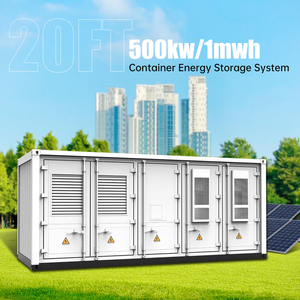
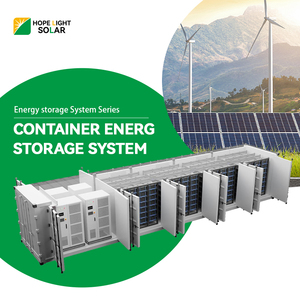
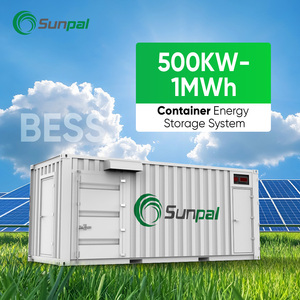
High-voltage commercial, industrial, and off-grid containerized lithium-ion energy storage systems (BESS) designed with custom internal pre-heating and sub-zero management systems for North American deployment.
Operating standard lithium-ion and lithium iron phosphate (LiFePO4) battery chemistries in freezing environments presents significant electrochemical hurdles. As temperatures drop below 0°C down to -40°C, conventional battery packs experience severe capacity fade, voltage drops, and rapid internal degradation. Understanding the physics behind these challenges is critical for system integrators, OEM engineers, and procurement directors sourcing lithium assemblies for deployment across northern US latitudes, Canada, and arctic industrial applications.
Liquid electrolytes thicken substantially under frigid conditions. Organic carbonate solvents (EC/DMC/EMC) experience drastic increases in dynamic viscosity, reducing Li+ ion diffusivity across the separator and spiking charge-transfer resistance at the electrode interfaces.
At sub-zero temperatures, the desolvation energy required for lithium ions to strip their solvent sheath and intercalate into graphite anodes surges dramatically. This high interface impedance severely throttles power output and causes significant voltage sag.
Attempting to charge standard lithium cells below freezing forces Li+ ions to deposit as metallic lithium on the anode surface rather than intercalate. Metallic lithium dendrites can pierce separators, triggering catastrophic internal micro-shorts and thermal events.
To neutralize these issues, premier Chinese manufacturers export advanced low-temperature lithium battery assemblies equipped with multi-layered thermal engineering. By incorporating proprietary electrolyte formulations—containing low-viscosity ester co-solvents like ethyl acetate (EA) or methyl propionate (MP) along with fluoroethylene carbonate (FEC) film-forming additives—our battery cells maintain electrochemical activity even when ambient conditions plummet to -40°C (-40°F).
Comparative breakdown of low-temperature lithium chemistries utilized in OEM energy storage and industrial battery packs exported to the United States market:
| Chemistry Type | Optimal Temp Range | Discharge Capacity @ -20°C | Discharge Capacity @ -40°C | Sub-Zero Charge Capability | Primary US Application |
|---|---|---|---|---|---|
| Standard LiFePO4 (LFP) | 0°C to 55°C | 55% - 65% | < 20% (Not recommended) | Requires Pre-heating | Standard Grid Storage / UPS |
| Low-Temp Modified LFP (Custom Additives) | -30°C to 55°C | 82% - 88% | 50% - 60% | Pulse Heating + Trickle | Cold Storage / Commercial BESS |
| Low-Temp NMC (Nickel Manganese Cobalt) | -40°C to 50°C | 88% - 93% | 65% - 75% | Supported with BMS Heating | Aerospace / Defense / Telecom |
| Lithium Titanate Oxide (LTO) | -50°C to 65°C | 95% - 98% | 85% - 90% | Direct Charge down to -30°C | Military Ground Support / Arctic Grids |
When delivering industrial battery assemblies to United States importers and integrators, standard passive battery management systems (BMS) are insufficient. Leading Chinese export manufacturers integrate Smart Active Thermal BMS Technology into high-voltage energy storage systems and custom modules.
Our sub-zero thermal management relies on three key engineering pillars:
Step 1: Low-Temp Detection
BMS NTC sensors detect sub-zero cell core temps & lock external charging inputs to eliminate lithium plating risk.
Step 2: Pre-Heat Activation
Auxiliary thermal heating pads draw power from grid/solar inputs to warm cell matrix up to 5°C (41°F).
Step 3: Soft-Start Charging
BMS initiates constant current low-rate charging until voltage and impedance baseline stabilizes.
Step 4: Full-Power Normal Charge
BMS restores maximum standard C-rate charge current with real-time temperature telemetry monitoring.
The demand for low-temperature lithium battery pack exports from China to the United States has accelerated across critical infrastructure, defense, telecom, and industrial automation sectors. Below are key regional application frameworks:
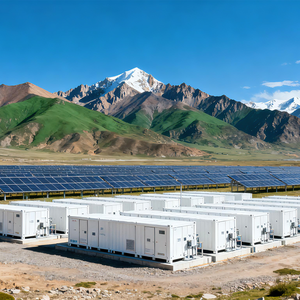
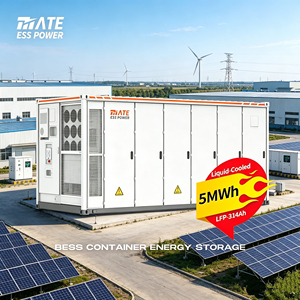
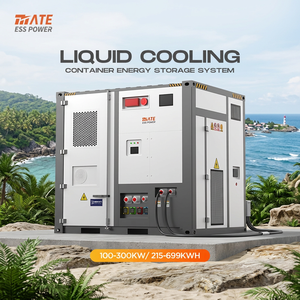
Off-grid communities and mining operations in Alaska, Montana, Minnesota, and Maine rely on containerized BESS (1MWh to 5MWh) to store wind and solar power during harsh winter freezes, eliminating generator idling and reducing expensive diesel fuel transport costs.
Industrial automated guided vehicles (AGVs), forklifts, and robotics operating inside food distribution cold storage warehouses (-25°F / -31°C) require high-discharge lithium packs with internal heaters to support continuous 3-shift operations without voltage drops.
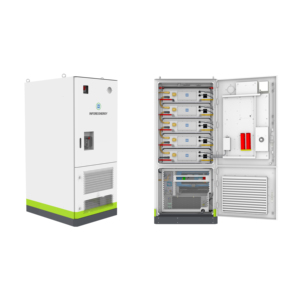
Mountain-top telecommunications towers across the Rocky Mountains and Appalachian networks demand zero-maintenance 48V/100Ah LFP battery cabinets that withstand severe ice storms and power outages without capacity collapse.
Navigating the import and installation of Chinese low-temperature lithium battery packs into the United States requires compliance with strict North American engineering standards, safety certifications, and grid interconnection laws.
Technical guidance for North American procurement managers, systems integrators, and OEM engineering leaders when sourcing low-temp battery assemblies from China:
Standard LiFePO4 battery packs lose cycle life rapidly if charged at sub-zero temperatures due to lithium plating. However, our engineered low-temperature battery assemblies utilize smart pre-heating BMS protocols. By ensuring the cell core reaches +5°C prior to current injection, cell lifespan remains virtually identical to ambient specs—delivering 4,000 to 6,000+ deep discharge cycles at 80% DOD.
Internal PTC heating wraps typically consume between 2% to 5% of total pack energy to elevate internal cell temperatures from -20°C to above 0°C. For grid-tied containerized system solutions (BESS), pre-heating power is drawn directly from auxiliary grid or PV inputs, preserving 100% of stored battery capacity for load output.
Yes. All custom containerized battery systems and lithium module packs undergo rigorous UN 38.3 testing (vibration, thermal shock, short circuit, impact, overcharge, and forced discharge). Products are fully certified and packaged in compliance with US Department of Transportation (DOT 49 CFR) and IMO maritime dangerous goods regulations.
Standard prototype custom module development takes approximately 3 to 4 weeks. High-voltage containerized BESS solutions (20ft/40ft units) require 6 to 8 weeks for manufacturing, assembly, factory acceptance testing (FAT), and certification. Sea freight to West Coast ports (Los Angeles/Long Beach) takes 14-18 days; East Coast ports (New York/Savannah) take 25-30 days.
Our intelligent low-temperature BMS supports multi-protocol connectivity including Modbus RTU/TCP, CAN-bus 2.0B, and SNMP. They are plug-and-play compatible with leading US inverter brands including SMA, Victron Energy, Schneider Electric, Sol-Ark, and Deye systems.
Absolutely. Every 20ft and 40ft low-temperature BESS container shipped to the US features integrated multi-stage safety systems: early gas detection (CO / Off-gas sensors), NOVEC 1230 / FM200 clean agent total flooding suppression, per-rack temperature monitoring, and mechanical explosion-venting panels certified to UL 9540A requirements.
With over 120 years of combined engineering expertise in high-reliability power systems, our manufacturing facility stands as China's premier supplier of low-temperature lithium assemblies exported directly to the United States, Europe, and global markets.
Our factory features walk-in environmental simulation chambers capable of testing full-scale battery racks down to -60°C (-76°F). Every assembly undergoes electrochemical impedance spectroscopy (EIS), high C-rate discharge evaluation, and thermal imaging verification before dispatch.
We maintain authorized assembly partnerships with top-tier cell producers (CATL, EVE, Amprius, Energizer), utilizing grade-A prismatic cells with matching internal resistance (<0.2mΩ) and precise cell voltage pairing for maximal system longevity.
Contact our technical engineering team for custom low-temperature lithium battery pack design, OEM white-label manufacturing, UL certification documentation, and wholesale export pricing to the US.