Pre-engineered containerized ESS and high-voltage lithium battery systems tailored for South African commercial facilities, mines, and utility microgrids.
In South Africa, the industrial and commercial sector operates under unprecedented grid instability. The ongoing power supply deficit managed by Eskom—commonly manifested as Stage 1 through Stage 8 load shedding—presents a structural threat to operational continuity, manufacturing throughput, and data center integrity. Traditional diesel generator sets, historically relied upon for emergency backup, suffer from escalating fuel expenditures, carbon tax liabilities under the South African Carbon Tax Act 15 of 2019, and significant mechanical wear caused by multiple daily start-stop cycles.
Furthermore, legacy VRLA (Valve-Regulated Lead-Acid) Uninterruptible Power Supply (UPS) installations are rapidly failing across sub-Saharan environments. Lead-acid chemistries undergo severe capacity degradation when subjected to ambient operating temperatures above 25°C and deep discharge cycles occurring two to three times daily. Under typical Stage 6 loadshedding schedules (up to 12 hours of power disruptions in a 24-hour cycle), lead-acid batteries cannot complete their required 8 to 10-hour recharge phase, resulting in chronic partial-state-of-charge (PSOC) failure within 3 to 6 months of commissioning.
Information Gain Metric: High-Voltage Lithium Iron Phosphate (LiFePO4 / LFP) UPS and Battery Energy Storage Systems (BESS) manufactured by leading Chinese OEMs offer 6,000 to 8,000 deep cycles, 2-hour rapid recharge capability, and operational stability up to 55°C—reducing Levelized Cost of Storage (LCOS) by over 62% compared to lead-acid and diesel generator configurations in South Africa.
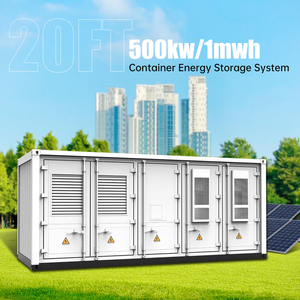
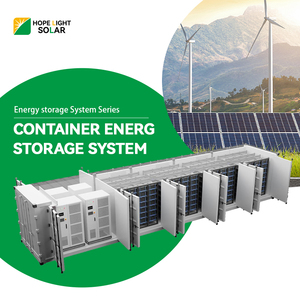
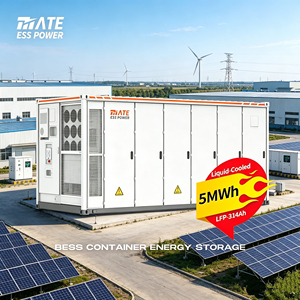
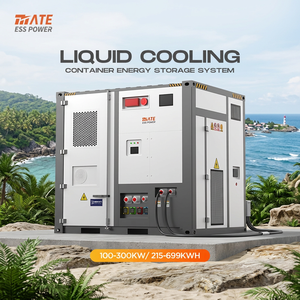
As a leading China-based Industrial UPS Lithium Battery Backup Factory and customized OEM supplier, our engineering frameworks deliver high-voltage (HV) containerized energy storage units (233kWh to 5MWh) designed specifically for the thermal and electrical parameters of the South African grid network. By integrating Tier-1 314Ah cell chemistry, smart liquid-cooling thermal management, and rapid static transfer switches, our systems bridge the gap between emergency power backup and long-term economic optimization through solar PV self-consumption and peak-shaving tariff management.
| Performance Parameter | China OEM Heavy-Duty LiFePO4 BESS | Traditional Lead-Acid (VRLA/Gel) UPS | Industrial Diesel Generator Sets |
|---|---|---|---|
| Cycle Life (80% DOD) | 6,000 – 8,000 Cycles | 400 – 800 Cycles | N/A (Engine overhaul at 5,000 hrs) |
| Recharge Time to 90% | 1.0 – 1.5 Hours (Fast C-Rate) | 8.0 – 12.0 Hours | Instant fuel refill (High Opex) |
| UPS Transfer Speed | < 10ms (Zero disturbance) | 0ms (Double Conversion) | 10 to 30 Seconds Delay |
| Thermal Resilience | -20°C to +55°C (Active Cooling) | Strict 20°C - 25°C Requirement | Derates in extreme heat (>40°C) |
| 10-Year Total TCO Cost | Lowest (Capex amortized over 15 yrs) | High (3x to 4x battery replacements) | Highest (Fuel + Carbon Tax + Maintenance) |
| Grid Support Capabilities | Peak Shaving, Solar Coupling, Frequency Reg. | Backup Only | Emergency Backup Only |
To withstand sub-Saharan climatic conditions—ranging from high ambient temperatures in the Northern Cape to coastal humidity in Durban and dust-heavy mining environments in Rustenburg—industrial UPS systems require robust thermal and mechanical enclosure design. China's top energy storage factories have pioneered high-density, multi-layer safety architectures that redefine performance standards for industrial lithium backups.
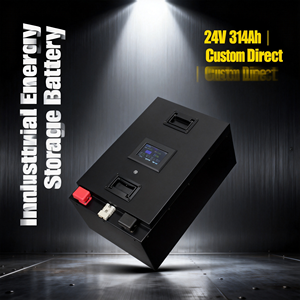
Utilizing high-capacity 314Ah LiFePO4 cells with single-cell energy density exceeding 170Wh/kg. The LFP chemistry features an ultra-stable olivine crystal structure, eliminating thermal runaway risks up to 400°C.
Precision liquid cooling maintains cell temperature variance (ΔT) within ≤ 2.5°C across the entire 5MWh container. Liquid cooling consumes 40% less auxiliary energy compared to traditional HVAC air cooling.
Triple-layer Battery Management System (Cell-level, Rack-level, System-level) providing real-time insulation monitoring, SOC/SOH estimation algorithms, RS485/CANbus, and Modbus TCP protocols for SCADA systems.
Integrated gas detector (CO, H2), thermal sensors, and localized aerosol fire extinguishers within each rack module. Compliant with NFPA 855 and UL9540A explosion-proof venting specifications.
Operating at elevated DC voltages reduces copper cable cross-sections, lowers system line losses by 3%, and enhances overall round-trip efficiency (RTE) to over 91.5% at the container boundary.
Firmware pre-programmed for seamless compliance with South African grid interconnection codes, enabling active power curtailment, reactive power support, and anti-islanding protection.
Industrial facility managers and electrical engineers in South Africa encounter distinct operational hurdles depending on geography and sector. Our specialized lithium backup configurations target specific localized infrastructure demands:
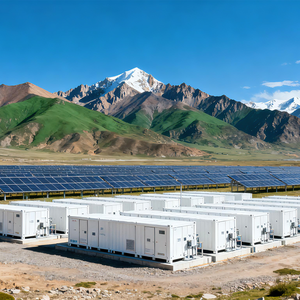
Underground platinum, gold, and diamond extraction facilities require absolute continuity for underground ventilation fans, dewatering pumps, and hoist elevators. A sudden voltage drop or outage can trigger catastrophic safety events. Our 20ft and 40ft containerized 1MWh to 5MWh BESS units act as high-power static UPS systems, supplying immediate backup power to critical switchgear while islanding sensitive underground networks from Eskom grid surges.
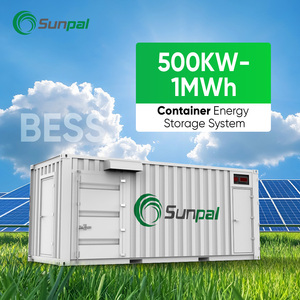
Automotive assembly plants and plastic injection molding facilities face immense financial loss when automated robotic lines freeze mid-cycle during Stage 4+ load shedding. Installing a 500kW/1MWh hybrid containerized lithium storage system integrated with rooftop Solar PV allows manufacturers to bypass peak tariff windows (Eskom Megawatt Park Tariffs) and maintain uninterrupted 24/7 assembly without restarting complex machinery.
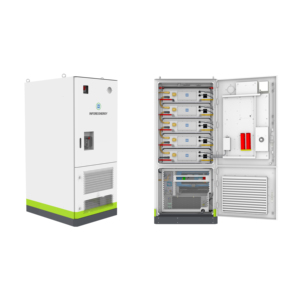
Citrus, fruit, and wine processing exporters in Cape Town and Nelspruit must preserve strict cold-chain temperatures to comply with international export standards. Our 233kWh all-in-one outdoor energy storage cabinets provide rapid discharge capability to sustain heavy compressor startup currents (high inductive loads), working alongside existing rooftop solar arrays to drive zero-carbon cooling.
South Africa's primary financial data corridors require zero-downtime tier-4 redundancy. Our modular high-voltage rack systems integrate directly into central DC bus bars, delivering ultra-clean power filtering, voltage regulation, and automated cloud-based telemetry to safeguard critical banking transactions and telecommunication switches.
The regulatory framework governing embedded generation in South Africa has evolved rapidly. Following the repeal of the 100MW licensing threshold by the National Energy Regulator of South Africa (NERSA), private enterprises can now implement large-scale wheeling projects and behind-the-meter energy storage without undergoing lengthy licensing cycles.
Regulatory Strategy: Industrial energy storage systems installed in South Africa must strictly adhere to NRS 097-2-1 (Utility Interface Standards) and SANS 10142-1 (Wiring of Premises). Our containerized factory solutions ship with pre-certified grid protection relays, islanding detection systems, and dedicated Modbus interfaces for seamless municipality sign-off (e.g., City of Cape Town & City Power Johannesburg).
Key market drivers pushing South African enterprises toward custom Chinese OEM lithium suppliers include:
Choosing an industrial battery partner requires rigorous evaluation of factory engineering depth, supply chain transparency, and quality assurance protocols. Leveraging over 120 years of collective technical expertise in custom pack design and heavy equipment integration, our manufacturing facility delivers unmatched structural and chemical reliability.
From custom 24V/48V off-grid modules to fully integrated 5MWh containerized solutions, our engineering team customizes voltage ranges, thermal cooling channels, and enclosure footprints to meet precise client specifications.
Every system manufactured in our automated facilities holds comprehensive international certifications, including IEC 62619, UL 1973, UL 9540A, UN 38.3, and CE marking—guaranteeing rapid customs clearance at South African ports.
We source only brand-new, Grade-A prismatic cells directly from world-class cell fabricators (CATL, EVE, BYD). Every cell is digitally barcoded, tested for matching internal resistance (IR), and logged into full factory traceability reports.
Manufacturing and full factory acceptance testing (FAT) typically require 4 to 6 weeks depending on customization depth. Ocean freight transit time from Ningbo or Shanghai port to Durban (Transnet Terminal) is approximately 22 to 28 days, and 26 to 32 days to Cape Town. Overall door-to-door delivery usually spans 8 to 10 weeks.
Our containerized systems feature integrated industrial liquid-cooling units or heavy-duty HVAC air cooling specifically calibrated for high ambient environments (up to 55°C). Liquid cooling ensures that internal cell temperature variances remain below 2.5°C, preventing localized hot spots and maintaining full 15-year design life even during extreme heat waves in the Karoo or Highveld regions.
Yes. Our smart 3-tier BMS supports open communication protocols including RS485, CAN 2.0, and Modbus TCP. They seamlessly interface with leading commercial inverter brands widely used in South Africa, such as Sungrow, Huawei, Schneider, Victron, Deye, and SMA, as well as centralized SCADA management platforms.
We supply full documentation packets for South African SARS customs compliance, including Certificate of Origin (COO), Bill of Lading, Commercial Invoice, Packing List, MSDS, UN38.3 test reports, UN3536 container certification, and IEC 62619 product certificates necessary for smooth customs declaration and municipal electrical sign-off.
We offer standard 5-year to 10-year linear performance warranties backed by throughput energy guarantees (e.g., 6,000 to 8,000 cycles at 80% DOD). Our factory technical team provides 24/7 remote telemetry diagnostic monitoring, firmware updates, and local engineer technical training for installation partners across South Africa.
Partner directly with our engineering team to design, build, and deploy custom industrial UPS lithium backups and high-voltage containerized energy storage tailored for South African operational environments.