Explore our CE-certified factory direct range engineered for continuous industrial uptime, remote microgrids, and high-discharge backup applications across Australia.
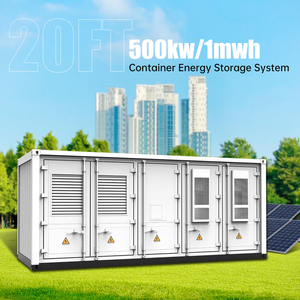
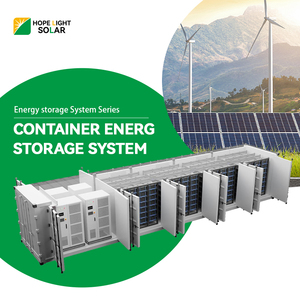
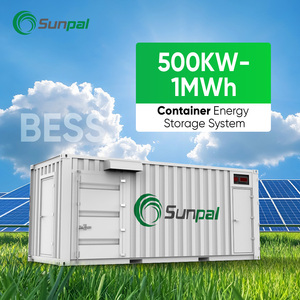
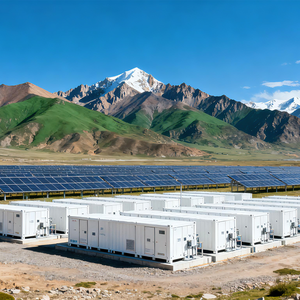
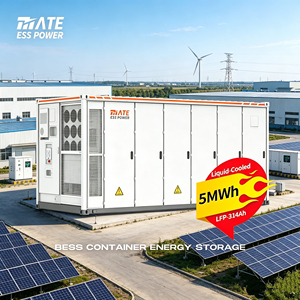
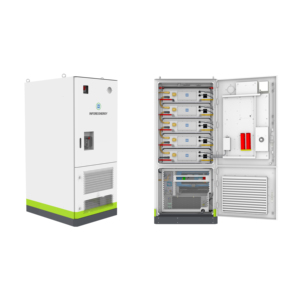
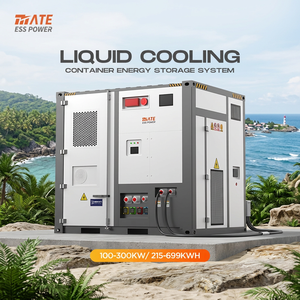
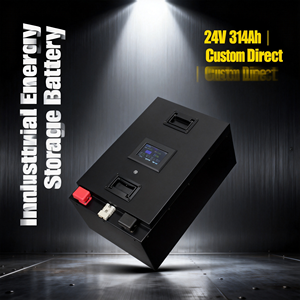
Modern industrial infrastructure across Australia—ranging from resource extraction facilities in the Pilbara to automated production plants in Victoria—requires robust, fault-tolerant Uninterruptible Power Supply (UPS) architecture. Traditional Valve-Regulated Lead-Acid (VRLA) UPS systems face severe thermal degradation in high ambient temperatures, frequent replacement schedules (every 3 to 5 years), and poor energy density. As an established global manufacturer with over 120 years of collective battery design expertise, our factory delivers high-voltage CE-certified Lithium Iron Phosphate (LiFePO4) industrial UPS and Containerized Battery Energy Storage Systems (BESS) engineered specifically for mission-critical reliability.
Our industrial lithium UPS cabinets incorporate Tier-1 prismatic 314Ah and 280Ah LiFePO4 cells. Unlike Nickel Manganese Cobalt (NMC) chemistry, LFP exhibits exceptional chemical stability, elevated thermal runaway thresholds (>270°C), and non-gassing characteristics under severe electrical stress. When deployed as a zero-downtime UPS, these batteries maintain continuous operational readiness under high ambient heat without accelerated capacity loss.
Exporting industrial UPS systems to international markets—especially Australia—demands rigorous compliance verification. Our factory manufacturing lines operate under stringent AS9100 and ISO 9001 quality systems. Every turnkey containerized system and cabinet UPS carries comprehensive CE certification covering both EMC (Electromagnetic Compatibility Directive 2014/30/EU) and LVD (Low Voltage Directive 2014/35/EU).
| Performance Parameter | Factory CE LiFePO4 Industrial UPS | Legacy VRLA / AGM UPS | NMC Lithium Containers |
|---|---|---|---|
| Cycle Life (80% DOD) | 6,000 – 8,000 Cycles | 500 – 1,200 Cycles | 2,500 – 4,000 Cycles |
| Thermal Runaway Temp | > 270°C (Extremely Safe) | N/A (Thermal runaway gas risk) | ~150°C (High fire hazard) |
| Operating Temp Range | -20°C to +60°C (Liquid Cooled) | 15°C to 25°C (Strict limit) | -10°C to +45°C |
| Round-Trip Efficiency (RTE) | > 95% System RTE | 75% – 82% System RTE | 92% – 94% System RTE |
| Transfer Time to Battery | < 10ms (On-line Double Conversion) | 15ms – 30ms | < 10ms |
| 10-Year TCO Savings | Up to 60% CAPEX/OPEX Reduction | Baseline (High maintenance) | Moderate TCO due to HVAC loads |
Australia’s unique geographical distribution and grid topography present harsh operational challenges. Our CE-certified industrial UPS lithium battery systems are tailored for local operating environments from coastal hubs to the remote Outback.
Iron ore, gold, and lithium extraction sites operate continuous processing machinery, heavy crushing plant automation, and worker camps isolated from Australia's National Electricity Market (NEM). Power interruptions cause severe financial loss. Our 20ft and 40ft containerized 1MWh to 5MWh LiFePO4 BESS modules serve as robust industrial UPS systems, maintaining voltage stability during heavy motor startups and providing seamless battery backup during diesel generator fuel cycles under 50°C ambient Outback conditions.
With Australia’s rapid solar PV adoption, industrial manufacturing plants in New South Wales and Victoria face strict grid connection requirements (AS/NZS 4777.2). Our hybrid integrated container battery systems perform dual roles: acting as instantaneous zero-millisecond UPS protection for sensitive precision tooling while executing microgrid solar peak-shaving and participating in Frequency Control Ancillary Services (FCAS) markets to monetize reserve battery capacity.
Enterprise data centers and rural telecommunication towers require uncompromised emergency power. Our high-voltage 233kWh and 500kW cabinet UPS units integrate direct SCADA, Modbus TCP, and CANbus monitoring interfaces. Featuring automatic liquid cooling thermal regulation, these systems ensure zero server reboot downtime during grid brownouts or extreme storm events along eastern Australian coastlines.
Large-scale fruit packing, dairy processing, and wine production facilities in South Australia and Queensland rely on uninterruptible refrigeration compressor power. A sudden power drop causes thermal degradation of perishable inventory. Our custom 314Ah battery racks provide 4 to 8 hours of sustained high-output power, shielding operations against regional grid vulnerabilities.
Australia’s industrial sector is undergoing a rapid transition toward decarbonization, driven by rising wholesale spot energy prices (AEMO volatility) and state-level renewable targets. Deploying CE-certified industrial UPS and containerized battery systems requires strict adherence to localized engineering guidelines:
The Australian Standard AS/NZS 5139 (Electrical installations - Safety of battery systems for use with power conversion equipment) sets stringent requirements for battery enclosure separation, thermal management, fault current protection, and risk mitigation against thermal runaway. Our factory engineers containerized structures specifically to satisfy AS/NZS 5139 Class 1 and Class 2 installation mandates, incorporating structural arc-blast venting and isolated electrical control bays.
In high ambient temperature zones like Western Australia and the Northern Territory, conventional air-cooled battery cabinets spend significant energy maintaining internal temperatures below 30°C. The industry trend has rapidly pivoted toward Liquid-Cooled 314Ah Cell BESS Containers. Liquid cooling reduces internal temperature variance across cell blocks to ≤2.5°C, reducing parasitic HVAC power loads by over 40% while extending total operational lifespan.
Australian industrial electricity consumers face severe capacity charges during peak evening windows. By configuring our CE-certified industrial UPS systems for peak shaving (discharging battery power during peak tariff rate hours and recharging via cheap solar or off-peak grid electricity), facilities achieve immediate reduction in network maximum demand charges while securing baseline UPS protection.
Drawing upon over 120 years of collective engineering leadership, advanced battery pack manufacturing facilities, and authorized component partnerships, we deliver end-to-end reliability for enterprise clients.
Our senior engineering team brings decades of specialized experience in electrochemical cell selection, structural pack housing design, smart BMS firmware development, and high-voltage grid integration.
We build tailored solutions—from 24V/48V high-discharge industrial packs to 10ft, 20ft, and 40ft high-voltage (up to 1500V DC) containerized ESS units designed specifically for your facility’s spatial footprint.
Every battery module undergoes automated cell impedance matching, ultrasonic wire bonding, automated optical inspection (AOI), thermal stress aging, and 100% full-cycle discharge validation prior to packing.
As authorized assemblers and procurement partners with leading battery cell developers (including Amprius, NanoGraf, and Energizer industrial tiers), we guarantee 100% genuine Grade-A lithium cells.
We manage complex Dangerous Goods (DG Class 9) logistics, maritime UN38.3 packaging, and door-to-port export documentation to major Australian ports including Fremantle, Sydney, Brisbane, and Melbourne.
Our proprietary BMS controllers offer multi-protocol communication (Modbus RTU/TCP, CANopen, SNMP), permitting seamless interface with existing facility SCADA or remote cloud monitoring platforms.
Get authoritative answers on regulatory compliance, thermal performance, freight logistics, and technical specifications for industrial battery procurement in Australia.
Consult directly with our senior application engineers. We provide comprehensive engineering proposals, single-line diagrams (SLD), sizing calculations, and factory-direct pricing tailored for your project requirements.
Get a Quote