CE Certified CAN Bus Smart BMS Integration Supplier & Suppliers serving Thailand

Industrial-Grade LiFePO4 Energy Storage Systems (BESS) & Custom Smart BMS Architecture Engineered for Tropical Industrial Microgrids

High-Voltage Industrial & Commercial Energy Storage Portfolio

Explore our CE-certified, CAN Bus integrated containerized and cabinet battery storage systems customized for factory peak shaving, solar PV smoothing, and microgrid applications across Thailand.
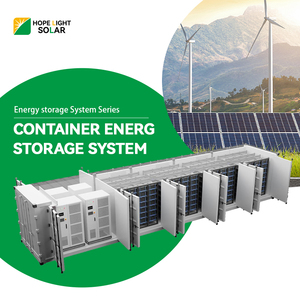
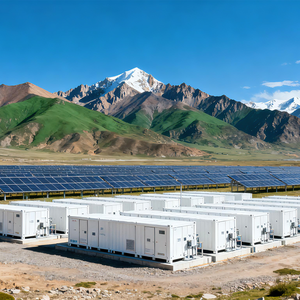
BENY 1Mwh 5mwh Container Energy Storage High Voltage LIFEPo4 Lithium Ion Batteries ESS
BENY 1MWh 5MWh Container Energy Storage High Voltage LiFePO4 ESS
Inquire Now
Custom 20ft & 40ft High Voltage ESS Battery Energy Storage System Commercial & Industrial Solution
Custom 20ft & 40ft High Voltage ESS Battery Container Solution
Inquire Now
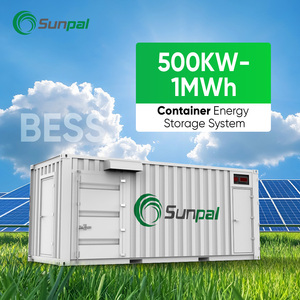
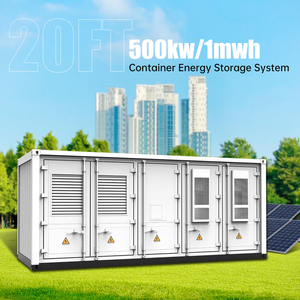
Sunpal ESS Solar Battery Cabinet Container 1MWh 500 KW Industrial Lifepo4 BESS
Sunpal ESS Solar Battery Cabinet Container 1MWh 500kW Industrial LiFePO4
Inquire Now
Customizable Container Energy Storage Hybrid Integrated Lithium Ion Battery System 1000KW Air Industrial Commercial
Customizable Container ESS Hybrid Integrated Lithium System 1000kW Air
Inquire Now
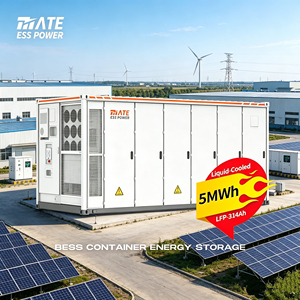
Lithium Batteries 5MWh Liquid Cooling Container Battery Storage System LiFePO4 Battery ESS 314Ah
Lithium Batteries 5MWh Liquid Cooling Container BESS 314Ah For Factory
Inquire Now
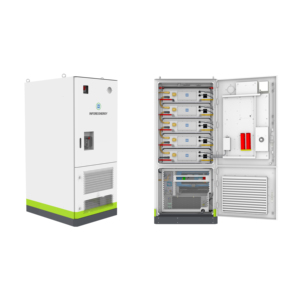
Industrial Commercial Lithium Ion Energy Storage System 233kWh High Power Output BESS
Industrial Commercial Lithium-Ion ESS 233kWh High Power Output BESS
Inquire Now
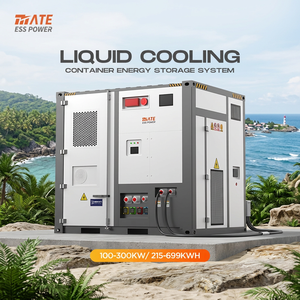
MATE LFP Lifepo4 Battery Container 100kW 215kWh 300kW 699kWh BESS Smart Lithium Battery System 10ft For Island
MATE LFP Battery Container 100kW-300kW / 215kWh-699kWh 10ft For Island
Inquire Now
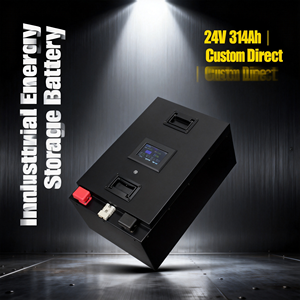
Direct Factory Custom 24V 314Ah for Industrial Off-Grid Energy Storage Power Electric Lithium Battery
Direct Factory Custom 24V 314Ah Industrial Off-Grid Lithium Battery Module
Inquire Now
< 2ms
CAN 2.0B Telemetry Speed
10,000+
Cell Cycle Life @ 80% DOD
CE / IEC
62619 & 62477 Certified
55°C
Tropical Thermal Derating Limit

Whitepaper: Engineering Architecture of CE Certified CAN Bus Smart BMS Integration

Information Gain Insight: Modern high-voltage lithium battery storage systems (BESS) deployed in Southeast Asia require more than basic overcharge protection. They demand deterministically isolated CAN 2.0B/CANopen telemetry, sub-millisecond cell-balancing matrixing, and dual-layer thermal shutdown triggers to survive high ambient humidity and grid fluctuations typical of Thailand's industrial zones.

As industrial automation and commercial solar-plus-storage projects accelerate across Southeast Asia, the underlying engineering of energy storage system (ESS) communication architecture has emerged as the critical single point of failure—or ultimate operational advantage. Central to this performance paradigm is the CE Certified Controller Area Network (CAN Bus) Smart Battery Management System (BMS).

1. The Mechanics of Deterministic CAN Bus Communication in High-Voltage Systems

Unlike standard RS-485 serial communication, which suffers from master-slave latency polling limits and susceptibility to high Electromagnetic Interference (EMI), CAN Bus architecture operates on a differential voltage signaling mechanism (CAN_H and CAN_L). In large-scale 1000V+ containerized BESS arrays (such as 1MWh to 5MWh configurations utilizing 314Ah LiFePO4 cells), thousands of individual cell nodes must transmit telemetry data simultaneously.

Bitwise Arbitration

Prioritizes safety-critical message frames (such as thermal runaway flags or cell voltage spikes) instantly without bus collisions.

🛡️

Galvanic Isolation

Optical and digital isolation up to 2.5kV prevents high-voltage common-mode transients from corrupting control logic.

🔄

Dual-Ring Redundancy

Supports topology failover, guaranteeing continuous telemetry even if a physical wiring path is compromised in harsh environments.

2. Three-Tier BMS Topography for Mega-Watt Scale BESS

Our CE-certified Smart BMS integration utilizes a structured hierarchical control matrix engineered specifically for industrial utility integration:

  • Layer 1: BMU (Battery Monitoring Unit): Direct sampling of cell voltage (±2mV accuracy) and localized NTC thermistor array sensing attached directly to cell busbars. Performs active or passive cell balancing up to 5A per string.
  • Layer 2: BCU (Battery Control Unit / Rack Master): Aggregates string-level data via high-speed internal CAN bus. Manages DC contactor isolation, pre-charge resistor control, and string SOC/SOH algorithm calculations using Coulomb counting and extended Kalman filtering (EKF).
  • Layer 3: BAMS (Battery Array Management System): Serves as the central gateway converting internal CAN 2.0B protocols to Modbus TCP/IP, IEC 60870-5-104, or DNP3 for direct interface with Power Conversion Systems (PCS) and Energy Management Systems (EMS).
Architecture Feature Standard RS485 BMS Advanced CAN Bus Smart BMS (Our Solution)
Data Throughput & Latency Slow (115.2 kbps max, 500ms+ polling) Ultra-Fast (500 kbps - 1 Mbps, < 2ms deterministic)
Noise Immunity (EMI/EMC) Low; vulnerable to high-voltage inverter switching High; CE EN 61000-6-2/4 industrial EMC certified
Thermal Runaway Isolation Reactive (Triggers after threshold breach) Predictive (Slope-rate dV/dt & dT/dt algorithm triggers)
Inverter / PCS Compatibility Requires external protocol converter boxes Native automatic handshake with Sungrow, SMA, Deye, Victron

Localized Application Scenarios in Thailand

Thailand's industrial sector is undergoing a massive clean-energy transition driven by the revised National Power Development Plan (PDP) and aggressive net-zero commitments by global manufacturing conglomerates established within the country. However, Thailand’s tropical geography poses distinct engineering challenges that require specialized BESS integration.

1. Eastern Economic Corridor (EEC) Industrial Estate Peak Shaving

Locations: Rayong, Chonburi, Chachoengsao Manufacturing Hubs.

Industrial facilities in EEC zones operate under Provincial Electricity Authority (PEA) Time-of-Use (TOU) tariffs, where peak power rates between 09:00 and 22:00 weekdays are substantially higher than off-peak rates. Our 233kWh to 1MWh containerized LiFePO4 systems integrated with Smart CAN BMS allow factories to perform automated daily peak shaving, lowering maximum demand charges by up to 35%.

Key Requirement: CAN Bus sub-second response times sync with factory load meters to discharge batteries instantly during heavy machinery start-up spikes.

2. Island Microgrids & Luxury Resort Resilience

Locations: Koh Samui, Phuket, Koh Phangan, Koh Chang.

Off-grid and weak-grid island hospitality assets rely heavily on expensive diesel generators. Our 10ft MATE LFP Containerized Systems (100kW/215kWh to 699kWh) seamlessly hybridize existing solar PV arrays with diesel gensets. The CAN BMS acts as the primary synchronization layer, delivering zero-break transition during main grid outages while reducing island fuel logistics costs by 60%.

Key Requirement: Corrosion-resistant C4/C5 marine-grade paint enclosures combined with insulated liquid cooling to combat saline coastal air.

3. Agricultural & Food Processing Cold Storage Microgrids

Locations: Chiang Mai, Nakhon Ratchasima (Isan region).

Temperature-sensitive agricultural cold-chain warehouses require uncompromised power reliability. Grid sags caused by seasonal monsoon storms can trigger massive product spoilage. High-capacity 5MWh Liquid-Cooled Container BESS solutions provide uninterrupted backup power while storing daytime rooftop solar generation for night-time refrigeration cycles.

4. EV Fast-Charging Hub Grid Amplification

Locations: Bangkok Metropolitan Region & Inter-city Highways.

With Thailand leading ASEAN in Electric Vehicle adoption, ultra-fast DC charging stations create severe localized grid congestion. Our 500kW/1MWh buffer storage systems discharge high current via CAN-controlled active power management during vehicle fast-charging, preventing transformer overload on local MEA/PEA distribution feeder lines.

Thailand BESS Localized Market & Technological Trends

Understanding local market dynamics is essential for engineering procurement teams, EPC contractors, and system integrators operating within Thailand. Over the past 24 months, four critical macro trends have redefined procurement specifications:

🌡️

1. Transition from Forced Air to Liquid Cooling

With ambient temperatures in central and northern Thailand frequently exceeding 40°C in summer, traditional air-cooled container batteries suffer from severe thermal gradient imbalances (>8°C difference between top and bottom cells). Liquid-cooled 314Ah systems maintain cell temperature uniformities within ±2°C, extending overall battery lifecycle by 30% under Thai climatic conditions.

📜

2. Strict Mandates for CE & TISI Certification

Thai utility authorities (EGAT, PEA, MEA) have elevated safety requirements. Energy storage imports must strictly conform to CE safety directives, IEC 62619 (for industrial lithium cells), IEC 62477-1, and UN38.3 transport standards. Non-certified BMS controllers face immediate customs rejection or grid interconnection refusal.

🔋

3. High-Density 314Ah LFP Cell Standardisation

The market has shifted away from older 280Ah cells toward next-generation 314Ah high-energy density cells. Utilizing the same 20ft container footprint, total capacity scales up from 3.35MWh to 5.0MWh—drastically reducing land footprint and civil installation costs for Thailand industrial plants.

Why Global OEM Partners & Thai EPCs Choose Our Supply Chain

We combine over a century of collective battery engineering expertise with automated, high-volume containerized BESS manufacturing lines.

🔬

Full In-House BMS Software & Hardware Engineering

Unlike assemblers who purchase off-the-shelf BMS modules, we develop firmware, CAN stack protocols, and hardware board layouts in-house. This allows custom CAN protocol matching with any inverter brand specified by Thai project owners.

🏭

Rigorous Hardware-in-the-Loop (HIL) Testing

Every Smart BMS module undergoes automated HIL simulation testing to verify over-voltage, short-circuit, ground fault detection, and thermal runaway propagation isolation under extreme fault emulation before factory acceptance shipping (FAT).

🚚

Seamless Logistics & Localized DDP Thailand Delivery

We provide full export-import compliance, marine UN38.3 certified hazardous packaging, and direct delivery options to Bangkok Port (Laem Chabang Port) with complete customs clearing documentation.

Thailand Procurement FAQ: CAN Bus Smart BMS & Containerized BESS

Key technical and commercial queries raised by Thai industrial buyers, engineering procurement managers, and plant operations directors:

Does your CAN Bus Smart BMS support direct integration with hybrid inverters popular in Thailand?
Yes. Our Smart BMS features built-in multi-protocol software drivers supporting native CAN 2.0B handshakes with leading global and regional inverter manufacturers including Sungrow, Huawei, SMA, Deye, Solis, Victron Energy, and Schneider Electric. We also provide custom CAN map configurations if your project utilizes proprietary PCS controllers.
What specific CE and international safety standards do your battery storage systems comply with?
Our containerized and cabinet energy storage systems are fully certified under CE directives, specifically conforming to IEC 62619 (Secondary cells and batteries containing alkaline or other non-acid electrolytes for industrial applications), IEC 62477-1 (Safety requirements for power electronic converter systems), and EN 61000-6-2/4 for electromagnetic compatibility (EMC). Cells also hold UN38.3, UL 1973, and UL 9540A thermal runaway propagation test reports.
How does the Smart BMS protect battery cells against Thailand's high heat and extreme humidity?
Our Smart BMS incorporates multi-point thermal monitoring (up to 4 thermistors per module string) coupled with dynamic CAN-driven HVAC and Liquid Cooling loop control. If internal temperatures approach 45°C, the BMS dynamically derates maximum charge/discharge C-rates. If relative humidity triggers internal condensation risk, automated anti-condensation heating elements are energized prior to high-voltage contactor closure.
What is the difference between air-cooled and liquid-cooled BESS containers for factory installation in Rayong or Chonburi?
Liquid cooling systems utilize direct glycol-fluid plates contacting cell surfaces, maintaining inter-cell temperature variances within ≤2°C while using 40% less auxiliary parasitic power than HVAC air blowers. For heavy continuous cycling in high-ambient environments like Rayong, liquid cooling prolongs overall battery operational lifespan from 6,000 cycles to 10,000+ cycles.
What container dimensions and capacities are available for immediate custom fabrication?
We manufacture standard 10ft (100kW-300kW / 215kWh-699kWh), 20ft ISO modular containers (1MWh to 3.35MWh), and high-cube 40ft containers (up to 5.0MWh utilizing 314Ah high-density cells), complete with integrated fire suppression (Novec 1230 / FM200), explosion vent panels, and isolated CAN BMS control racks.
How do we initiate custom OEM BMS firmware modifications or request site specific quotations for Thai industrial projects?
Simply click the Live Chat or Inquire Now button below. Our senior battery design engineers will review your electrical single-line diagrams (SLD), peak demand curves, and inverter CAN communications requirements within 24 business hours to supply a complete technical proposal and commercial bill of materials (BOM).

Ready to Engineer Your Industrial Battery Storage Solution?

Consult directly with our senior energy storage application engineers for custom CAN Bus Smart BMS integration, containerized BESS dimensioning, and direct factory pricing for delivery into Thailand and surrounding ASEAN regions.