Direct factory exports engineered with high-density LiFePO4 cells, intelligent active-balancing BMS, liquid/air thermal management, and full UL/CE/UN38.3 certification compliance.
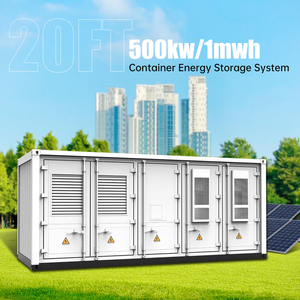
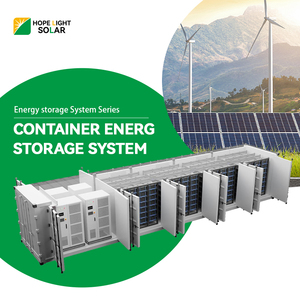
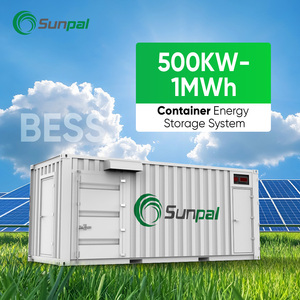
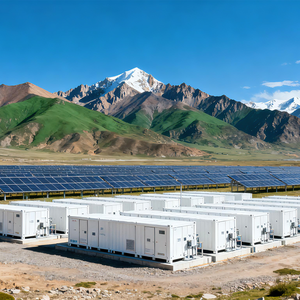
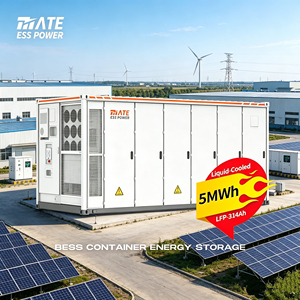
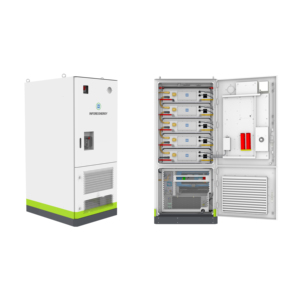
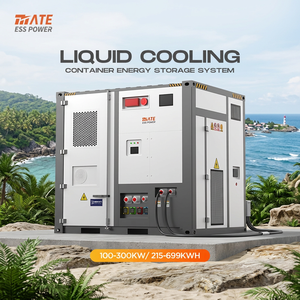
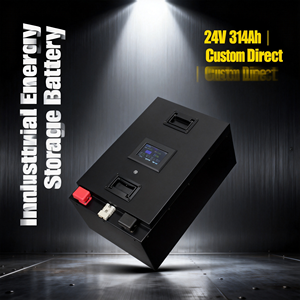
As global energy transitions accelerate, procurement managers and EPC engineers are requiring significantly higher energy density metrics from lithium battery exporters. Traditional lithium-iron-phosphate (LiFePO4) systems built around legacy 280Ah prismatic cells are rapidly maturing into 314Ah+ cell chemistry architectures. This transition delivers up to a 12% to 20% increase in volumetric energy density, allowing export manufacturers to package up to 5MWh of usable storage into standard 20ft ISO liquid-cooled containers.
Information Gain Benchmark: Transitioning from air-cooled 280Ah designs to 314Ah liquid-cooled high energy density systems reduces the land footprint of commercial energy storage installations by up to 35% while extending cycle life beyond 8,000 to 10,000 cycles at 80% Depth of Discharge (DoD).
Custom battery pack exporters playing a pivotal role in the international marketplace must deliver complete engineering stacks. This includes precise Battery Management System (BMS) customization, multi-tier thermal modeling, integrated aerosol fire-suppression systems, and rigorous compliance with standard global transport protocols (UN38.3, non-hazardous cargo classification, and MSDS documentation).
Achieving high volumetric (Wh/L) and gravimetric (Wh/kg) energy density without compromising operational safety requires meticulous design at four architectural levels:
| System Architecture Layer | Legacy Technology (280Ah Air-Cooled) | Next-Gen High Energy Density (314Ah Liquid-Cooled) | OEM Operational Benefit |
|---|---|---|---|
| Cell Level Chemistry | Standard LiFePO4 (160-170 Wh/kg) | Advanced LFP with Nano-Coated Cathodes (180-195 Wh/kg) | Higher capacity per kilogram, optimized freight shipping weights. |
| Thermal Management | Forced Air HVAC Cooling | Direct Liquid-Plate Microchannel Cooling | Delta T across cells maintained < 3°C; extends cycle life by 25%. |
| Volumetric Efficiency | 3.35 MWh per 20ft Container | 5.01 MWh per 20ft Container | 33% increase in container storage volume for global ocean freight. |
| System Voltage Range | 768V DC Nominal Bus | 1280V – 1500V High Voltage DC Bus | Reduces copper cabling losses, increases inverter conversion efficiency. |
| BMS Communication | Basic CANbus 2.0B | Multi-Protocol CAN/RS485/Modbus TCP + AI State-of-Health | Seamless integration into microgrid SCADA and cloud telemetry systems. |
Overseas buyers sourcing high density lithium battery packs from reputable export partners are navigating shifting technological dynamics. The key purchasing criteria have evolved from initial capital expenditure (CAPEX) per kWh to total Levelized Cost of Storage (LCOS).
1. Dominance of Liquid-Cooled All-In-One Containerized Systems: Liquid cooling has officially crossed the cost-parity threshold with traditional air conditioning systems for containers rated at 215kWh and above. The localized heat dissipation afforded by liquid thermal plates prevents localized hot-spots, preserving cell capacity uniformity across multi-megawatt configurations.
2. Standardized High Voltage DC Architecture (1500V): Shifting from low-voltage (48V/100V) or mid-voltage (700V) systems to 1500V DC enables higher power transmission with lower current requirements. This translates directly to smaller cable cross-sections, lower thermal dissipation losses, and streamlined grid-tie inverter matching for solar-plus-storage projects.
3. Deep BMS Customization and Protocol Openness: Global EPC buyers no longer accept proprietary, locked-down BMS controllers. Leading exporters now supply fully configurable BMS platforms capable of dual-ring CANbus communication, active cell-balancing (up to 5A balancing currents), and automated diagnostic reporting to third-party Energy Management Systems (EMS).
As an established industry manufacturer with over 120 years of collective engineering experience across US and global engineering frameworks, our export capabilities encompass end-to-end customization, stringent quality assurance, and global compliance safety execution.
Full international certification support: UN38.3 test reports, UL 1973, UL 9540A thermal runaway testing, CE, IEC 62619, and MSDS safety clearance.
In-house electrical, mechanical, and thermal design teams capable of custom cabinet sizing, busbar calculation, and tailored BMS software programming.
Turnkey Class 9 hazardous export packaging, specialized sea-freight container reinforcement, and hassle-free customs clearances for global delivery.
High energy density lithium battery packs leverage advanced cell chemistries (such as high-grade LiFePO4 314Ah prismatic cells or customized NMC pouch cells) that achieve volumetric energy densities exceeding 350-400 Wh/L at the module level. This enables exporters to deliver maximum capacity (e.g., 5MWh in a 20ft container) while drastically reducing shipping footprint and site installation costs.
Liquid cooling circulates specialized coolant (such as ethylene glycol mixture) directly through microchannel cold plates clamped against individual cell faces. This maintains temperature variation (Delta T) across the entire battery container under 3°C, compared to 8-10°C in legacy air-cooled systems. Suppressing localized overheating significantly mitigates thermal runaway risk and eliminates catastrophic cell degradation.
Exporting high energy density lithium packs requires full UN38.3 test summary certification, a current 16-point Safety Data Sheet (SDS/MSDS), dangerous goods (DG) packaging certification for Class 9 hazardous cargo, drop test compliance documentation, and proper IMO maritime packaging validation for international containerized shipping.
Yes. Custom export configurations include IP54 to IP65 weather-resistant enclosures, C4/C5 marine-grade anti-corrosion exterior coatings for coastal deployment, internal HVAC/PTC heating elements for sub-zero (-30°C) operation, and fire suppression systems (aerosol or FM200/Novec 1230) compliant with NFPA 855 standards.
Passive BMS balancing merely bleeds off excess energy from higher-charged cells as heat through resistors at low current rates (typically 50-100mA). In contrast, active balancing BMS transfers energy dynamically from higher-voltage cells to lower-voltage cells at currents up to 2A-5A. This prevents capacity bottlenecks during charging cycles, maximizes usable storage capacity, and extends system service life up to 15 years.
Partner with an authoritative OEM battery pack manufacturer & global exporter. Submit your project requirements to receive a customized engineering quotation, technical drawing, and thermal modeling assessment.
Send an Inquiry