Top Trusted High Capacity 18650 Battery Assemblies Suppliers & Exporter

Global OEM Engineering Whitepaper & Strategic Sourcing Guide for High-Energy Density Battery Modules, Smart BMS Integration, and Turnkey Containerized Energy Storage Systems (BESS)

Industrial & Commercial Solutions

High-Capacity 18650 & Industrial Energy Storage Assemblies

Explore our field-proven lithium-ion and LiFePO4 battery storage systems, built with precision cell matching, smart multi-tier protection BMS, and extreme thermal resilience.
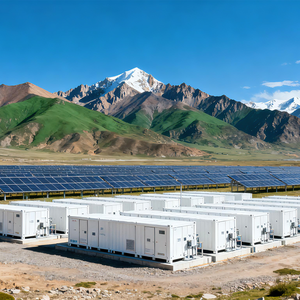
BENY 1Mwh 5mwh Container Energy Storage Battery
BENY 1Mwh 5mwh Container Energy Storage High Voltage LIFEPo4 Lithium Ion Batteries ESS Industrial And Commercial Battery
Custom 20ft & 40ft High Voltage ESS Container Solution
Custom 20ft & 40ft High Voltage ESS Battery Energy Storage System Commercial & Industrial Lithium Ion Battery Container Solution
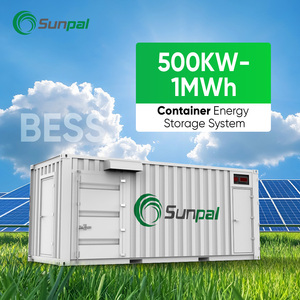
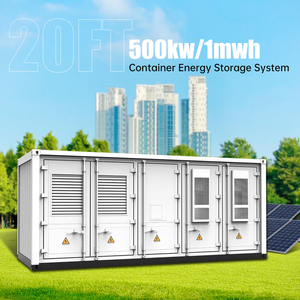
Sunpal ESS Solar Battery Cabinet Container 1MWh
Sunpal ESS Solar Battery Cabinet Container 1MWh 500 KW Industrial Lifepo4 BESS Solar Energy System
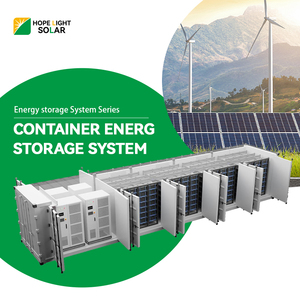
Container Energy Storage Hybrid Integrated Battery System
Customizable Container Energy Storage Hybrid Integrated Lithium Ion Battery System 1000KW Air Industrial Commercial Photovoltaic
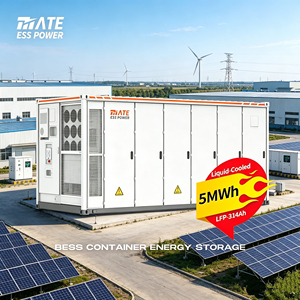
5MWh Liquid Cooling Container Battery Storage System
Lithium Batteries 5MWh Liquid Cooling Container Battery Storage System LiFePO4 Battery ESS All In One BESS 314Ah For Factory
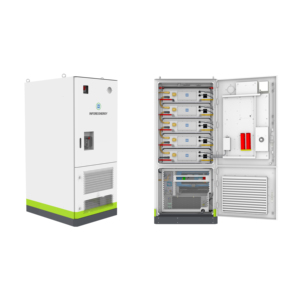
Industrial Commercial Lithium Ion Energy Storage System 233kWh
Industrial Commercial Lithium Ion Energy Storage System 233kWh High Power Output BESS Customized Manufacturer High Quality
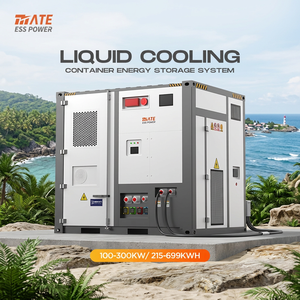
MATE LFP Lifepo4 Battery Container 100kW 215kWh
MATE LFP Lifepo4 Battery Container 100kW 215kWh 300kW 699kWh BESS Smart Lithium Battery Energy Storage System 10ft For Island
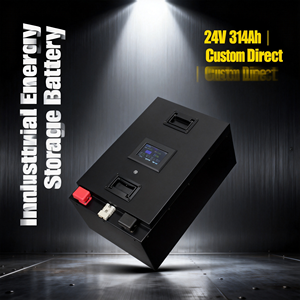
Direct Factory Custom 24V 314Ah Industrial Lithium Battery
Direct Factory Custom 24V 314Ah for Industrial Off-Grid Energy Storage Power Electric Lithium Battery
120+
Years Collective Expertise
5MWh
Max Modular Capacity
99.98%
BMS Balancing Precision
50+
Export Destinations
Tier-1 OEM Manufacturing Authority

Why Leading Global Enterprises & OEMs Partner With Us

Leveraging over 120 years of collective engineering experience, Emerging Power stands as a premier US-certified custom battery pack manufacturer and authorized pack assembler. We bridge the gap between high-volume cell chemical innovation and field-ready industrial reliability. From medical-grade life-support power packs to heavy industrial 1MWh–5MWh containerized battery energy storage systems (BESS), our engineering capabilities cover the entire lifecycle of custom energy storage solutions.

ITAR & AS9100 Quality Compliance

Fully certified for defense, military, aerospace, and medical device manufacturing standards with strict traceability.

Smart BMS & Protocol Integration

In-house design of active-balancing BMS supporting SMBus, CANbus, Modbus TCP/RTU, and IoT cloud telematics.

Authorized Tier-1 Cell Assembler

Direct authorized assembler for Energizer, Amprius, and NanoGraf silicon-anode cells for ultra-high energy density.

1. Comprehensive Engineering Analysis: 18650 Battery Assemblies vs. Large-Format Prismatic Cells

In modern industrial energy engineering, choosing between high-density cylindrical 18650 cell assemblies and large-format prismatic LiFePO4 cells (such as 314Ah or 280Ah) is a strategic decision that impacts gravimetric energy density, volumetric efficiency, thermal dissipation dynamics, and overall Total Cost of Ownership (TCO).

The 18650 form factor (18mm diameter by 65mm length) remains the undisputed gold standard for modularity, vibration resistance, and structural consistency. Due to its automated mass production across Tier-1 manufacturers, the 18650 format exhibits extraordinary consistency in Internal Resistance (IR) and State of Charge (SoC) variance, making it ideal for precision series-parallel matrix pairing in high-drain applications.

Technical Dimension Standard 18650 Assemblies (NMC/LCO) Silicon-Anode 18650 Assemblies 314Ah Prismatic LiFePO4 ESS Modules
Gravimetric Energy Density 240 – 270 Wh/kg 350 – 410 Wh/kg (e.g. Amprius / NanoGraf) 160 – 185 Wh/kg
Volumetric Energy Density 650 – 720 Wh/L 800 – 1050 Wh/L 350 – 420 Wh/L
Cycle Life (80% DoD) 1,500 – 3,000 Cycles 1,000 – 2,000 Cycles 6,000 – 10,000 Cycles
Thermal Runaway Risk Low per cell (Localized propagation risk) Low per cell (Requires PCM insulation) Extremely Low (Intrinsic LFP stability)
Cooling Architecture Forced Air / Dielectric Immersion / Liquid Cold Plate Direct Liquid Cooling Plates Integrated Liquid Cooling Loop
Target Applications Medical Equipment, UAVs, Robotics, Portable Power Defense, Aerospace, High-End Drones Utility-Scale BESS, 1MWh–5MWh Containers

*Table data compiled from empirical OEM testing and field deployment benchmarks across industrial environments.

2. Technical & Development Trends in 18650 Battery Pack Manufacturing

The global battery assembly market is undergoing a rapid paradigm shift driven by smart electrification, high-voltage architecture adoption, and advanced material science. Industrial buyers must understand four foundational technological trends currently reshaping custom battery manufacturing:

01

Silicon-Nanowire & Hybrid Anode Integration

Replacing conventional graphite anodes with silicon-nanowire matrixes increases 18650 cell energy density by up to 50%. This enables compact battery packs for UAVs and robotics where weight reduction directly extends operational runtime.

02

Active Liquid Cooling & PCM Heat Sinks

Modern high-capacity assemblies utilize micro-channel liquid cold plates sandwiched between 18650 cell rows alongside Phase Change Materials (PCM) to maintain cell temperature uniformity within ±2°C, preventing localized degradation.

03

Smart AI-Driven Edge BMS

Next-generation Battery Management Systems feature embedded microcontrollers capable of real-time Electrochemical Impedance Spectroscopy (EIS). This allows predictive health monitoring (SoH) and early thermal anomaly detection via IoT protocols.

Furthermore, automated wire-bonding technology (using high-purity aluminum or copper ribbon welding) has virtually replaced conventional nickel spot-welding in heavy-duty 18650 module assembly. Wire-bonding acts as an individual cell-level electrical fuse; should an internal short-circuit occur within a single cell, the wire bond vaporizes safely within milliseconds, isolating the faulted cell without interrupting the pack's overall operational continuity.

3. Global Procurement Trends & Sourcing Strategies for Enterprise Buyers

As supply chain dynamics shift toward regionalization, enterprise procurement managers, System Integrators (SIs), and Original Equipment Manufacturers (OEMs) face increasingly complex sourcing challenges. To mitigate risk, tier-1 buyers are adopting structured procurement workflows tailored for high-capacity battery assemblies:

  • Cell Sorting & Grade-A Verification: Top-tier suppliers enforce strict 100% automated cell screening. Cells are graded according to capacity (±5mAh), AC internal resistance (±0.5mΩ), and open-circuit voltage (±2mV) prior to module packing to ensure maximum pack cycle longevity.
  • Turnkey Containerized Modular BESS Solutions: High-capacity procurement is moving rapidly toward prefabricated 10ft, 20ft, and 40ft containerized systems (ranging from 215kWh to 5MWh). These systems integrate liquid cooling HVAC, automated aerosol fire suppression (FM200/Novec 1230), PCS inverters, and high-voltage DC busbars into a single plug-and-play unit.
  • Regulatory Pre-Certification: Sourcing pre-certified battery modules compliance-tested under UN 38.3, IEC 62133-2, UL 1973, and UL 9540A drastically reduces product launch timelines for medical, industrial, and commercial off-grid equipment.

Proactive Procurement Checklist for OEM Engineers

When submitting a request for quotation (RFQ), ensure your technical specification sheet includes: Peak C-Rate requirements, target operating ambient temperature range (-20°C to +60°C), communication interface protocols (CAN 2.0B / Modbus), target enclosure IP rating (IP65/IP67), and mechanical shock/vibration compliance (MIL-STD-810H or IEC 60068).

4. Frequently Asked Questions (FAQ) for B2B Battery Procurement

Addressing key engineering, regulatory, and logistics queries raised by enterprise procurement officers and technical project leads.

What are the primary advantages of custom 18650 battery assemblies over off-the-shelf standardized battery packs?
Custom 18650 battery pack engineering allows precise mechanical and electrical optimization for your device's exact physical envelope. Unlike rigid standardized packs, custom assemblies allow tailored cell matrix geometry, optimized heat dissipation pathways, custom PCB/BMS shapes, specific voltage-to-capacity ratios, and dedicated communication protocols (e.g., custom SMBus registers or CAN open mappings). This results in higher energy density, lower unutilized volume, and superior thermal reliability in harsh operational environments.
How do liquid cooling containerized systems (e.g., 5MWh BESS) compare to traditional forced-air cooling?
Liquid cooling containerized systems offer significantly higher thermal dissipation efficiency compared to air-cooled units. By directly circulating glycol-water coolant through cold plates in physical contact with cell clusters, liquid cooling reduces internal cell temperature gradients to under 3°C. This prevents thermal hot spots, extends battery cycle life by up to 20%, consumes up to 40% less auxiliary cooling power, and allows higher continuous C-rate charging and discharging without thermal throttling.
What safety certifications are required for exporting high-capacity lithium battery assemblies internationally?
International air, sea, and land transportation of lithium battery assemblies strictly requires UN 38.3 certification (covering altitude simulation, thermal testing, vibration, shock, external short circuit, impact, overcharge, and forced discharge). For end-product deployment, European and North American markets typically mandate IEC 62133-2 (safety of portable sealed secondary cells), UL 1973 (for stationary and industrial energy storage), and UL 9540/UL 9540A (for commercial grid-scale energy storage systems).
How does an active-balancing BMS differ from a passive-balancing BMS in large 18650 assemblies?
Passive balancing burns off excess charge from high-voltage cells as heat through resistors, which is inefficient and generates unwanted thermal loads. Active balancing uses capacitive or inductive charge-transfer circuits to shuttle energy directly from higher-voltage cells to lower-voltage cells within the string. Active balancing operates continuously during both charging and discharging with over 90% energy transfer efficiency, maximizing usable battery pack capacity and preventing cumulative cell-voltage divergence over long service lives.
What lead times and Minimum Order Quantities (MOQs) should buyers expect for custom industrial battery assemblies?
Prototypes and NRE (Non-Recurring Engineering) development cycles typically range from 4 to 8 weeks, including 3D enclosure prototyping, custom BMS layout design, and initial sample assembly. Mass production lead times generally range between 8 to 12 weeks, depending on Tier-1 cell supply availability and UN 38.3 testing schedules. MOQs depend heavily on pack complexity—ranging from 100 units for complex custom industrial packs to turnkey project-based ordering for containerized BESS systems.
Accelerate Your Power Project

Partner with Premier Battery Engineers Today

Whether you require custom high-density 18650 cylindrical cell packs or turnkey 1MWh–5MWh industrial containerized BESS solutions, our engineering team provides complete technical validation, rapid prototyping, and scalable OEM manufacturing.