Heavy-duty containerized lithium energy storage systems engineered for explosion-proof environments, chemical processing, off-grid microgrids, and utility-scale industrial applications.
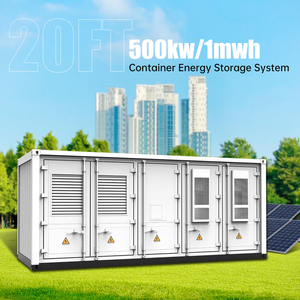
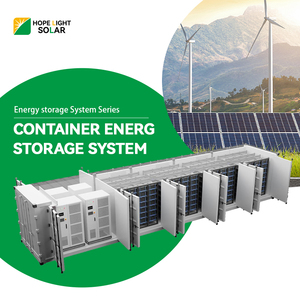
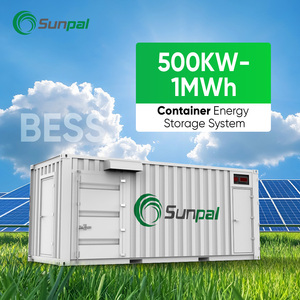
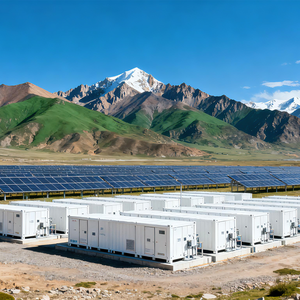
Deploying heavy industrial battery energy storage systems (BESS) and custom battery packs into hazardous operational environments demands an exhaustive, multi-layered approach to safety engineering. Hazardous Locations—classified globally under the North American NEC 500/505 system (Class I, Division 1 / Division 2) and international ATEX / IECEx directives (Zone 0, Zone 1, Zone 2)—contain volatile concentrations of flammable gases, vapors, liquids, or combustible dusts. Standard lithium-ion battery assemblies present severe ignition risks due to potential electrical arcing, thermal runaway propagation, static discharge, and high thermal surface dissipation.
To eliminate explosion vectors while maintaining high energy density, certified HazLoc battery manufacturers integrate Intrinsic Safety (Ex i), Flameproof/Explosion-Proof Enclosures (Ex d), and advanced Encapsulation (Ex m) techniques into cell topology, module construction, and containerization layout.
Designed to withstand an internal explosion without transmitting flame or hot gases into the surrounding volatile atmosphere. Machined flame-path joints act as thermal sinks, cooling escaping gases below ignition thresholds.
Low-power electronic circuits and digital BMS sensor buses designed so that maximum stored electrical and thermal energy remains strictly below ignition thresholds under both normal operating and fault conditions.
Critical electronic components, high-current busbars, and microcontrollers are fully embedded in non-conductive, fire-retardant epoxy resins to isolate spark-producing elements from explosive ambient gases.
Backed by over 120 years of collective battery design engineering, Emerging Power delivers mission-critical energy storage solutions for medical, defense, oil & gas, and heavy industrial automation OEMs worldwide.
Headquartered in Hackensack, NJ (200 Holt Street), our state-of-the-art facility provides complete end-to-end custom battery pack development. As an ITAR registered and AS9100 certified manufacturer, we adhere to stringent quality control standards mandated by aerospace, defense, and life-critical medical equipment manufacturers.
Our battery management systems feature redundant hardware and firmware safety loops, real-time State-of-Health (SoH) monitoring, dynamic cell balancing, and multi-node CANbus/Modbus integration. Designed specifically to prevent thermal runaway propagation under severe shock, vibration, or ambient thermal stress.
Consult directly with our engineering team to review Class I Div 1/2 requirements, liquid cooling container designs, or custom voltage string configurations.
Inquire NowCompare containerized, cabinet-level, and custom pack battery architectures across critical engineering variables.
| System Architecture | Cell Chemistry | Thermal Management | HazLoc Protection Standard | Typical Applications |
|---|---|---|---|---|
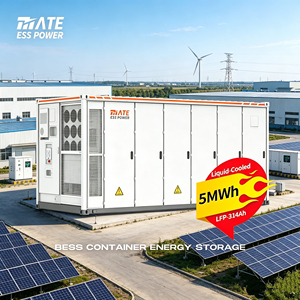
| 5MWh Liquid-Cooled Container | LiFePO4 (LFP 314Ah High Density) | Liquid-Cooling Chiller (Direct Plate) | Class I Div 2 / ATEX Zone 2 / UL 9540A | Utility BESS, Chemical Plants, Refinery Backup |
| 20ft / 40ft High Voltage ESS Container | LiFePO4 (3.2V High C-Rate) | HVAC Smart Air Conditioning | NFPA 855 / UL 1973 / IEC 62619 | Industrial Solar Microgrid, Port Automation |
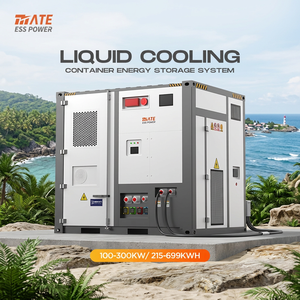
| 215kWh - 699kWh Smart Island BESS | Prismatic LFP Modular Strings | Hybrid Air/Liquid Integrated Thermal | IP65 Enclosure / Flame-Stop Coating | Island Microgrids, Remote Mining Operations |
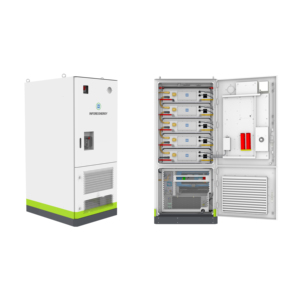
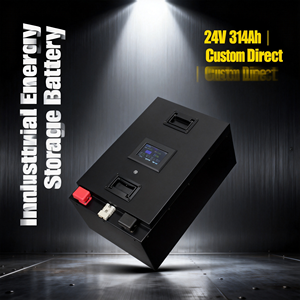
| Custom 24V / 48V Off-Grid Industrial Pack | LFP / High-Safety NMC / LTO | Passive Aluminum Heat Sink / Potting | Class I Div 1 (Ex d explosion proof enclosure) | Offshore Rig Telemetry, Oil & Gas Smart Sensors |
As global energy transition policies mandate rapid industrial decarbonization, global procurement directors in energy, mining, and heavy chemical processing face evolving regulatory and economic landscapes. Modern BESS purchasing strategy extends far beyond upfront cell-level cost per kilowatt-hour ($/kWh); it centers around total risk mitigation, extended lifecycle yield, and strict compliance with international battery passports and safety codes.
Global procurement is rapidly pivoting toward high-capacity 314Ah lithium iron phosphate cells. Compared to older 280Ah iterations, 314Ah chemistry increases volumetric energy density by over 11% while maintaining superior thermal stability, lowering footprint requirements for containerized HazLoc installations.
Air-cooled containerized BESS systems are being replaced by direct liquid-cooling chillers. Liquid cooling reduces temperature gradients between cells to within ≤ 2.5°C, reducing parasitic HVAC auxiliary loads by 30% and extending system operational lifespan to over 15 years.
Jurisdictions worldwide strictly enforce full-scale fire testing standards. Procurement evaluations require documented proof of non-propagation at the unit-level during induced thermal runaway event testing, driving demand for multi-tier aerosol and inert gas fire suppression integration.
The convergence of advanced material science, artificial intelligence, and solid-state electrochemistry is revolutionizing extreme-environment battery systems. Next-generation hazardous location power architectures focus on complete thermal safety and real-time fault foresight.
Future smart battery management systems integrate edge-computing neural networks to continuously calculate electrochemical impedance spectroscopy (EIS). By detecting microscopic lithium dendrite growth and micro-short circuits weeks before physical temperature spikes occur, AI systems proactively isolate hazardous strings to eliminate fire events.
Replacing flammable liquid organic electrolytes with non-combustible solid or gel state ceramic-polymer electrolytes inherently resolves the thermal runaway hazard. Semi-solid state LFP cells slated for industrial deployment by 2027 offer zero flashpoint volatility, ideal for ATEX Zone 0 critical operations.
Expert technical answers to common questions asked by industrial engineers and global supply chain managers.
Partner with Emerging Power's engineering team for custom battery pack design, containerized BESS procurement, and certified HazLoc power solutions.