Certified hazardous-location ready, high-voltage explosion-proof battery container solutions engineered for heavy utility, solar BESS, and industrial off-grid infrastructure.
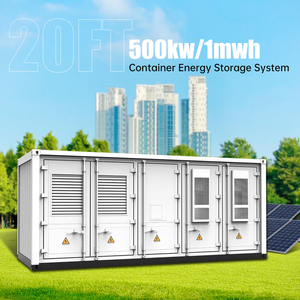
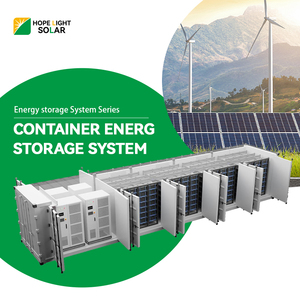
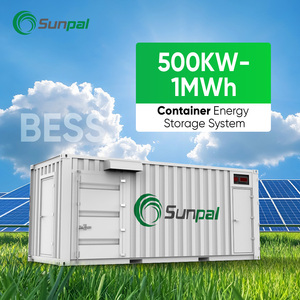
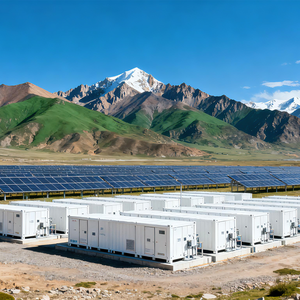
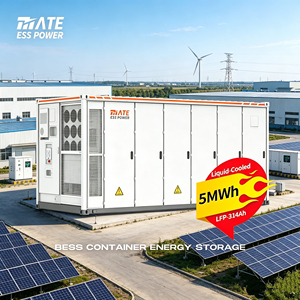
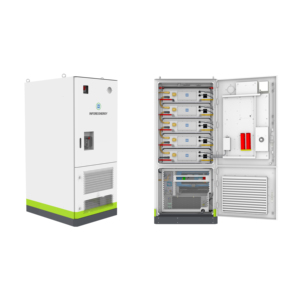
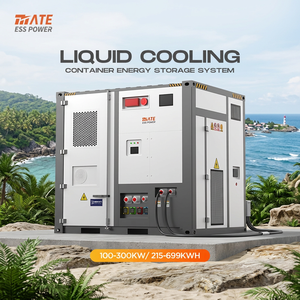
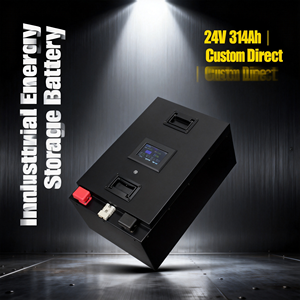
In high-risk industrial sectors—ranging from offshore petroleum rigs and chemical manufacturing plants to military weapon platforms and grid-scale Battery Energy Storage Systems (BESS)—the integration of high-energy-density lithium-ion (LiFePO4, NMC, Li-Polymer) chemistry presents dual engineering challenges: electrochemical efficiency and catastrophic thermal risk mitigation.
When high-capacity lithium battery cells undergo thermal runaway due to mechanical puncture, internal short-circuiting, overcharging, or ambient thermal stress, they decompose violently, releasing volatile off-gasses (including hydrogen, carbon monoxide, and methane) accompanied by extreme deflagration pressures. Standard NEMA or IP-rated electrical cabinets are structurally incapable of containing internal ignition, leading to casing fragmentation, toxic atmospheric discharge, and cascading facility explosions.
Information Gain Insight: Explosion-proof battery enclosures engineered by top-tier suppliers do not merely stop external sparks from entering; their primary objective in battery safety design is internal containment and controlled deflagration venting. They are mechanically rated to withstand internal explosion pressures up to 10 times higher than ambient while simultaneously cooling expelled gases through precision-machined flame paths (Ex d) or maintaining positive internal pressure purging (Ex p).
System designers and procurement officers must evaluate enclosure architectures based on international explosive atmospheric standards (NEC 500/505, ATEX Directive 2014/34/EU, and IECEx certification framework):
| Protection Concept | IECEx / ATEX Code | North American Code | Primary Operating Mechanism | Ideal Industrial Applications |
|---|---|---|---|---|
| Flameproof Enclosure | Ex d (Zone 1, 2) | Class I, Div 1 & 2 | Contains internal explosion without rupturing; cools flame front via flame gaps before exiting. | High-voltage BESS containers, heavy industrial lithium pack housings, mining equipment. |
| Pressurized Purging | Ex p (Zone 1, 2) | Class I, Div 1 & 2 | Maintains positive protective gas pressure (nitrogen or air) to prevent flammable gas entry. | Large modular 20ft/40ft battery storage containers, power conversion stations. |
| Increased Safety | Ex e (Zone 2) | Class I, Div 2 | Eliminates arcs, sparks, and hot surfaces through enhanced electrical creepage distances. | Auxiliary battery boxes, low-voltage solar storage cabinets, remote telemetry stations. |
| Intrinsic Safety | Ex i (Zone 0, 1, 2) | Class I, Div 1 & 2 | Limits electrical energy and thermal output below gas ignition thresholds under all fault conditions. | Smart BMS telemetry modules, sensor packs, wireless industrial meters, IoT monitoring. |
Top trusted explosion-proof enclosure manufacturers utilize precision metallurgic alloys and advanced structural thermodynamics to maintain containment integrity during high-joule deflagration events.
Heavy-gauge cast copper-free aluminum alloy (A356/LM6) and 316L stainless steel provide superior tensile yield strength (>290 MPa) and high corrosion resistance against salt spray, acid wash, and industrial atmospheres.
Flanged, spigoted, and threaded joint interfaces are CNC-machined to tolerances under 0.04 mm. These narrow mechanical gaps rapidly quench thermal energy as gas escapes, preventing external atmosphere ignition.
Integrated spring-loaded or disc-rupture deflagration relief valves actuate at pre-calibrated pressures (e.g., 0.2 to 0.5 bar) to channel overpressure safely away from neighboring battery racks and personnel.
Modern high-capacity battery enclosures (such as 215kWh to 5MWh container systems) cannot rely solely on passive heat dissipation. Leading custom battery pack suppliers integrate active liquid-cooling plates, phase-change materials (PCM), and intelligent Battery Management Systems (BMS) directly into the explosion-proof housing structure.
The internal smart BMS provides real-time monitoring of key safety parameters:
As energy transition targets accelerate global deployment of utility-scale storage and electrification in hazardous industrial zones, the market for explosion-proof battery enclosures is experiencing significant technological transformations. B2B buyers and EPC contractors must align procurement strategies with these evolving technical paradigms.
Air-cooled battery storage containers are rapidly being superseded by closed-loop liquid-cooling systems integrated into explosion-resistant 10ft, 20ft, and 40ft ISO enclosures. Liquid cooling achieves a thermal uniformity variance within ±2°C across thousands of 314Ah LiFePO4 cells, drastically reducing cell aging, eliminating hot-spots, and reducing the volume of flammable atmospheric oxygen within the enclosure vault.
Next-generation procurement guidelines increasingly stipulate smart explosion-proof battery packs equipped with IoT-enabled predictive safety analytics. By analyzing real-time impedance spectroscopy, voltage drift, and thermal expansion curves, cloud-connected BMS architectures can predict cell degradation and potential thermal runaway up to 72 hours prior to physical manifestation, permitting safe remote de-energization.
Global regulatory bodies no longer accept basic IP ratings for hazardous location storage. Tier-1 project developers require suppliers to provide full-scale UL 9540A test reports (evaluating thermal runaway fire propagation at the cell, module, unit, and installation levels). Enclosure factories that incorporate multi-stage deflagration venting and flame arrestors capable of passing UL 9540A without explosive propagation are capturing market share.
With the rise of the green hydrogen economy, battery systems installed adjacent to electrolyzers or hydrogen refueling stations must meet Group IIC / Class I, Zone 0/1 compliance—the most stringent explosion rating due to hydrogen's low ignition energy (0.017 mJ). Top enclosure suppliers are innovating specialized ceramic-metal feedthrough seals and ultra-narrow flame gaps specifically engineered for Group IIC environments.
Selecting the right custom battery pack manufacturer and explosion-proof enclosure supplier requires evaluating proven manufacturing pedigree, rigorous quality systems, and deep engineering capabilities. Emerging Power stands as a preeminent USA-based custom battery pack manufacturer and authorized assembler delivering end-to-end portable and industrial energy solutions.
Our senior engineering team brings over a century of combined expertise in complex battery chemistry selection, mechanical enclosure stress analysis, custom BMS firmware design, and global hazardous-location compliance testing.
As an ITAR-registered manufacturer with AS9100 and ISO 9001 quality certifications, Emerging Power adheres to stringent aerospace and defense standards, ensuring complete traceability, secure supply chains, and flawless execution.
From custom PCB layout and firmware development to thermal modeling, structural finite element analysis (FEA), and custom enclosure prototyping, we deliver end-to-end turnkey battery solutions tailored to exact OEM specifications.
As an authorized assembler for premier tier-1 cell manufacturers (including Energizer, Amprius, and NanoGraf), we provide direct access to advanced lithium chemistry with verified cell origin and global distribution logistics.
Essential technical and logistical queries evaluated by procurement managers, systems engineers, and safety compliance officers when sourcing explosion-proof battery enclosures.
Whether you require custom lithium-ion battery pack engineering, military-grade ITAR enclosures, or utility-scale container storage systems, Emerging Power delivers uncompromised safety, performance, and reliability.