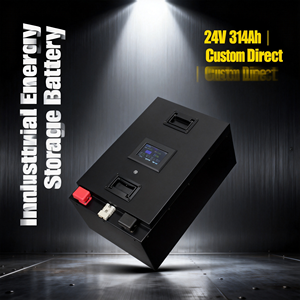
Explore engineered industrial LiFePO4 battery pack systems, high-voltage utility containers, and modular off-grid power banks crafted for global exports.
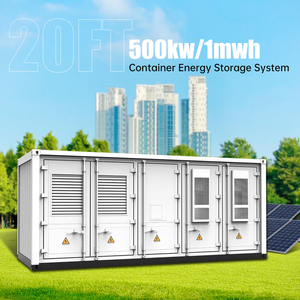
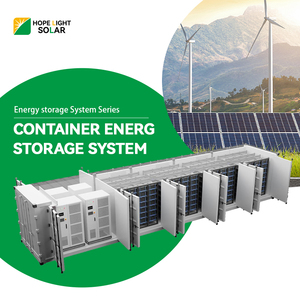
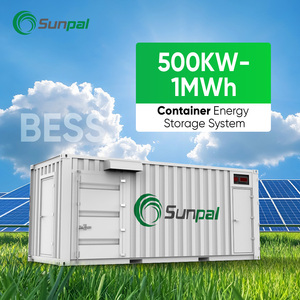
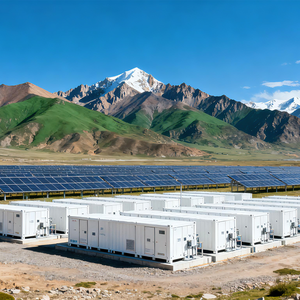
Delivering flight-certified, military-compliant, and commercial-grade energy storage systems across North America, Europe, and Asia-Pacific markets.
As a leading US-aligned custom battery pack factory and international exporter, our manufacturing plants integrate AS9100D aerospace quality protocols, ITAR compliance for military-grade deployments, and ISO 9001:2015 quality management systems. Every battery module—from micro-IoT 18650 packs to 40ft 5MWh BESS utility containers—undergoes rigorous automated End-of-Line (EOL) electrical testing, thermal imaging, and vibration resistance profiling prior to export.
The global transition toward decentralized power grids, industrial peak-shaving, and mission-critical OEM applications demands an evolved standard in battery pack custom engineering. Standard off-the-shelf battery solutions frequently compromise on gravimetric energy density, operational temperature envelopes, and communication compatibility. Our OEM/ODM manufacturing facility addresses these friction points by implementing cell-to-pack (CTP) integration, multi-tier Battery Management System (BMS) safety loops, and tailor-made enclosure design.
Whether utilizing Lithium Iron Phosphate (LiFePO4/LFP) for ultra-stable, long-cycle stationary ESS or high-density Nickel Manganese Cobalt (NMC) and solid-state chemistry for UAV/flight platforms, custom battery customization begins at the electrochemistry level. Cell matching via internal resistance (DCIR) grading ensures delta-capacity variance below 0.5%, preventing premature pack degradation and thermal imbalances over multi-thousand cycle lifespans.
Proprietary Hardware-in-the-Loop (HIL) BMS supporting CANbus 2.0B, Modbus TCP, and SMBus protocols with predictive AI State of Health (SoH) diagnostics and active cell balancing up to 5A.
Multi-layered fire suppression integrating aerogel insulation barriers between 314Ah cells, directional pressure relief valves, and automatic aerosol-based Novec 1230 fire suppression.
Advanced liquid-cooling cold plates maintaining delta-T across all cells under ≤2.5°C, expanding cycle lifespans to >6,000 cycles at 80% Depth of Discharge (DoD) even under continuous 1C operation.
When procuring industrial and commercial (C&I) containerized battery energy storage systems (BESS), choosing the correct thermal control regime is critical for project Levelized Cost of Storage (LCOS). The matrix below provides a comparative analysis for B2B procurement decision-makers.
| Engineering Specification | Standard Air-Cooling System | Next-Gen Liquid-Cooling System | Sourcing Advantage / Value Gain |
|---|---|---|---|
| Energy Density (Per 20ft Footprint) | 1.5 MWh – 2.5 MWh | 3.44 MWh – 5.0 MWh | +100% Volumetric Efficiency Gain |
| Cell Thermal Uniformity (Delta-T) | ≤ 5.0°C Difference | ≤ 2.5°C Difference | Prevents Localized Aging Hotspots |
| Auxiliary Power Consumption | 8% – 12% Total Output | 3% – 5% Total Output | 30% Lower System O&M Operating Costs |
| Expected Cycle Lifespan (@ 80% DoD) | 4,000 – 5,000 Cycles | 6,000 – 9,000 Cycles | Extends Project Utility Life to 15+ Yrs |
| Fire Safety Compliance Level | NFPA 855 / UL 9540 | UL 9540A Explosion Tested | Simplified Municipal Zoning Approval |
Critical insights for global supply chain directors, EPC contractors, and OEM product managers planning battery procurement through 2030.
The market is rapidly sunsetting legacy 280Ah cells in favor of 314Ah and 560Ah prismatic cells. Utilizing 314Ah cells reduces inter-cell connection points by 12%, lowers BMS wire harness complexity, and increases container energy capacity from 3.35MWh to 5.0MWh per 20ft enclosure.
Global export standards require full supply chain visibility. Modern rechargeable battery factories now incorporate block-chain backed carbon footprint tracking, ethical cobalt/lithium sourcing validation, and QR code digital passports embedded directly within the BMS memory structure.
Transitioning from legacy 1000V DC system architecture to 1500V DC platforms significantly reduces copper cabling volume, minimizes I²R thermal transmission losses, and improves overall solar-plus-storage inverter conversion efficiencies by up to 1.8-2.2% across utility scales.
Procuring custom rechargeable battery packs from an established export factory ensures high product reliability and strict compliance with international shipping guidelines. Our engineering flow adheres to a rigorous six-stage stage-gate process:
Get expert answers regarding MOQ, custom battery design timelines, international shipping regulations, and warranty protection terms.
Initial technical drawings and BMS architecture schematics are typically delivered within 3-5 business days. Rapid prototypes are fabricated within 2-3 weeks following design freeze. Mass production lead times generally range between 4 to 6 weeks, depending on cell availability, custom enclosure tooling requirements, and UN38.3 certification processing schedules.
Our custom battery pack design processes comply with strict international regulatory standards. Individual packs and systems can be certified under UN 38.3 (Lithium Battery Transport), UL 1642, UL 2054, UL 9540A (for BESS systems), IEC 62133 (for portable applications), IEC 62619 (for industrial batteries), and CE/FCC/RoHS compliance. Full documentation test reports are provided prior to export dispatch.
Yes. Our in-house firmware and electrical engineering team specializes in custom BMS design. We engineer custom PCB layouts featuring active balancing, ultra-low standby power consumption (<10µA), self-heating film control for sub-zero operations, high-voltage isolation monitoring, ITAR-compliant encryption, and proprietary communication protocols tailored to host equipment controllers.
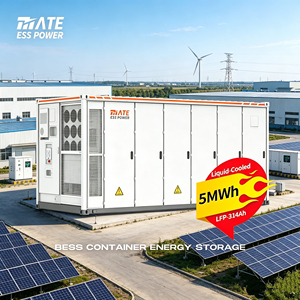
5MWh liquid-cooled containerized systems utilize 314Ah cells packed in high-density rack modules. This enables a full 5MWh capacity inside a standardized 20ft high-cube ISO shipping container frame. Compared to older 2.5MWh air-cooled 20ft containers, this doubles energy density per ocean freight container shipment, reducing international maritime freight expenditure by up to 50% per megawatt-hour delivered.
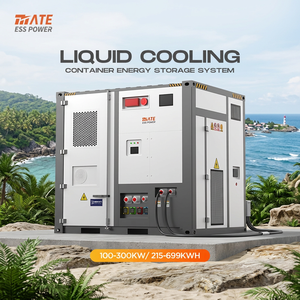
For custom industrial packs, medical device packs, and specialized robotics batteries, initial prototype sample orders are offered at low MOQs (typically 5–10 units) to facilitate engineering design verification. Commercial volume production MOQs depend on cell selection and enclosure tooling costs. Utility-scale energy storage containers (100kW to 5MWh) are offered starting at single-unit orders (MOQ = 1 Container).