
1. Technical Overview: The Shift to High-Voltage Custom Industrial Battery Systems
As global commercial and industrial (C&I) sectors accelerate electrification, traditional stationary battery configurations are undergoing a monumental shift. Industrial facility operators, utility microgrids, and OEM machinery manufacturers require custom industrial lithium battery systems that maximize volumetric energy density, optimize round-trip efficiency (RTE), and provide bulletproof operational safety under extreme environmental conditions.
Custom industrial lithium battery systems are no longer off-the-shelf assemblies. Modern procurement specifications demand full engineering customization down to the cell-to-pack (CTP) structural design, multi-stage Battery Management System (BMS) communications, and advanced thermal management architectures. By moving from legacy low-voltage (48V DC) parallel topologies to high-voltage (1000V DC to 1500V DC) series architectures, industrial facilities reduce copper busbar sizing, minimize I²R line losses by up to 40%, and achieve superior inverter conversion efficiencies.
2. Future Technological & Development Trends in Industrial Lithium Systems (2025–2030)
Understanding technology roadmaps is critical for industrial B2B buyers seeking to avoid premature asset obsolescence. Over the next five to ten years, four major technological shifts will dominate the custom industrial battery manufacturing ecosystem:
A. Commercialization of 314Ah High-Capacity Prismatic LFP Cells
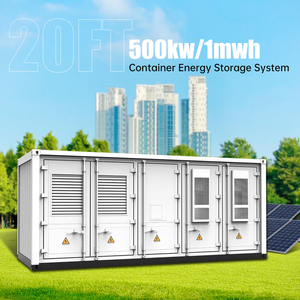
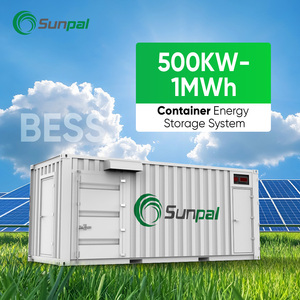
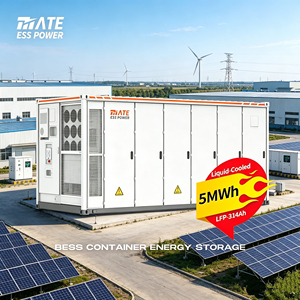
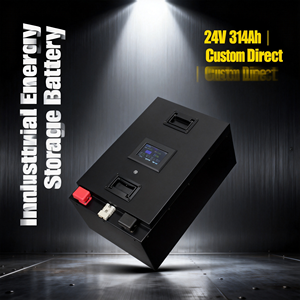
The industry standard for energy storage is rapidly transitioning from legacy 280Ah cells to high-density 314Ah Lithium Iron Phosphate (LiFePO4) prismatic cells. The 314Ah cell form factor yields a 12% increase in energy density without expanding physical cabinet footprints. Coupled with zero thermal runaway propagation design, 314Ah cells enable 20ft BESS containers to achieve up to 5MWh usable capacity—a threshold previously achievable only in 40ft structures.
B. Precision Liquid Cooling Replacing HVAC Air Systems
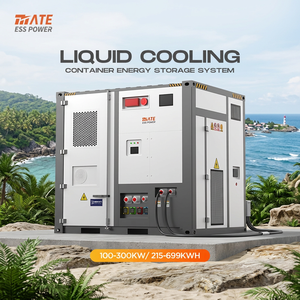
Air cooling systems suffer from thermal gradients exceeding 5°C to 8°C across battery racks, accelerating localized cell degradation and causing capacity imbalance. Next-generation custom industrial battery systems utilize direct liquid cooling plates (propylene glycol-water mixture) in direct contact with cell surfaces. Liquid cooling maintains inter-cell thermal variance within ≤2.5°C, reducing auxiliary cooling energy consumption by 30% and extending system operational life past 15 years (>6000 deep discharge cycles).
C. AI-Driven Predictive BMS and Digital Twin Diagnostics
Modern industrial lithium battery factories integrate cloud-connected edge computing into local BMS hardware. Using cloud-based Machine Learning (ML) algorithms, the system creates a dynamic "Digital Twin" of every cell block. This enables real-time predictive failure analysis, internal short-circuit detection hours before thermal events occur, and automated active balancing algorithms that maximize usable state-of-charge (SOC) throughout the battery lifecycle.
| Technology Parameter | Standard Air-Cooled System | Advanced Liquid-Cooled BESS (Next-Gen) |
|---|---|---|
| Cell Thermal Uniformity | ΔT ≤ 6°C to 8°C | ΔT ≤ 2.0°C to 2.5°C |
| Energy Density (20ft Container) | Approx. 2.5 MWh – 3.3 MWh | Up to 5.0 MWh (with 314Ah LFP) |
| Auxiliary Power Consumption | High (Continuous Fan & HVAC load) | Low (Up to 35% Energy Reduction) |
| Expected Cycle Life (@80% DoD) | 4,000 – 5,000 Cycles | 6,000 – 8,000+ Cycles |
| Protection & Noise Level | IP54 / 75-85 dB | IP67 / < 65 dB Low Noise |
3. Strategic Procurement Trends for B2B Industrial Battery Buyers
Procurement managers and OEM engineers face complex trade-offs when sourcing custom industrial lithium battery systems. Sourcing strategy has evolved beyond looking strictly at upfront $/kWh cell cost. Modern procurement protocols emphasize Total Cost of Ownership (TCO), supply chain traceability, and regulatory compliance.
A. Shift to Total Cost of Ownership (TCO) Sourcing
While low upfront capital expenditure (CAPEX) is attractive, experienced B2B buyers calculate Levelized Cost of Storage (LCOS). LCOS accounts for round-trip efficiency, degradation rates, maintenance downtime, and battery replacement intervals. High-quality custom LiFePO4 systems with liquid cooling yield a significantly lower LCOS over a 15-year horizon compared to lower-cost lead-acid or basic air-cooled lithium setups.
B. Stringent Regulatory & Safety Pre-Certifications
Global industrial facilities are subject to strict fire safety and transport regulations. Leading manufacturers build battery packs designed specifically to pass **UL 1973** (Standard for Batteries in Stationary Applications), **UL 9540** (Energy Storage Systems and Equipment), and **UL 9540A** (Thermal Runaway Fire Test). Furthermore, international shipping regulations mandate certified **UN 38.3** transport safety documentation for all lithium battery sub-assemblies.
C. Modular Scalability & Plug-and-Play Factory Customization
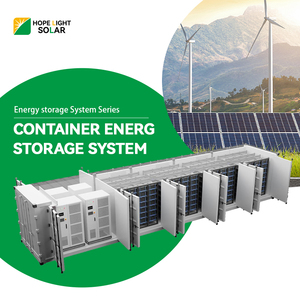
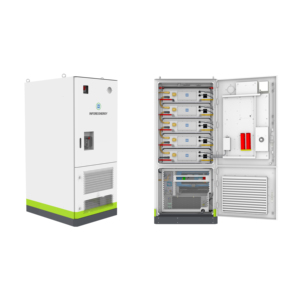
Industrial sites require scalable modularity. Industrial buyers prioritize manufacturers offering pre-engineered, factory-tested modules (e.g., 233kWh cabinets or 1MWh/5MWh containers) that allow rapid onsite commissioning. Plug-and-play design reduces field labor, minimizes wiring errors, and enables seamless expansion as factory energy demands grow.
4. Customization Architecture: From Cell Selection to Container Integration
A truly custom industrial lithium battery factory tailors every layer of the battery architecture to match specific industrial load profiles:
- Electrochemistry Selection: Matching LiFePO4 (LFP) for long cycle life stationary storage versus NMC/Li-Polymer for space-constrained high-power pulse applications.
- Enclosure & IP Rating: Heavy-gauge galvanized steel or aluminum enclosures rated at IP55/IP67 with anti-corrosion C5-M coatings for coastal or harsh industrial environments.
- Electrical Architecture: Sizing busbars, fuse protection, and contactors to handle continuous high C-rate discharge without excessive heating.
- Integrated Thermal Management: Dual-zone air conditioning or closed-loop liquid chillers tailored to local ambient climate extremes (-30°C to +55°C).
- Fire Mitigation Systems: Multi-tier detection (gas, smoke, temperature) combined with localized aerosol extinguishers or water-sprinkler interface systems conforming to NFPA 855 standards.