Explore our top-rated, OEM-customized high-voltage Lithium-ion (LiFePO4) containerized energy storage units, optimized with multi-tiered CAN 2.0B and CANopen Smart BMS telemetry.
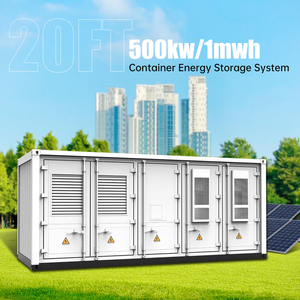
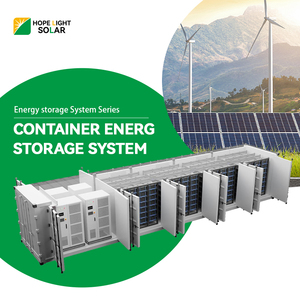
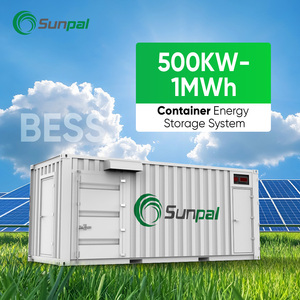

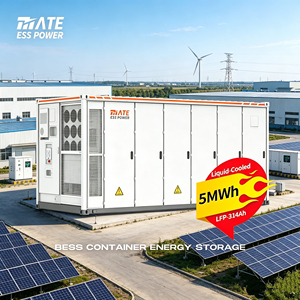
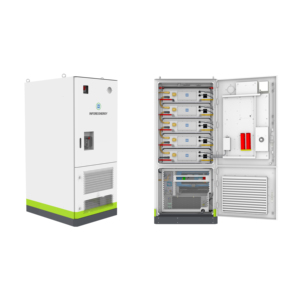
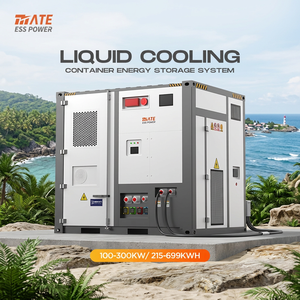
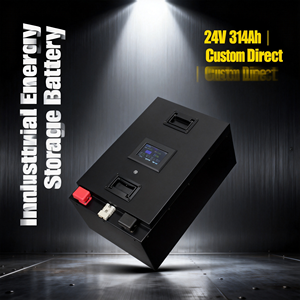
Modern industrial electrification demands unprecedented levels of thermal stability, operational safety, and system-level communication protocol compliance. As a premier USA-headquartered custom battery pack designer, authorized assembler, and global exporter, our engineering heritage spans over 120 years of collective technical expertise. We specialize in transforming complex battery chemistries—ranging from 314Ah Lithium Iron Phosphate (LiFePO4) to military-grade Lithium-Ion and advanced High-Density Solid-State cells—into robust, intelligent energy storage systems (ESS).
At the center of our high-voltage battery architecture is the CAN Bus Smart Battery Management System (BMS). Utilizing standardized Controller Area Network protocols (CAN 2.0B, CANopen, and SAE J1939), our integrated BMS solution acts as the primary nervous system for multi-megawatt commercial containerized BESS, medical equipment power sources, and defense platforms. By engineering multi-tiered Master-Slave BMS controllers, we eliminate risk points associated with cell voltage imbalance, thermal propagation, and data latency.
Information Gain Insight: Unlike standard off-the-shelf BMS modules that use static threshold cutoffs, our smart BMS architectures feature adaptive state-of-charge (SoC) algorithms, active dynamic cell balancing up to 5A, and real-time predictive degradation modeling capable of forecasting State-of-Health (SoH) across 6,000+ deep cycles.
To assist system integrators, EPC engineers, and procurement directors in evaluating OEM containerized energy storage configurations, the table below provides a comprehensive comparison of our smart BMS specs integrated across standard cabinet and container solutions:
| System Capacity Class | BMS Topology | Primary Protocol | Cell Balancing Type | Thermal Management | Safety Certifications |
|---|---|---|---|---|---|
| 24V - 48V (Industrial/Off-Grid) | Single-Board Smart BMS | CAN 2.0B / RS485 | Passive (100mA - 300mA) | Air Cooled / Heaters | UN38.3, CE, IEC 62619 |
| 215kWh - 699kWh (Microgrid BESS) | 2-Tier Master-Slave | CANopen / Modbus RTU | Active Dynamic (2A - 5A) | HVAC Smart Air Cooling | UL 1973, IEC 62619, CE |
| 1MWh - 5MWh (Utility & C&I Container) | 3-Tier Master-Rack-Slave | Dual CAN Bus / Modbus TCP | Active Bidirectional 5A | Liquid Cooling (Glycol/Water) | UL 9540, UL 9540A, NFPA 855 |
The global battery energy storage system (BESS) sector is experiencing a rapid technological evolution. Global export metrics confirm a definitive shift toward high-capacity 314Ah LiFePO4 cells, high-voltage battery racks exceeding 1000V DC, and ultra-dense liquid-cooled enclosure systems. These developments necessitate unprecedented advancements in CAN Bus controller capabilities.
Traditional passive cell balancing dissipates excess energy as heat through resistors, wasting energy and causing localized thermal stress inside battery modules. Modern CAN Bus Smart BMS implementations utilize bidirectional active balancing topologies. By transferring energy dynamically from high-energy cells to lower-energy cells across the CAN communication line, system round-trip efficiency (RTE) is increased by 3% to 5%, extending the lifetime of 5MWh liquid-cooled containerized systems significantly.
As IoT telemetry becomes standard in industrial energy infrastructure, modern CAN Bus BMS gateways serve as edge computing nodes. Operating with high-speed sampling rates (up to 100Hz), the internal master controller analyzes voltage drift, internal impedance (AC IR), and temperature gradients. Telemetry parameters are encapsulated into compressed CAN frames and transmitted via RS485 or Ethernet to cloud management systems for early predictive maintenance and thermal runaway prevention.
Safety is the foundational metric of tier-1 custom battery manufacturing. Advanced CAN Bus BMS architectures incorporate dual hardware watchdogs, isolated galvanic signal channels, and independent aerosol fire suppression triggers. In the event of a localized cell rupture or over-voltage anomaly, the BMS signals the main circuit breaker (MCCB/Contactor) within under 1 millisecond, isolating the affected battery string before propagation occurs.
Procurement directors and BESS project developers must navigate emerging global trends to ensure their energy storage deployments remain technologically relevant, cost-effective, and fully compliant with evolving global regulations.
Controller Area Network (CAN Bus) provides high-speed differential signaling, multi-master node arbitration, and superior hardware-level error checking compared to RS485 Modbus. CAN Bus allows microsecond-level fault propagation reporting, making it the industry standard for high-voltage battery storage systems (BESS), automotive electric vehicles, and critical medical equipment.
Yes. Our engineering team provides custom firmware programming and CAN protocol mapping for all major inverter platforms, including Sungrow, SMA, Deye, Victron, Schneider, and Solis. We supply full DBC files and configuration software to ensure seamless commissioning upon delivery.
In containerized BESS configurations, a 3-tier structure is used: Slave BMS units (BMU) monitor individual cell voltages and temperatures within a module; Rack Master BMS units (BCU) monitor string-level contactors and current; and System Master Controllers (BMM) aggregate CAN telemetry across all racks to coordinate with the Power Conversion System (PCS) and Energy Management System (EMS).
Our custom battery systems comply with top global standards, including UN 38.3 (transport safety), IEC 62619 (industrial lithium safety), UL 1973 (stationary batteries), UL 9540 / UL 9540A (fire propagation safety), and CE certifications. Production facilities adhere to AS9100 and ISO 9001 quality management systems.
When paired with our liquid-cooling thermal management and active balancing Smart BMS, our 314Ah LiFePO4 systems deliver 6,000 to 8,000 cycles at 80% Depth of Discharge (DoD), corresponding to an operational lifespan exceeding 15 years in typical daily cycle applications.
We support both small-batch custom OEM prototypes and high-volume commercial container manufacturing. Standard sample lead times for custom smart battery packs range from 3 to 6 weeks, while large-scale 20ft/40ft containerized BESS units typically ship within 8 to 12 weeks following technical drawing approval.
Leverage over 120 years of collective battery engineering expertise. Request a technical consultation or tailored quotation for your CAN Bus Smart BMS container project today.
Get a Quote