Featured Tier-1 OEM Energy Storage Systems
Explore high-efficiency Lithium Iron Phosphate (LiFePO4) containers, rack-mounted modules, and residential storage solutions manufactured by industry-leading Chinese exporters.
⚡ Industry Whitepaper: The Strategic Evolution of Chinese Battery Manufacturers
The global energy landscape is undergoing a unprecedented transition toward decentralized renewable generation, dynamic tariff optimization, and microgrid resilience. At the core of this transformation is China's advanced battery manufacturing infrastructure. Producing over 90% of the world's Lithium Iron Phosphate (LiFePO4) storage cells, Chinese original equipment manufacturers (OEMs) and original design manufacturers (ODMs) set the global benchmarks for electrochemical performance, cycle longevity, safety engineering, and levelized cost of storage (LCOS).
This technical report delivers an analytical breakdown for procurement directors, system integrators, project developers, and EPC firms evaluating OEM/ODM partnerships with Chinese residential and commercial energy storage manufacturers.
1. Advanced Cell Metallurgy: LiFePO4 vs. Emerging Solid-State Architectures
Lithium Iron Phosphate (LiFePO4) remains the gold standard chemistry for stationary residential and commercial energy storage systems (BESS). Unlike nickel-manganese-cobalt (NMC) chemistries susceptible to thermal runaway at temperatures exceeding 210°C, LiFePO4 olivine crystal structures maintain thermal stability up to 500°C without releasing structural oxygen.
Information Gain Insight: The market transition from legacy 280Ah prismatic cells to next-generation 314Ah and 320Ah prismatic cells represents a quantum shift in volumetric energy density. By increasing volumetric efficiency by up to 12% without increasing standard 20-foot or 40-foot containerized footprints, Tier-1 Chinese manufacturers have reduced total project balance of system (BOS) costs by 8.5% per megawatt-hour.
🔋
Volumetric Density
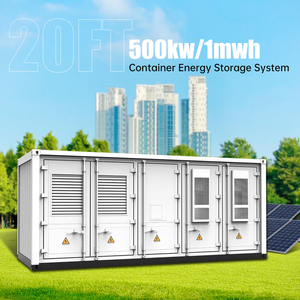
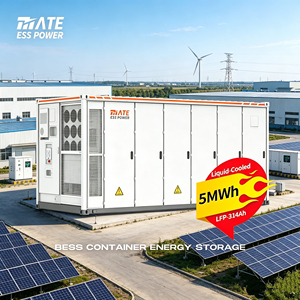
Next-gen 314Ah cells enable 5MWh+ capacity in standard 20ft ISO container configurations, maximizing land utilization for both residential cluster microgrids and C&I developments.
🛡️
Multi-Tier Safety Architecture
Integrated aerosol/Novec 1230 gas suppression systems combined with cell-level ceramic separators stop thermal runaway propagation across adjacent modules.
⚡
Smart Active BMS
Real-time cell balancing (up to 5A active current) minimizes state-of-charge (SoC) drift, extending usable pack lifetime by 30% over passive balancing circuits.
2. Thermal Management Paradigms: Air Cooling vs. Liquid Cooling
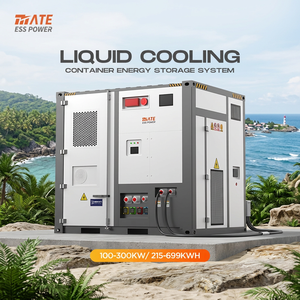
As residential systems scale up from low-voltage 48V stackable units (5kWh-20kWh) to high-voltage distributed systems (100V-800V) and containerized C&I backup solutions (100kWh-5MWh), heat dissipation strategy directly dictates capacity degradation curves. Traditional air-cooling methods rely on high-volume fan arrays, creating temperature deltas exceeding 5°C across large battery banks. Modern liquid-cooling systems utilize closed-loop ethylene glycol plates in direct contact with cell casings, maintaining internal temperature uniformities within ±2°C.
📈 Future Procurement Trends: What Global Buyers Must Benchmark
Procuring energy storage systems from Chinese manufacturers requires understanding upcoming technological mandates and regulatory compliance shifts. Buyers evaluating multi-year supply contracts must align their product specifications with the following 4 macroeconomic and engineering trends:
1. HV Stackable Architecture
Transitioning from low-voltage (48V) to High Voltage (200V-800V) stackable residential modules. HV systems increase inverter conversion efficiency to 97.5% while drastically reducing copper cabling losses.
2. AI-BMS Cloud Integration
Predictive state-of-health (SoH) diagnostics via IoT telemetry. Chinese OEMs now offer embedded AI chips capable of dynamically forecasting cell degradation 500 cycles prior to capacity failure.
3. Dual UL 9540 / 9540A Standard
Strict North American and European grid compliance requires full-scale thermal runaway fire testing at the unit level. Non-certified systems face severe import restrictions and insurance hurdles.
4. VPP Protocol Native Support
Residential batteries must support bi-directional API integration for Virtual Power Plants (VPP), enabling homeowners to participate in dynamic frequency regulation and time-of-use tariff arbitrage.
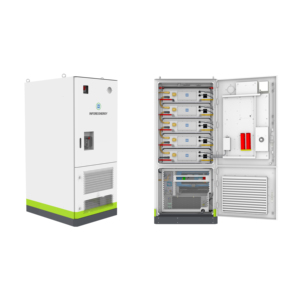
Strategic Buyer Advisory: Avoid non-modular OEM designs. Procurement managers should prioritize standardized 19-inch rackable formats or stackable plug-and-play cabinet systems. Modular architectures drastically decrease field maintenance costs (MTTR) by allowing hot-swappable module replacements without taking the entire storage bank offline.
Factory Quality Infrastructure & Manufacturing Excellence
Leading Chinese battery manufacturers operate automated Industry 4.0 production lines utilizing AI vision inspection, laser welding, and automated cell grading systems. By sourcing directly from qualified tier-1 factories, global buyers gain access to unmatched cost efficiency and stringent quality assurance frameworks.
Manufacturing protocols include 100% End-of-Line (EOL) electrical testing, thermal chamber burn-in, double-pulse testing for BMS short-circuit response times under 10 microseconds, and helium mass spectrometer leak detection for liquid-cooled BESS containers.
ISO 9001:2015 Certified
ISO 14001 Environmental Management
UL 1973 & UL 9540 Certified
IEC 62619 Compliance
UN 38.3 Transport Safety
CE & VDE AR-N 4105 Grid Code
CanBus / RS485 / Modbus Protocols
❓ Global Procurement FAQ: Sourcing Residential & Commercial ESS from China
Below are critical technical and logistics answers curated by senior SEO growth engineers and battery systems procurement experts to help buyers navigate vendor evaluation.
What is the expected cycle life of Chinese LiFePO4 residential storage systems under daily operation?
Tier-1 Chinese manufacturers utilize Grade-A LiFePO4 cells rated for 6,000 to 8,000 complete charge/discharge cycles at 80% Depth of Discharge (DoD) under 0.5C charge rates at 25°C ambient temperature. Assuming one complete cycle per day, a properly thermally managed system offers an operational lifespan exceeding 15 to 20 years before reaching 70% end-of-life (EOL) capacity retention.
How do I ensure inverter protocol compatibility when importing battery packs from China?
Leading Chinese OEM battery pack manufacturers write custom firmware supporting multi-inverter CAN/RS485 communication protocols. Before issuing a purchase order, request a protocol matrix verification matching your target inverters—such as Solis, Deye, Victron Energy, Growatt, GoodWe, SMA, or Luxpower. Most OEMs support pre-programmed inverter selection directly via the battery management system (BMS) LCD touch display or software tool.
What is the difference between Grade-A cells and recycled/second-life cells in OEM quotes?
Grade-A cells are brand-new cells direct from top-tier cell foundries (such as CATL, EVE, BYD, Hithium) that pass strict capacity, internal resistance (ACIR/DCIR), and voltage tolerance screening. Second-life or lower-grade cells are harvested from EV packs or fail manufacturer internal resistance tolerances. Second-life cells exhibit premature capacity fade, high cell-to-cell imbalance, and heightened thermal runaway risks. Always mandate factory test reports (OCV, IR, Capacity grading curves) in your OEM supply contract.
What safety certifications are required to import residential storage batteries into North America and Europe?
For North America, systems must comply with UL 1973 (for battery packs) and UL 9540 (for the integrated inverter and battery storage system), supported by UL 9540A fire propagation test reports. For European markets, compliance with IEC 62619, CE-EMC, UN 38.3 (transport safety), and local grid connection standards (e.g., VDE-AR-N 4105 for Germany, G99 for the UK) is mandatory for grid interconnection and insurance compliance.
Why are 314Ah cells rapidly replacing 280Ah cells in commercial and containerized BESS procurement?
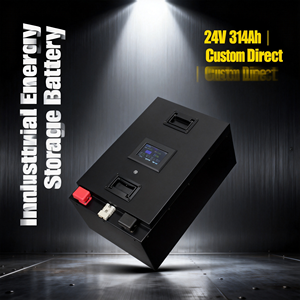
The 314Ah cell shares the exact outer dimensions as the industry-standard 280Ah prismatic cell (71173 format) but increases nominal energy capacity from 896Wh to 1004.8Wh per cell. This 12% energy boost allows containerized BESS suppliers to deliver a 5.015MWh system in a standard 20-foot container that previously maxed out at 3.72MWh or 4.17MWh. This drastically reduces shipping cost per kWh, civil foundation footprint, and site labor costs.
What is the lead time and Minimum Order Quantity (MOQ) for custom OEM battery manufacturing?
Standard white-label or existing casing MOQs typically start at 10 to 20 units for residential wall-mounted or stackable systems. For custom tooling (new sheet metal enclosures, custom BMS layout, specialized plastic injection molds), MOQs range between 50 to 100 units. Prototype engineering lead time is generally 3 to 4 weeks, while mass production takes 4 to 6 weeks depending on cell supply chain allocation.
Request Custom OEM Specifications & Factory Price List
Connect directly with certified engineering specialists. Get comprehensive datasheets, UN 38.3 test reports, inverter protocol matrixes, and containerized BESS technical drawings.