
1MWh - 5MWh
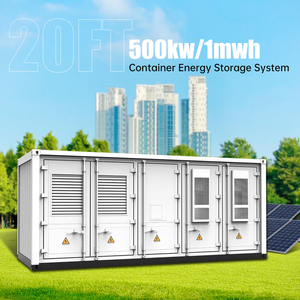
Direct factory-engineered microgrid energy storage system (BESS) containers and battery cabinets, manufactured in China under strict ISO 9001 and AS9100 quality control. Select a standardized system below to initiate technical compliance verification and custom price quotation.
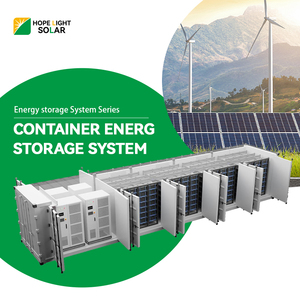
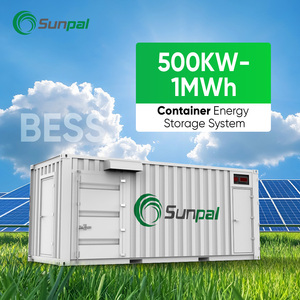
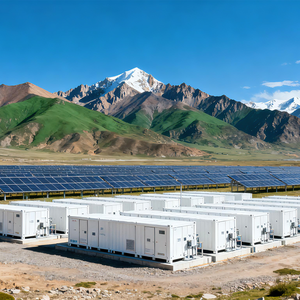
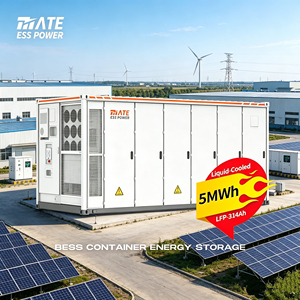
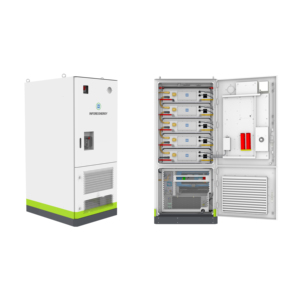
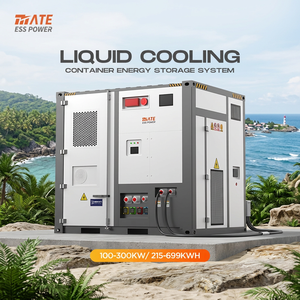
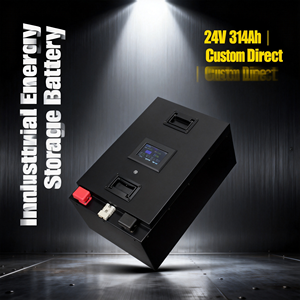
As global power grids face unprecedented instability due to renewable penetration, extreme weather, and electrification demands, microgrids have evolved from niche backup systems into critical infrastructure for industrial complexes, remote communities, data centers, and island utilities. At the heart of every resilient microgrid lies the Battery Energy Storage System (BESS). China has established an absolute technological and industrial lead in the production of lithium iron phosphate (LiFePO4 / LFP) battery packs, containerized energy storage systems, and advanced Battery Management Systems (BMS).
Sourcing microgrid battery packs directly from top-tier Chinese manufacturers provides global EPCs (Engineering, Procurement, and Construction contractors), project developers, and system integrators with unparalleled advantages: a vertically integrated supply chain spanning raw lithium refinement, cell chemistry synthesis, automated module packing, and full ISO/container integration. However, navigating the ecosystem of Chinese BESS factories requires a granular understanding of technical cell architecture, thermal safety standards, local compliance certification, and total cost of ownership (TCO).
The microgrid energy storage sector is experiencing a rapid technological paradigm shift. Manufacturers in China are replacing legacy low-voltage, air-cooled 280Ah configurations with high-density, liquid-cooled 1500V DC architectures. Understanding these technology vectors is crucial for project procurement officers targeting 20-year asset design life.
The industry standard has transitioned from 280Ah to 314Ah cells without changing the physical dimensions (71173 format). This increases single-cell energy to 1004.8Wh, enabling 5MWh+ single-container systems. Next-gen 587Ah ultra-large cells are slated for 2026 utility deployments.
Liquid-cooled BESS containers maintain internal temperature variance within 2.5°C across all cells, compared to 5°C-8°C in air-cooled units. This extends total cycle life by 20%, cuts auxiliary power consumption by 35%, and mitigates localized hot-spot thermal runaway risks.
Migrating from 1000V DC to 1500V DC allows longer string lengths (up to 416 cells in series), reducing DC cabling losses, simplifying combiner box counts, and improving Power Conversion System (PCS) inverter efficiency to over 99%.
Advanced microgrids rely on Grid-Forming PCS to act as a virtual synchronous generator (VSG). GFM inverters construct synthetic voltage and frequency references, allowing seamless islanded operation without relying on a diesel generator or main utility grid connection.
| Technical Parameter | Generation 1.0 (Legacy) | Generation 2.0 (Current Mainstream) | Generation 3.0 (2026+ Next-Gen) |
|---|---|---|---|
| Cell Chemistry & Capacity | LFP 280Ah Prismatic | LFP 314Ah High-Density | LFP / Solid-State 587Ah+ |
| 20ft Container Capacity | 2.5 MWh - 3.35 MWh | 3.72 MWh - 5.0 MWh | 6.0 MWh - 6.25 MWh |
| Thermal Management System | Forced Air HVAC (Industrial Air Conditioner) | Liquid Cooling Plate (Water-Glycol) | Immersion Cooling / Direct Phase Change |
| DC System Voltage | 1000V DC System | 1500V DC System | 1500V - 2000V DC System |
| Expected Cycle Life (0.5C/0.5C) | 6,000 Cycles @ 80% EOL | 8,000 - 10,000 Cycles @ 70% EOL | 12,000 - 15,000 Cycles @ 70% EOL |
| Fire Safety Standard | Module Aerosol Fire Suppression | UL 9540A + Pack-level Liquid Novec 1230 | Active Gas Detection + AI Thermal Runaway Early Warning |
Global buyers are shifting away from standalone battery purchase orders toward integrated turnkey solution procurement. Key purchasing criteria for international developers sourcing microgrids from Chinese suppliers include:
Pre-assembled, factory-tested "Plug and Play" containers housing battery racks, liquid cooling units, BMS, auto-fire suppression, and localized PCS dramatically reduce field installation schedules by up to 60%.
Bankability and insurance approvals mandate full-scale cell, module, and system thermal runaway propagation testing under UL 9540A and compliance with NFPA 855 hazard mitigation requirements.
Top suppliers integrate Cloud-connected AI platforms that track real-time cell degradation, impedance growth, state-of-health (SoH) telemetry, and automated energy arbitrage optimization via Modbus TCP/CANbus protocols.
Tier-1 manufacturers now back their products with 10 to 15-year linear capacity warranty agreements (throughput-based or annual cycle-based guarantee backed by international re-insurance brokers).
Combining over 120 years of collective engineering experience in custom battery pack manufacturing, smart BMS development, and high-reliability power systems, our engineering infrastructure bridges top-tier cell chemistry with customized OEM integration.
From compact, high-discharge industrial off-grid packs (such as 24V/48V 314Ah modules) to multi-megawatt 40ft microgrid containers operating under extreme ambient environments (-30°C to +55°C), our direct factory production leverages:
Key technical and commercial queries resolved by senior energy storage engineers to guide your procurement evaluation.
Partner with experienced battery system engineers to configure your custom microgrid storage project. Receive direct factory engineering support, single-cell degradation modeling, and formal budgetary proposals.