High-Voltage LiFePO4 Protection Circuit Modules & Custom Scalable BESS Hardware Integration
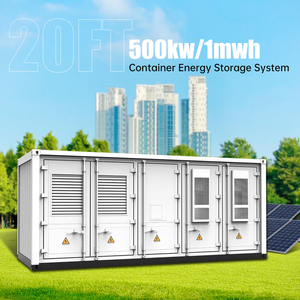

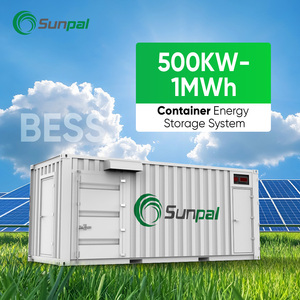

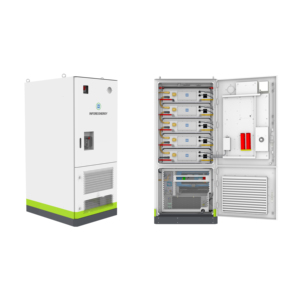
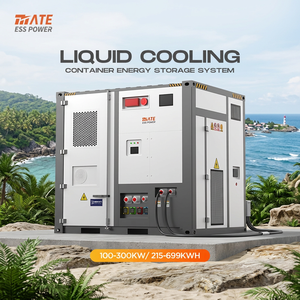
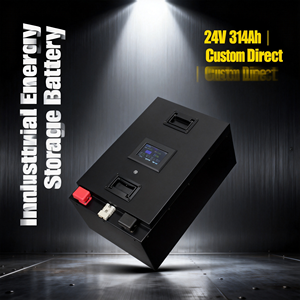
As industrial energy storage systems (BESS), electric vehicles, defense equipment, and mission-critical medical applications shift toward higher energy densities and higher discharge C-rates, the hardware reliability of Protection Circuit Modules (PCM) and Battery Management Systems (BMS) forms the primary defense against thermal runaway, cell degradation, and catastrophic electrical failure. A Protection Circuit Module is far more than a simple set of switching MOSFETs; it is a meticulously engineered safety system integrating Analog Front Ends (AFE), microcontrollers (MCUs), galvanic isolation barriers, current shunt telemetry, transient voltage suppressors (TVS), and thermal sensor networks.
China's custom PCM manufacturing ecosystem has evolved from high-volume standardized board assembly into world-class high-precision hardware prototyping. As a premier China custom PCM circuit board design supplier and exporter, our engineering facilities bridge the gap between initial schematic capture, multi-layer PCB layout optimization, firmware embedded code generation, and scalable high-mix automated SMT production. Our designs strictly follow international standards including IEC 62619, UL 1973, UN 38.3, and MIL-STD-810G.
Key Engineering Pillars of Advanced Custom PCM Design:
Selecting the correct circuit architecture depends heavily on system capacity, operational voltage, thermal footprint, and regulatory certification targets. Below is an engineering trade-off matrix designed to guide OEM procurement managers and hardware design directors.
| Specification / Feature | Standard Analog PCM | Custom Smart PCM (MCU-Based) | Containerized High-Voltage Master/Slave BMS |
|---|---|---|---|
| Cell Series Count | 1S – 16S Series | 4S – 32S Series | 100S – 450S+ Series (Up to 1500V) |
| Current Capability | 5A – 60A Continuous | 30A – 300A Continuous | 100A – 1000A+ Continuous (Relay / Contactor Driven) |
| Cell Balancing Methodology | Passive Bleeding (30mA – 50mA) | Smart Passive (100mA) / Active Inductive (1A – 2A) | High-Efficiency Transformer Active Balancing (2A – 5A) |
| Communication Protocols | None (Hardware Standalone) | UART, SMBus, I2C, CANbus 2.0B, RS485 | Isolated CAN, Ethernet (TCP/IP), Modbus RTU/TCP, Cloud Telemetry |
| Thermal Sensor Channels | 1 – 2 NTC Thermistors | 2 – 8 Independent NTC Channels | Multi-point Thermistors (16+ channels per module stack) |
| Target Application Domain | Consumer Electronics, Power Tools, E-bikes | Industrial Robotics, AGVs, Medical Carts, Solar Off-grid | Containerized BESS (1MWh - 5MWh), Commercial Grid Storage |
| Customization Level | Fixed Voltage Thresholds | Fully Customizable Firmware & Layout | Full System OEM Architecture |
Unrivaled Engineering Expertise, Rigorous Quality Control, and Vertical Integration from Prototyping to Mass Production
From schematic capture and high-density multi-layer PCB layout to firmware coding and enclosure design. Our 120+ years of collective R&D expertise guarantees optimized thermal dissipation, low electromagnetic interference (EMI), and maximum power density.
Equipped with high-speed Yamaha and Siemens SMT production lines, 3D Automated Optical Inspection (AOI), In-Circuit Testing (ICT), and 100% full-load Functional Testing (FCT). We maintain a first-pass yield (FPY) exceeding 99.8% across all batch sizes.
Our custom PCM designs and manufactured battery management units comply fully with international safety mandates including UL 1973, UL 9540A, IEC 62619, CE, FCC, RoHS, and UN38.3 transport testing protocols, eliminating export barrier risks for global OEMs.
Integration of state-of-the-art bi-directional active balancing topologies (up to 5A balancing current) transfers energy from overcharged to undercharged cells with minimal heat dissipation, extending total battery lifecycle by over 30%.
Custom software development offering proprietary SOC algorithm tuning, custom CAN/RS485 communication frame maps, desktop GUI software, Bluetooth mobile apps, and IoT gateway connectivity for real-time cloud data logging and predictive maintenance.
The global battery storage landscape is undergoing a massive paradigm shift. Buyers, system integrators, and procurement directors are no longer looking for commodity protection boards. Sourcing strategies in 2025 and beyond are governed by four dominant market and technological trends:
A. Dominance of High-Capacity 314Ah LiFePO4 Cells & Liquid-Cooled Container Systems
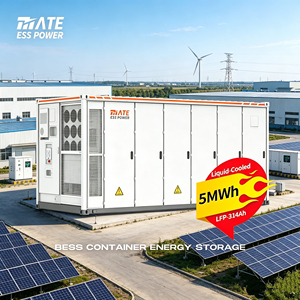
The industry standard for Utility-Scale and Commercial & Industrial (C&I) Energy Storage Systems (BESS) has rapidly shifted from 280Ah to high-density 314Ah LiFePO4 cell form factors. This transition demands custom PCMs and BMS architectures capable of sensing precise millivolt differences across larger cell capacities while supporting liquid-cooling thermal management loops to ensure thermal uniformity across 20ft and 40ft containers (e.g., 2.15MWh to 5MWh enclosures).
B. Adoption of Wide-Bandgap Semiconductors (SiC and GaN MOSFETs) in High-Current PCMs
Silicon-based power MOSFETs are approaching their physical switching and conduction efficiency limits. Leading China custom PCM circuit board exporters are integrating Silicon Carbide (SiC) and Gallium Nitride (GaN) switching devices into heavy-duty industrial PCMs. Wide-bandgap devices decrease conduction loss by up to 40% and drastically reduce PCB footprint requirements through operating at higher switching frequencies with lower thermal dissipation.
C. AI-Driven Predictive Health Monitoring (Edge AI BMS)
Modern procurement specifications increasingly mandate local microcontrollers equipped with light neural-network inference capabilities. By continuously analyzing real-time impedance spectra, micro-voltage fluctuations, and thermal response curves, smart PCMs can predict micro-short circuits and dendritic formation weeks before an thermal runaway event occurs, enabling proactive battery pack servicing.
D. Dual-Functional PCM/BMS Architectures for Hybrid Photovoltaic Integration
As hybrid solar-plus-storage solutions (100kW to 1000kW) become standard for industrial factories and island microgrids, custom PCMs are now designed to interface directly with hybrid PV inverters via customizable CANbus protocols (such as Pylontech, Victron, Growatt, SMA, and Deye communication standards), enabling seamless plug-and-play installation without external protocol translators.
Expert Answers to Critical Hardware Design, Lead Time, Quality Assurance, and Customization Questions
A standard PCM primarily provides hardware-level safety protection against overcharge, overdischarge, overcurrent, short circuit, and over-temperature conditions using discrete analog components or AFEs. A smart BMS incorporates microcontrollers to add digital telemetry, dynamic state estimating (SOC/SOH/SOP), active cell balancing, communication protocols (CANbus, RS485, Bluetooth), and custom programmable logic for advanced system integration.
To provide an accurate schematic design and quotation, our engineering team requires: (1) Battery chemistry type (LiFePO4, NMC, LTO); (2) Series cell count (S) and parallel configuration (P); (3) Peak continuous and surge discharge/charge currents; (4) Dimensions and enclosure mechanical constraints; (5) Required communication interfaces (CAN, RS485, UART); (6) Thermal sensor count; and (7) Mandatory certification standards (UL, IEC, CE).
We deploy high-thermal-conductivity multi-layer PCBs utilizing 2oz to 10oz copper layer designs, augmented by aluminum or copper heat-sink plates, thermal interface materials (TIM), and direct thermal vias positioned beneath the switching MOSFETs. For extreme high-current containerized systems, our PCMs interface directly with liquid-cooling chillers and forced-air cooling fans.
For custom PCB designs with established component selections, schematic capture and PCB layout take 3 to 7 business days. Quick-turn SMT prototyping and functional verification testing require approximately 7 to 14 days. Complete turnkey sample delivery is typically achieved within 3 to 4 weeks from design sign-off.
Yes. Our firmware team writes custom CANbus and RS485 communication stacks compatible with leading commercial inverters (including SMA, Victron Energy, Growatt, Deye, GoodWe, Sofar, and Solis). Custom CAN frame configurations can also be tailored to proprietary OEM host controllers upon request.
Every manufactured batch undergoes 100% automated testing including 3D AOI inspection, high-pot voltage withstand isolation testing, precision resistance calibration, automated overcurrent trigger testing, thermal cycle burn-in, and full functional firmware verification prior to moisture-proof conformal coating and final packaging.
Take your custom lithium-ion battery pack or industrial container energy storage project from concept to mass production. Speak directly with our senior hardware engineering team today.
Contact Us