Executive Summary: The Strategic Evolution of Custom LiFePO4 Battery Systems
As global decarbonization mandates accelerate, industrial and commercial (C&I) energy consumers, utility providers, and microgrid integrators face growing pressures to adopt highly stable, scalable, and cost-effective energy storage architecture. Lithium Iron Phosphate (LiFePO4 or LFP) battery chemistry has rapidly captured the dominant share of the energy storage system (ESS) and heavy-duty custom electrification markets worldwide. Renowned for its superior thermal stability, non-toxic chemistry, extended cycle life (>6,000–10,000 deep cycles), and lower operational expenditure (OpEx), LiFePO4 is replacing legacy Nickel Manganese Cobalt (NMC) and Lead-Acid systems in multi-megawatt applications.
China stands at the absolute center of the global LiFePO4 battery supply chain, accounting for over 85% of worldwide manufacturing capacity for LFP cells, active materials, and advanced battery management system (BMS) integration. Partnering with top-tier custom China LiFePO4 battery pack manufacturers allows global OEMs, EPC contractors, and system integrators to leverage unrivaled economies of scale, cutting-edge prismatic cell innovations (such as 314Ah/320Ah high-capacity cells), and bespoke structural engineering designed specifically for complex environmental and electrical load demands.
Information Gain Insight: Modern OEM battery procurement is no longer about buying off-the-shelf cells; it requires custom multi-tiered engineering—from cell matching (<2mV voltage spread) to dynamic liquid-cooling thermal management, multi-protocol BMS communication, and UL 9540A unit-level fire safety compliance.
85%+
Global LFP Market Share
10,000+
Cycle Life at 80% DoD
314Ah
High-Density Cell Standard
UL 9540A
Thermal Runaway Certified
Global Procurement Trends in Custom LiFePO4 Energy Storage (2026–2030)
Understanding emerging technology trajectories is vital for enterprise procurement leaders. Purchasing custom LiFePO4 battery packs requires strategic foresight to ensure assets remain profitable, compliant, and upgradable throughout their 15-to-20-year lifecycle.
⚡
314Ah Prismatic Cell Migration
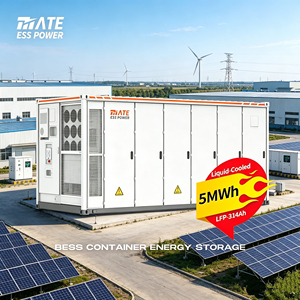
Transitioning from legacy 280Ah to standard 314Ah cells boosts container volume density by 11-14%, enabling 5MWh+ capacity in standard 20ft container configurations without altering footprint.
✽
Liquid Cooling Dominance
Direct-to-plate liquid cooling is rapidly replacing forced air cooling in industrial BESS. It maintains cell-to-cell thermal variance below 3°C, extending pack lifespan by up to 20% while cutting HVAC parasitic power consumption.
💻
AI-Powered Cloud BMS
Next-generation BMS architectures integrate cloud-edge machine learning to monitor State of Health (SOH) and State of Charge (SOC) with 99% precision, providing predictive maintenance alerts prior to cell anomalies.
Key procurement trends reshaping global sourcing include:
- Shift to High-Voltage DC Architectures (1000V–1500V DC): Utility and commercial scale installations are migrating toward high-voltage systems to reduce cable copper weight, minimize internal I²R transmission losses, and increase inverter integration efficiency.
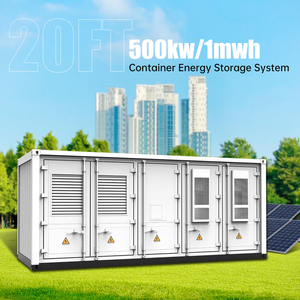
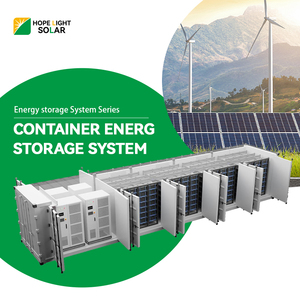
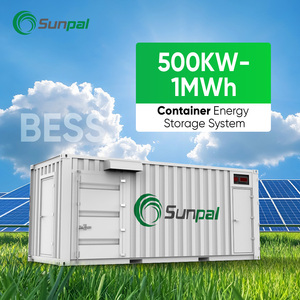
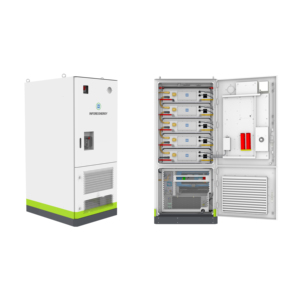
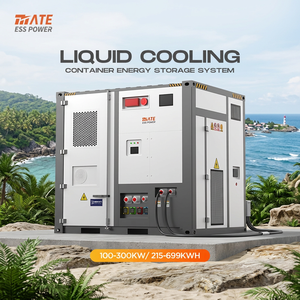
- Containerized All-In-One Micro-BESS Solutions: Enterprise buyers increasingly request plug-and-play, fully integrated 100kW–500kW / 215kWh–1MWh cabinet systems equipped with internal PCS (Power Conversion Systems), fire suppression, and smart energy management systems (EMS).
- Carbon Footprint Transparency & Digital Battery Passports: Mandated by European and global regulations, tier-1 Chinese manufacturers now provide full lifecycle carbon accounting, ethically sourced raw material verification, and automated battery passports.
Technical Benchmark: Chemistry & Design Trade-offs
When selecting custom battery pack configurations, evaluating technical parameters against application requirements is critical. Below is a engineering comparison of current custom storage platforms:
| Specification Parameter |
Prismatic LiFePO4 (LFP) |
Lithium Nickel Cobalt (NMC) |
Lithium Titanate (LTO) |
| Nominal Cell Voltage |
3.2V |
3.6V - 3.7V |
2.3V |
| Volumetric Energy Density |
350 - 420 Wh/L |
550 - 700 Wh/L |
180 - 240 Wh/L |
| Cycle Life (80% DoD @ 25°C) |
6,000 - 10,000 Cycles |
1,500 - 3,000 Cycles |
15,000 - 25,000 Cycles |
| Thermal Runaway Threshold |
~270°C (Extremely Safe) |
~210°C (Highly Reactive) |
~300°C+ (Ultra Safe) |
| C-Rate Capability (Continuous) |
0.5C - 2C (Peak 3C) |
1C - 3C |
5C - 10C |
| Cost per kWh (System Level) |
Lowest / Highly Economical |
Moderate to High |
Very High |
| Primary Target Application |
C&I BESS, Solar Storage, Telecom |
EVs, High-Density Portable |
Frequency Regulation, Heavy Rail |
Engineering Competencies of Leading Chinese Custom Manufacturers
Custom LiFePO4 battery pack manufacturing involves sophisticated multi-disciplinary engineering across chemical, electrical, thermal, structural, and software domains. Sourcing directly from tier-1 Chinese manufacturers provides international clients with distinct strategic advantages:
1. Cell Sourcing, Grading & Precision Automated Cell Matching
A battery pack is only as strong as its weakest cell. Premium Chinese custom pack builders maintain strategic relationships with top-tier cell producers (CATL, EVE, REPT, HITHIUM, BYD). Advanced manufacturing lines execute 100% automated inspection testing, sorting cells based on three essential parameters:
- Capacity Tolerance: Within ±0.5Ah matching threshold.
- Open Circuit Voltage (OCV): Voltage variance controlled within ≤ 2mV.
- Internal AC Resistance (ACIR): Impedance variance controlled within ≤ 0.2 mΩ.
2. Structural Integrity & Advanced Thermal Management Engineering
Off-grid and industrial environments subject battery enclosures to severe environmental stressors—including high humidity, seismic vibrations, extreme ambient heat (+50°C), and sub-zero cold (-30°C). Custom China suppliers utilize heavy-duty IP55 to IP67 powder-coated steel or aluminum enclosures designed to withstand rigorous structural stress tests.
Thermal management is tailor-engineered for each client’s operational profile:
- Air-Cooled Systems: Utilizes targeted air ducts, intelligent speed-variable fans, and internal HVAC units for light-to-medium duty applications.
- Liquid-Cooled Systems: Integrates internal cooling plates, glycol circulating loops, and external chillers. This minimizes thermal gradients across the pack to under 3°C, drastically slowing capacity degradation and preventing localized hotspot formation.
3. Intelligent Battery Management Systems (BMS) & Multi-Protocol Communication
The BMS acts as the core central brain of custom energy storage. Top Chinese manufacturers design custom multi-tier BMS architectures (Cell Monitoring Unit -> Rack Management Unit -> System Master BMS) supporting bidirectional active balancing (1A to 5A balancing current). This continuously re-aligns cell state-of-charge during operational cycles.
Furthermore, custom BMS firmware supports seamless integration with leading global inverter brands (Solis, Victron, Deye, SMA, Schneider, Sungrow) via flexible communication protocols including CANbus 2.0B, Modbus RTU/TCP, and Ethernet IP.
Multi-Layer Safety Ecosystem: Comprehensive safety engineering integrates multi-stage electrical protection (fuses, contactors, circuit breakers), thermal protection, aerosol/Novec 1230 gas fire suppression, combustible gas detection (CO, H2), and structural explosion-proof pressure relief vents.
End-to-End OEM/ODM Customization Workflow
Procuring a tailor-made LiFePO4 battery pack system follows a structured, milestone-driven engineering methodology:
1
Requirement Audit
Defining load curves, peak discharge currents, voltage range (VDC), ambient operating temperatures, physical dimension boundaries, and target certification mandates.
2
3D Design & Simulation
SolidWorks 3D mechanical framing, finite element analysis (FEA) for structural vibration, thermal fluid dynamics (CFD) simulation, and schematic drafting.
3
BMS & Protocol Setup
Customizing firmware algorithms, SOC/SOH estimation models, protection thresholds, and mapping register addresses for third-party inverter handshakes.
4
Prototype & Testing
Sample fabrication followed by 100% End-of-Line (EOL) full-cycle aging tests, thermal chamber endurance trials, and high-current stress verification.
5
Global Certification
Submitting pack designs for international compliance verification: UN 38.3 (transport), IEC 62619, UL 1973, and UL 9540A fire propagation tests.
6
Automated Mass Production
Scaling production using automated busbar laser welding, automated glue dispensing, barcode traceability, and MES factory tracking systems.
Frequently Asked Questions (FAQ) for Global B2B Buyers
Q1: Why should I choose custom LiFePO4 battery packs over standard off-the-shelf cabinets?
Standard off-the-shelf battery modules are built for generic operating scenarios and often suffer from physical dimensional constraints, fixed voltage limits, or incompatible BMS software protocols. Custom LiFePO4 packs allow engineering teams to optimize volumetric energy density for specific enclosures, select exact operating voltage thresholds (e.g., matching custom inverter DC buses), incorporate specific thermal management solutions (liquid vs air cooling), and configure proprietary communication protocols required for enterprise IoT and microgrid monitoring platforms.
Q2: What is the typical lifespan and degradation curve of high-grade Grade A LiFePO4 cells?
Premium Grade-A prismatic LiFePO4 cells (such as 280Ah or 314Ah cells from CATL, EVE, or REPT) typically offer 6,000 to 10,000 continuous charge/discharge cycles at 80% Depth of Discharge (DoD) under standard 0.5C operating conditions at 25°C before capacity retention drops to 80% SOH. Under steady daily single-cycle operations, this translates into an effective operational lifespan of 15 to 20 calendar years.
Q3: How do Chinese manufacturers guarantee cell quality and prevent Grade-B/refurbished cell use?
Top-tier Chinese pack manufacturers enforce strict raw material auditing. Every incoming cell features a laser-etched 2D matrix barcode direct from the cell foundry. Manufacturers provide factory OQC (Outgoing Quality Control) reports, cell matching test data sheets, and batch traceability certificates confirming original Grade-A status. Buyers can verify cell production date, original capacity grading, internal resistance records, and factory source data directly via manufacturer barcode scanning.
Q4: What certifications are mandatory for international transport and installation of LiFePO4 storage?
For global maritime and air transport, UN 38.3 certification along with MSDS (Material Safety Data Sheet) and Dangerous Goods (Class 9) shipping documentation is mandatory. For regional safety compliance:
- North America: UL 1973 (stationary batteries) and UL 9540/UL 9540A (system-level safety and fire propagation test).
- Europe: CE, IEC 62619 (industrial safety), and compliance with the EU Battery Regulation.
- Global Grid/Microgrid: IEC 63056, UN 38.3, and local grid connection compliance certifications.
Q5: What is the difference between air-cooled and liquid-cooled ESS containers?
Air-cooled containers rely on industrial air conditioning units and internal fans to circulate cold air through battery racks. They feature lower initial capital expenditure (CapEx) but exhibit higher internal temperature variations (>5°C to 8°C spread across cells), which accelerates cell aging. Liquid-cooled containers circulate coolant (typically ethylene glycol water mixture) directly through aluminum cooling plates bonded to cell faces. This achieves uniform cell temperatures (≤ 3°C difference), increases energy density by 30% per container, reduces system parasitic power loss, and dramatically extends total system cycle life.
Q6: How does active balancing in custom BMS systems differ from passive balancing?
Passive balancing bleeds off excess energy from higher-voltage cells as waste heat through resistors during the final stages of charging (usually at low currents of 50mA–200mA). Active balancing uses capacitive or inductive energy transfer circuits to actively move energy from higher-voltage cells to lower-voltage cells throughout the entire charge and discharge cycle at higher currents (1A to 5A+). Active balancing improves total usable system capacity by 5%–10% and significantly extends pack operational life in multi-series high-voltage strings.
Q7: What lead times should B2B buyers expect for custom prototype and mass production runs?
Custom engineering design and 3D CAD modeling typically require 1 to 2 weeks. Prototype fabrication (including custom sheet metal tooling, PCB fabrication, and sample testing) takes approximately 3 to 4 weeks. Once sample testing is approved, full-scale mass production lead times generally range between 4 to 6 weeks, depending on cell procurement schedules and specific international testing/certification requirements.
Partnering with China’s Leading LiFePO4 Manufacturing Ecosystem
Selecting the right custom LiFePO4 battery pack manufacturer in China is a critical operational decision for global energy companies, OEM product designers, and EPC system integrators. By prioritizing suppliers with advanced engineering capabilities, transparent cell sourcing, sophisticated BMS customization, and rigorous international safety certifications, enterprise buyers can ensure optimal ROI, minimal maintenance downtime, and industry-leading thermal and electrical safety.
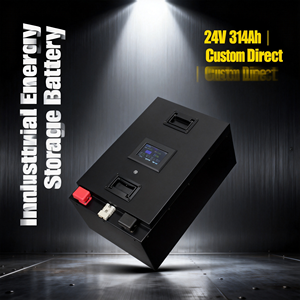
Whether you require a custom 24V/48V off-grid battery module, a 233kWh commercial building cabinet BESS, or a 5MWh utility-scale liquid-cooled container solution, our engineering team is ready to accelerate your electrification roadmap.
Ready to Engineer Your Custom LiFePO4 Energy Solution?
Consult with our senior battery engineers today to review your electrical schematics, thermal specifications, and custom OEM manufacturing requirements.
Inquire Now