Direct Factory Customization: Solid-State Cells, EV Prototyping, High-Voltage Packs & Automated Production Line Equipment
The global transition toward electrification across industrial robotics, unmanned aerial vehicles (UAVs), electric vehicles (EVs), and smart agricultural systems has elevated custom battery pack engineering from simple cell assembly to complex electromechanical system design. Top Chinese custom battery pack engineering suppliers have established a comprehensive industrial ecosystem that seamlessly integrates electrochemistry, embedded Battery Management System (BMS) design, thermal engineering, precise CNC tooling, magnesium die-casting, and custom plastic injection molding under stringent global regulatory frameworks.
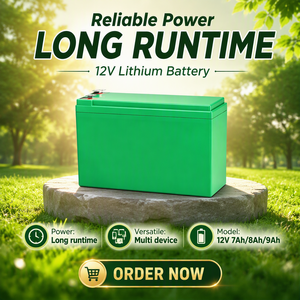
Selecting the optimal lithium-ion or solid-state electrochemistry forms the bedrock of custom battery engineering. Expert suppliers analyze operational temperature profiles, C-rate charge/discharge vectors, lifecycle expectations, and physical constraints before determining cell format (cylindrical 18650/21700/32700, prismatic LiFePO4, or solid-state lithium polymer pouch cells).
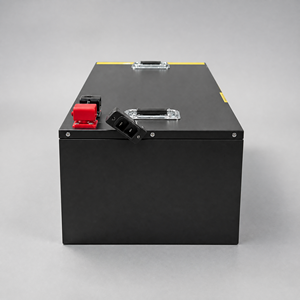
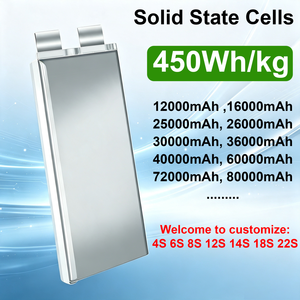
For high-altitude UAVs and long-endurance defense drones, pouch cells utilizing solid-state electrolytes achieve breakthrough energy densities of 450 Wh/kg. Conversely, industrial robotics, unmanned ground vehicles (UGVs), and high-capacity e-bikes rely heavily on customized 60V or higher LiFePO4 / NCM cylindrical cell packs equipped with active balancing BMS to withstand rigorous vibration and thermal cycling.
| Battery Electrochemistry | Gravimetric Density | Nominal Voltage | Cycle Life (80% DOD) | Primary Industrial Applications |
|---|---|---|---|---|
| Solid-State Polymer Pouch | 400 – 450 Wh/kg | 3.7V | 1,200+ Cycles | Aerospace Drones, Commercial UAVs, Portable Medical Devices |
| Lithium Iron Phosphate (LiFePO4) | 160 – 190 Wh/kg | 3.2V | 3,500 – 6,000 Cycles | AGVs, Energy Storage (ESS), Agricultural Sprayers, EV Golf Carts |
| Nickel Cobalt Manganese (NCM) | 240 – 300 Wh/kg | 3.6V - 3.7V | 1,500 – 2,500 Cycles | EV Prototypes, Electric Motorcycles, High-Discharge Power Tools |
| Lithium Primary (Li-SOCl2 / Li-MnO2) | 400 – 650 Wh/kg | 3.0V - 3.6V | Primary (Non-Rechargeable) | Smart Utility Meters, Asset Trackers, Subsea Sensor Nodes |
An sophisticated battery pack design relies on a customized Battery Management System (BMS) engineered for hardware-level security and firmware adaptability. Leading Chinese engineering services specialize in multi-tier BMS design capable of monitoring cell-level voltages, pack temperatures via arrayed NTC thermistors, and dual-directional current flow.
Key architectural highlights of smart industrial BMS implementations include:
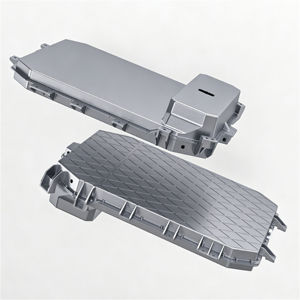
Mechanical enclosure engineering determines the survival of custom battery packs in harsh environments. Top suppliers provide end-to-end mechanical design utilizing dynamic FEA (Finite Element Analysis) structural simulation and CFD (Computational Fluid Dynamics) thermal profiling.
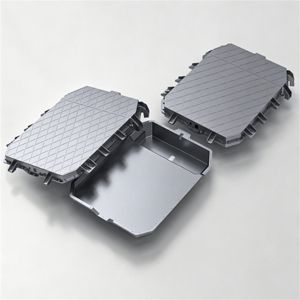
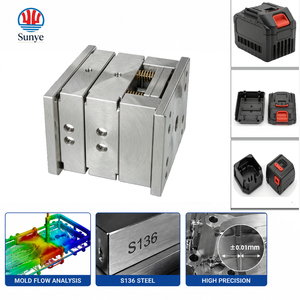
Engineers utilize high-precision multi-axis CNC machining for EV prototype chassis components, magnesium alloy die-casting for extreme strength-to-weight optimization, and custom plastic injection molding utilizing flame-retardant polymers (UL94-V0 rated ABS/PC). For agricultural sprayers and outdoor marine equipment, specialized gasket sealing and ultrasonic welding yield certified IP67 or IP68 waterproof ratings capable of resisting immersion, chemical exposure, and mechanical shock.
Full Vertical Integration: From CAD Drawings & Prototyping to Automated Production Machinery Setup
Rapid prototyping of battery enclosures using precision CNC machining and magnesium die-casting. Ideal for automotive EV validation, functional testing, and low-volume pre-series runs.
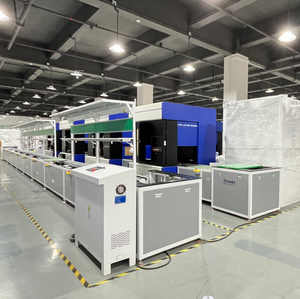
Deployment of automated cell sorting, precision spot welding, automatic BMS soldering, and computerized aging test lines for factories building domestic battery assembly plants.
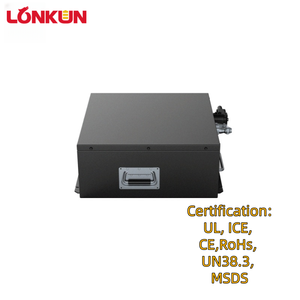
Full regulatory compliance services including UN38.3 transport safety testing, MSDS documentation, CE marking, UL1973, UL2054, and IEC 62133 certification packages for direct export.
As global supply chains demand greater traceability, safety, and efficiency, technical procurement directors are altering how they evaluate Chinese manufacturing partners. The following trends represent the future vector of custom battery pack engineering and global export logistics:
Solid-state batteries are rapidly transitioning from lab-scale prototypes to high-value industrial applications. By replacing flammable liquid electrolytes with solid polymer or ceramic membranes, solid-state cells eliminate the risk of catastrophic thermal runaway while increasing energy density by up to 80%. OEM procurement teams for defense UAVs, robotics, and medical equipment are actively shifting specifications toward solid-state pouch formats to minimize payload weight while maximizing mission runtimes.
Impending global regulations (such as the EU Battery Regulation) mandate recycled material content, clear carbon footprint declarations, and "Right to Repair" modular pack architectures. Traditional potted battery packs that cannot be serviced are being phased out in favor of mechanical cell-clamping systems and smart modular sub-packs, allowing economical module-level replacement and simplified end-of-life recycling.
Next-generation battery packs are increasingly designed as connected IoT endpoints. Integrated cellular (NB-IoT/LTE-M) or Bluetooth modules transmit real-time cell parameters to cloud analytics platforms. Machine learning algorithms analyze internal impedance, temperature spikes, and capacity fade curves to predict potential failures weeks before they occur, revolutionizing fleet maintenance for commercial EVs, micro-mobility networks, and stationary energy storage systems.
Detailed Technical Clarifications for Global Buyers & Procurement Managers
To provide an accurate technical proposal and NRE (Non-Recurring Engineering) estimate, suppliers typically require: 3D CAD step files of the battery compartment, continuous/peak discharge current requirements (C-rate), voltage range, target capacity (Ah/Wh), IP rating, target weight limits, communication protocol specifications (e.g., CANbus baud rates), and required safety certifications (UN38.3, IEC, UL).
Thermal management is executed using a combination of active and passive cooling techniques. Passive methods include phase-change materials (PCM), aluminum heat-sinks, thermally conductive silicone potting, and aerogel insulation barriers between cells. Active methods utilize liquid cooling plates (common in custom EV/magnesium die-cast enclosures) or forced-air ducting designed via CFD modeling.
For custom battery packs requiring new injection tooling or complex CNC magnesium prototypes, initial design validation samples generally take 3 to 5 weeks. BMS PCBA development and firmware tuning take approximately 3 weeks. Once prototype approval and UN38.3 testing are completed, mass production lead times range between 4 to 6 weeks depending on cell batch availability.
Lithium-ion and solid-state batteries are classified as Class 9 Dangerous Goods (UN3480 / UN3481). Reputable Chinese exporters provide complete UN38.3 test reports, 1.2m drop test documentation, MSDS (Material Safety Data Sheets), and certified hazardous goods packaging (UN-rated cartons with anti-static and flame-retardant foam inserts) to ensure smooth customs clearance worldwide.
Have a complex battery pack project or need custom engineering support? Contact our senior electrochemistry and mechanical engineering team for immediate technical consultation.