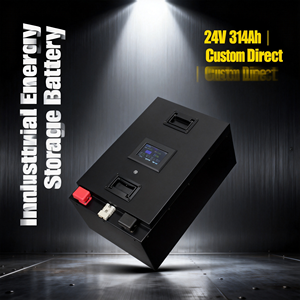
High-capacity LiFePO4 and NMC prismatic cell assemblies engineered for commercial, industrial, and utility-scale energy storage systems (ESS).
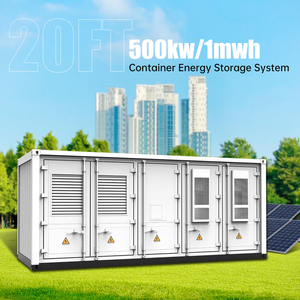
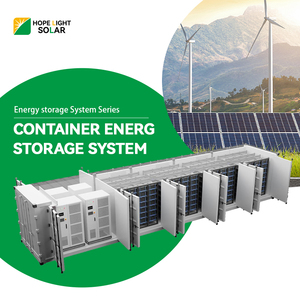
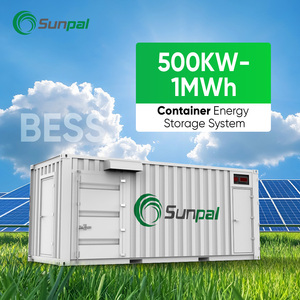
An in-depth analysis of high-density prismatic cell integration, thermal architecture standards, smart BMS protocols, and factory qualification frameworks for enterprise B2B procurement officers.
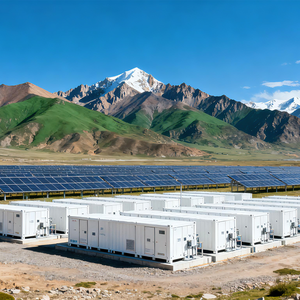
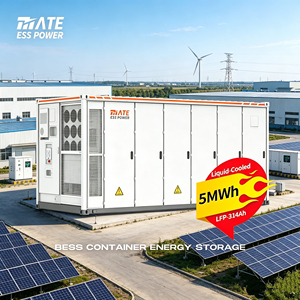
Information Gain Insight: Modern utility and industrial energy storage systems (BESS) are shifting rapidly from 280Ah to 314Ah+ prismatic Lithium Iron Phosphate (LiFePO4) cell architectures. This shift achieves up to a 20% increase in energy volumetric density within standard 20ft and 40ft container footprints while significantly mitigating balance-of-plant (BOP) costs through integrated liquid cooling.
Prismatic lithium-ion cell packs have become the dominant architecture for medium-to-large energy storage systems (ESS), heavy electric transportation, defense installations, and mission-critical power supplies. Unlike cylindrical cells (such as 18650 or 21700 formats) that suffer from volumetric void spaces when packed, prismatic cells feature metallic aluminum enclosures that optimize space utilization to over 92% cell-to-pack (CTP) structural efficiency.
Furthermore, prismatic cells exhibit enhanced mechanical rigidity and localized heat dissipation pathways, making them superior candidates for high-stress environmental conditions. When assembled by certified tier-1 contract manufacturers, prismatic battery arrays offer superior thermal management, lower internal resistance across laser-welded busbars, and robust current distribution under continuous 1C to 3C pulse discharge scenarios.
Procuring industrial-grade prismatic lithium-ion battery assemblies requires rigorous factory audits beyond surface-level unit costs. OEM procurement officers must evaluate suppliers against strict technical benchmarks:
Precision robotic fiber-laser welding ensures contact resistance remains below 0.05 mΩ per joint, eliminating hot spots during continuous high-amp energy discharge.
Aerogel thermal insulation sheets (over 1000°C protection threshold) integrated between cells to prevent cascading propagation across adjacent prismatic blocks.
Dual CAN-bus and RS485/Modbus telemetry enabling cell-level voltage balancing, SOC/SOH estimation algorithms, and cloud diagnostic access.
Comparative matrix highlighting structural performance, cycle life, thermal management complexity, and total cost of ownership (TCO) for large-scale enterprise deployments.
| Performance Parameter | Prismatic LiFePO4 / NMC Assembly | Cylindrical 18650/21700 Array | Pouch Laminate Pack Design |
|---|---|---|---|
| Volumetric Efficiency (Cell-to-Pack) | Optimal (88% - 94%) | Moderate (65% - 75%) | High (80% - 88%) |
| Single-Cell Capacity Range | 100Ah – 314Ah+ | 2.5Ah – 5.0Ah | 20Ah – 100Ah |
| Mechanical Compression & Swelling Resistance | High (Rigid Aluminum Casing) | High (Steel Cylinder) | Low (Requires External Clamping) |
| Thermal Cooling Integration | Direct Liquid Plate / Bottom Cooling | Interstitial Liquid Ribbon | Surface Thermal Pads |
| Cycle Life (to 80% Initial Capacity) | 6,000 – 10,000 Cycles | 2,000 – 4,000 Cycles | 3,000 – 5,000 Cycles |
| BMS Interconnect & Busbar Complexity | Low (Fewer connections per kWh) | Extremely High (Thousands of wire bonds) | Moderate (Tab welding required) |
A comprehensive overview of leading manufacturing hubs, engineering labs, and authorized assemblers powering the global renewable energy transition.
With over 120 years of collective engineering experience, Emerging Power leads the US market in authorized assembly and custom battery pack design. Specializing in medical, defense, aerospace, and high-reliability industrial applications, Emerging Power integrates premium prismatic cells with smart BMS tech, custom enclosures, and automated compliance testing (UN38.3, UL1973, ITAR).
CATL dominates the global supply chain for large-format prismatic LiFePO4 cells and containerized ESS systems. Known for pioneering the 314Ah high-density cell format and EnerOne liquid-cooling outdoor cabinet series, CATL sets international standards for utility-grid energy storage systems.
BYD's FinDreams division revolutionized prismatic design with its ultra-long Blade Battery format. Incorporating high structural integrity and extreme safety profiles (passing direct nail penetration testing without fire), BYD's modular BESS containers power major microgrid and utility projects globally.
What OEM engineering heads and enterprise procurement officers must anticipate over the next decade.
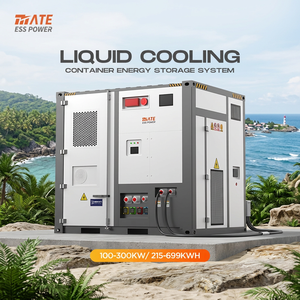
Next-generation 5MWh containerized BESS designs are shifting standard cooling media from forced air to direct-to-plate liquid cooling circuits. This transition reduces auxiliary power consumption by up to 30% and keeps cell-to-cell thermal variance under 2.5°C across the pack.
Standard 280Ah prismatic formats are quickly being upgraded to 314Ah and 560Ah ultra-large cells. By reducing the overall count of physical cells, busbars, and BMS sensing points, system reliability increases while volumetric cost drops by 12–15%.
Regulatory mandates demand full unit-level fire propagation testing under UL9540A. Future prismatic assemblies incorporate integrated aerosol or gas fire suppression systems directly into the rack enclosures, coupled with smart deflagration venting panels.
Answers to common technical, regulatory, and logistics queries from enterprise sourcing managers.
For international transport and grid connection, assemblies must hold UN38.3 (transportation safety), UL1973 (stationary battery safety), and IEC 62619 certifications. For utility grid installations, UL9540 system-level certification and UL9540A fire propagation test reports are mandatory.
Lithium Iron Phosphate (LiFePO4) exhibits superior thermal stability (decomposition temp > 270°C vs NMC at ~210°C), vastly higher cycle life (6,000+ vs 2,500), and lower raw material risk (cobalt/nickel-free). While NMC retains higher gravimetric energy density, LiFePO4 is the preferred standard for stationary BESS where footprint weight is less critical than safety and TCO.
A customized Battery Management System monitors individual cell voltages, temperatures across thermistors, and string current in real time. It performs active/passive balancing to eliminate capacity bottlenecks, prevents over-charge/over-discharge, and triggers automated contactors or fire suppressors if thermal anomalies occur.
Initial engineering, BMS tailoring, 3D modeling, and prototype delivery typically take 4 to 8 weeks. Once UN38.3 certification and customer validation are completed, mass production lead times run between 8 and 12 weeks depending on cell batch allocation and enclosure customization.